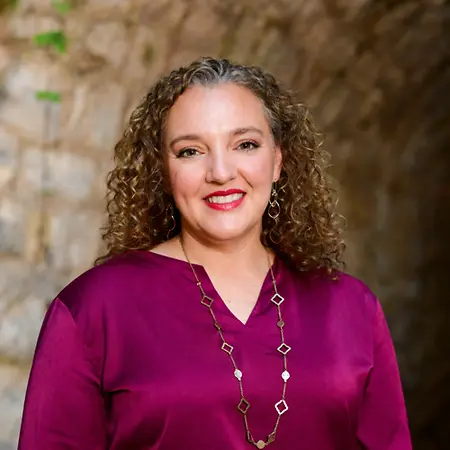
Her Story
About Kane
Dr. Kane Jaggers is a mission-driven social work leader dedicated to strengthening child welfare systems and supporting children, youth, and families through innovative, community-centered practice. Her journey into social work began with plans to pursue teaching until her cousin, a social worker, encouraged her to explore the field. She went on to attend Our Lady of the Lake University, where she completed both her undergraduate and master’s degrees in social work in approximately four years. Through this experience, she discovered that social work aligned deeply with her personal values, giving language and structure to her lifelong commitment to service, advocacy, and care for others.
She began her career in case management before quickly advancing into leadership roles overseeing foster care programs, where she focused on recruiting and preparing foster families to understand trauma and provide safe, nurturing environments for children from difficult circumstances. Dr. Jaggers became a Trust-Based Relational Intervention (TBRI) practitioner through a fellowship at Texas Christian University, bringing trauma-informed, relationship-based practices back into her community and expanding their use beyond foster care into schools, hospitals, and juvenile justice systems. Her work also included serving in a high-need San Antonio school, where she recognized the deep intersection between education and child welfare, ultimately leading her to transition into Texas’ community-based care movement—helping redesign child welfare services to be locally driven, relationship-focused, and responsive to community needs rather than procedural barriers.
Currently, Dr. Jaggers serves at SJRC Texas | Belong Now, the largest community-based care provider in the United States, serving 28 counties. In this role, she supervises regional directors and the Director of Faith-Based Initiatives while leading efforts to build sustainable community infrastructure, including community resource coordination groups, child welfare boards, and CASA programs in regions where they previously did not exist. She recently earned her Doctorate in Social Work from Capella University, where her research focused on kinship families within community-based care systems. A 2026 Change Collective Fellow, she is also developing a community advisory committee to evaluate impact and ensure systems remain proactive, innovative, and continuously responsive to the needs of children and families. Outside of her professional work, she values time spent gardening, engaging in children’s activities, and sports.
Her Interview
Ten minutes with Kane
01What do you attribute your success to?
God. I mean, it's him. That's it. Like, for me, end of story. Things have not been easy in our communities, in our world. It's been hard, and it's been easy for a lot of people to have to switch careers or switch perspectives because of all the external noise, and my success is only to him. Even when I did my research project, went to the dedication page of my capstone, I was like, this is it. Like, that's who I want to thank and contribute my success to. He has a plan for me, he's building something great, I know it, and I just have to learn to be patient, which is something I am working on, and his time is the perfect time. I give everything to him, all my successes and failures are with him, because of him, and I trust that he will guide me to wherever he needs me to.
02What’s the best career advice you’ve ever received?
The best career advice I ever received came from my CEO very early on when I was new to a supervisor role. She told me that when you leave a room, when you leave that house, you always want to let them know that you're going to be there for them. Making a simple statement of, if you need anything, let me know. Even in my emails now, I respond in that way. That's how I close them out. If I can help in any way, please don't hesitate to reach out to me. I think a lot of times as humans, we struggle asking for help. I know I'm one of those people, I'm like, I can do it on myself. So sometimes when you extend that arm out to another person and follow through, right, should that person call upon you, it does so much for that individual to feel empowered, to feel connected, to feel supported and encouraged to continue to do this work. The work we do is hard, and so a lot of times, people feel as though they're fighting these battles by themselves. More recently, some of the advice that has stuck with me is really just driving into the purpose that God has placed on my life. I give everything to him, all my successes and failures are with him, because of him, and I trust that he will guide me to wherever he needs me to. Even as I lead my team, I always come back to that. No matter what their spiritual belief is in, I always talk to them about, what is your purpose? Make sure that whatever you're doing still aligns with the purpose that you feel has been placed on you. Because that's when you're going to be able to have our staff be resilient, especially when things are hard, and hopefully we retain them in the field at large.
03What advice would you give to young women entering your industry?
I would give a young woman entering our industry, stay true to who you are. It's going to be very easy to change for a system, change for your leadership at the time, change to develop a sense of belonging, to be at the table. Some tables are not meant for us to be at. Sometimes, we are meant to build our own table. And if we stay true to who we are inside, and focus on our own growth, and our own success and our goals, then the external noise is just that. It doesn't become as hard to navigate that next step because you're always going to fall back upon who you are as a person, and your values, and not trying to fit into a team, or an organization, or a system that may not be where you're meant to be. I think I've had to learn even the hard way along the lines. But it's been very, now that I'm there, it just, while things are stressful, there's this peacefulness within the chaos.
04What are the biggest challenges or opportunities in your field right now?
Some of the biggest opportunities I have right now are to really highlight the work that's being done through community building. I have presented at a number of state conferences and have a few presentation proposals that are out right now for some upcoming conferences. I'm working with other executive directors and CEOs within a group I'm in to identify opportunities where we can take our skills and the work we're doing and push it out into other nonprofits of people of variety levels, really helping them build their bench and pour into future leaders of our organization. I read an article not too long ago that said in the next 5 years, there's going to be a mass exodus of nonprofit leadership across the board, just through attrition and retirement. This really brought it back down to, we have to pour in professionally to people throughout our organization. Professional development is key. How are we supporting their knowledge of writing grants, engaging in community building efforts, managing a board, those kinds of things. Through the Change Collective, my project is to develop a community advisory committee bringing together people with lived experience, government officials, and other nonprofit leaders to come to the table and assess where we're at in terms of community-based care and how we are working in the child and family well-being system, and what opportunities do we need to shift and start focusing on so we continue to be transformative in the work that we do and we don't get complacent, because our communities are changing very rapidly. We have to make sure we're one step ahead and being proactive to address things that may come awry rather than reactive.
05What values are most important to you in your work and personal life?
My faith, I would say, first and foremost. It keeps me grounded, it keeps me motivated, it keeps me humble. The other value that I would say, and I tell my team this all the time, is take accountability for your own success and failures. At the end of the day, can you say you've done everything possible to preserve this family? You've done everything possible to build this community. And if you can say yes, then you know you did your job. Sometimes there are external factors that negatively impact our success, and we can't let that get us down. Accountability for yourself has been really important, and a value that I hold myself to, and I hold those that I work with to as well. And then the value of just being empathetic, right? Being person first, no matter where you're at, what you're doing, it's just how you show up for other people. And that goes a long way. Every time we leave the grocery store, I always thank the cashier by name, right? Because they have a name, they're not just checking us out. They are a human being and should be treated as such. It makes me pause and be in the moment, and now they're seen, right? And they feel valued.
Join Influential Women and start making an impact. Register now.