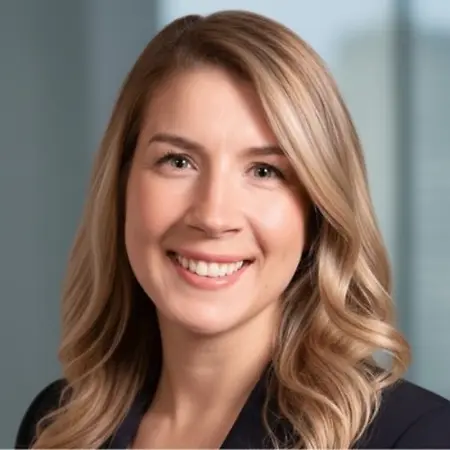
Her Story
About Kara
I've always wanted to help people, and that's been the core driver of my career. My mom was hit by a drunk driver and had to have some pretty severe spine surgery. I saw what good care looked like in some areas and where there could be improvements, so I thought I can do that, I can help other families going through that. That's how I got into the spine field specifically, and it kind of spiraled from there. I really like to see what care looks like from the patient perspective and from their families' perspective, not just the person receiving the care, but the support systems that we all have that are also trying to make sure our families are taken care of. I always look through the lens of, if that was my mom, if that was my sister, my friend, what would I want for them. I started as a patient advocate at MedStar Georgetown in Washington, D.C., and after completing my master's degree in healthcare administration, I helped develop and oversee their comprehensive spine center, facilitating all operations to assure that patients could get spine care for back aches, neck aches, all of that stuff, up to and including surgery if necessary. I then transitioned to run the spine center at Lehigh Valley Health Network, where I've been for 7 and a half years, rising through the ranks to become vice president for the second largest hospital in the network. In my role, I'm responsible for the day-to-day oversight of all operations in the hospital, everything from making sure we get all of our patients and staff fed and that the rooms are clean, all the way up to compliance issues, big picture strategy planning, capital planning, financial budgeting, and patient throughput. There's really nothing that isn't my job. My job is to make sure everyone has what they need to do their jobs.
Her Interview
Ten minutes with Kara
01What do you attribute your success to?
I think a lot of hard work and determination, but a fair bit of luck and being in the right place at the right time, and having those connections and building relationships with kind of the right people. Really following my morals and values has kind of helped me position myself so that when things come up, I'm first of mind for opportunities.
02What’s the best career advice you’ve ever received?
A physician colleague who had two kids told me she always knew she would stop after two, because she could be a great mom to two kids, but would only be an okay-ish mom to three. I extrapolate that into my work life - I can do a certain amount of things really, really well, and so I pick and curate what I'm going to spend my time and energy on, and then I try not to broaden too much from that, because you can do a little bit of everything kind of okay-ish, or you can be great at a select number of things.
03What advice would you give to young women entering your industry?
Get involved. Try everything. I think it's really important to say yes as much as possible, and get as many different experiences as you can, and to always focus on building relationships, and why we're doing the work that we're doing. Just make sure that you're aligned with your moral compass and your values when you're selecting projects to work on, and who you want to work with, and for, and where you want to spend your time and energy, being intentional about it.
04What are the biggest challenges or opportunities in your field right now?
It's really hard to work in non-profit healthcare right now, because we just want to take care of patients. The ongoing battle with insurance providers to be paid for the work that we're doing really wears on you, and it's hard to argue to be paid the rates that they promised they would pay you. It puts patients in the middle, and it really interferes with delivering the care that we want to deliver, and that patients deserve, and it just forces money to be in the middle of something that really it shouldn't be in the middle of. It just makes it kind of ugly sometimes, having to fight for patients to receive the care that they deserve. On the opportunity side, AI is definitely helping when used correctly in an educated, targeted manner. It can definitely help reduce administrative burden in certain fields. It's been revolutionary for doctors to help create their notes so they don't have to spend their nights typing out what they spoke to a patient about, and they can really enjoy time with their families. Using it in a strategic, very targeted way, I think is going to definitely help decrease some of the administrative burden for healthcare.
05What values are most important to you in your work and personal life?
I consistently put people first. I prioritize humans, dogs too, but doing the right thing for people is my top priority. And then trying to consistently optimize and be more efficient is another big value for me, looking at things from a systematic perspective to determine if we can improve in any way, shape, or form, even if it doesn't benefit me, if there's room for improvement, how can we do better, so constant improvement, I guess.
Join Influential Women and start making an impact. Register now.