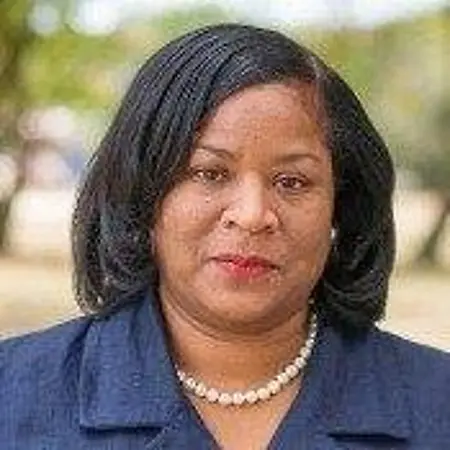
Her Story
About Dr. Karen
Dr. Karen Mohammed-Perry | Social work and clinical leadership professional is an experienced clinical and behavioral health leader with more than 30 years in the substance use and mental health field. She currently serves in a leadership role overseeing Client Care Coordinator Services at Urban Strategies, Inc. in Brooklyn, New York, where she manages operations across multiple residential shelter sites. In this role, she supervises staff, ensures quality client care, oversees psychiatric evaluations and psychosocial assessments, and helps coordinate services for individuals experiencing homelessness and complex mental health needs. Throughout her career, Dr. Mohammed-Perry has held a wide range of clinical and executive leadership positions across nonprofit and healthcare systems. She has served as a clinical director in substance use treatment programs, worked with organizations such as Phoenix House, and contributed to collaborative initiatives including programs connected to the New York State MTA. Her work also includes providing counseling services through BetterHelp and leading trauma-informed programs supporting survivors of domestic violence and human trafficking, including her earlier leadership at Sanctuary for Families’ Crossroads program. Across these roles, she has consistently focused on building systems of care that prioritize safety, stability, and long-term recovery. Dr. Mohammed-Perry holds a Bachelor’s and Master’s degree in Social Work, a Doctorate in Social Work from Capella University, and a post-master’s certificate in substance abuse treatment from NYU, along with additional graduate education in youth ministry from New York Theological Seminary. She is a Licensed Mental Health Counselor (LMHC) in New York and holds multiple clinical credentials, including ACSW, QCSW, CATODSW, MAC designations. Her professional philosophy is rooted in trauma-informed, survivor-centered care, with a strong commitment to advocacy, workforce development, and expanding access to mental health and recovery services for vulnerable populations.
Her Interview
Ten minutes with Dr. Karen
01What do you attribute your success to?
First and foremost, my mother greatly influenced me by teaching me the importance of education, continuous learning, and always striving to do my best. Her values and encouragement motivated me to work hard and develop a strong drive for achievement. In addition, my spouse has been a constant source of support and stability throughout my journey. By providing a strong foundation and encouragement, my spouse allowed me to focus on my education and pursue my goals with confidence and peace of mind. Overall, I would say that my mother and spouse have had the greatest influence on my ability to achieve my personal and professional goals.
02What’s the best career advice you’ve ever received?
Continue to persevere and never give up, as these are two of the most important factors for success. Equally important is maintaining your mental and physical well-being so that you are able to effectively support and help others. Helping others requires mental, physical, emotional, and spiritual strength. If you are not well yourself, it becomes difficult to perform at your highest capacity. To prevent burnout and remain effective in your role, it is essential to practice self-care and continue participating in professional development and training opportunities.
03What advice would you give to young women entering your industry?
Individuals entering the profession should first conduct an honest self-assessment to determine whether they genuinely possess the passion, commitment, and emotional capacity required for the work. While the profession may not lead to financial wealth, the opportunity to positively impact and save lives can provide a deep sense of purpose and fulfillment.
Because the work can be emotionally and psychologically demanding, it is essential that individuals prioritize their own well-being by maintaining strong physical, mental, and spiritual health. They should ensure they are emotionally stable and capable of managing the responsibilities associated with helping others. Additionally, individuals should explore the wide range of career paths available within the profession to identify the role that best aligns with their strengths and interests. Opportunities may include positions in administration, counseling, education, nutrition, and other specialized areas. Identifying a clear area of expertise is important for long-term professional growth and effectiveness.
04What are the biggest challenges or opportunities in your field right now?
In my opinion, there should be increased awareness and specialized training for providers at the state level, particularly regarding human trafficking. This training should extend beyond the field of mental health and also include professionals in criminal justice and education. It is essential that we are able to identify signs of abuse, recognize indicators of trafficking, and understand how to provide appropriate resources, support, and protection to victims. Addressing this issue also requires strong leadership and advocacy efforts aimed at promoting awareness and legislative reform. Greater advocacy is necessary, especially because individuals in positions of power may discourage confrontation or accountability. However, collective action creates strength, and meaningful change can occur when communities stand together. One of my long-term goals is to organize a cohort of advocates to travel to Albany, New York, to promote greater awareness, education, and policy reform surrounding human trafficking.
05What values are most important to you in your work and personal life?
Integrity and professionalism are two essential qualities for achieving success and long-term growth. Working with integrity is critical because clients can recognize when someone is not genuine or acting ethically. Professionalism also requires competence, accountability, and a commitment to continuous improvement. It is important to become an active adult learner by consistently seeking opportunities for growth, staying informed through reading and education, and remaining current on evidence-based practices, interventions, policies, and procedures. Taking initiative to learn and develop professionally is a key component of long-term success.
Join Influential Women and start making an impact. Register now.