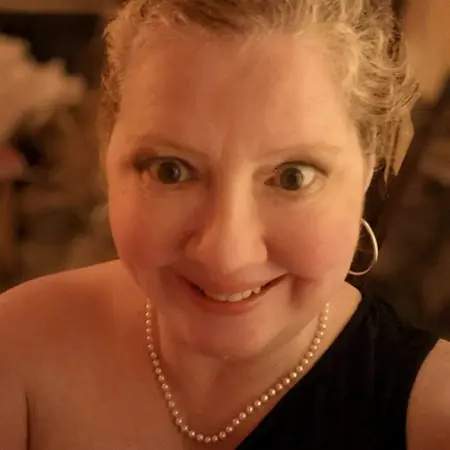
Her Story
About Karen
I've been in my field since 1995, which means 31 years of professional experience. My consulting practice focuses on both process engineering and the arts, which allows me to merge my professional expertise with my creative passions. On a typical day, I might play piano for an hour at a local Masonic Lodge for their extended care individuals, then handle paperwork, followed by three consulting appointments in the afternoon. One of my newest clients is the National Institutes of Health in Bethesda, Maryland, where I have the opportunity to do music for patients. This is particularly meaningful to me because I was diagnosed with Hereditary alpha tryptosemia at the NIH, so being able to give back to that community is really powerful. My company is called Valutivity, which reflects my philosophy of focusing on the things that you value the most. Through Valutivity Press, one of my imprints, I help clients capture their experiences in books. I also create venues where others can perform, which has been one of the most rewarding aspects of my work. We do two of these events per year, featuring about 15 individuals, and we've done over 30 of them through the years. These venues also showcase art from art classes that our team has put together and books that my clients have written.
Her Interview
Ten minutes with Karen
01What’s the best career advice you’ve ever received?
When I left Capital One, somebody that I valued very highly told me that he really thought that I would be able to make it on my own, and that if that's something that I had an appetite to do, that right then was a really good time to do it. I could not be more blessed that I made that decision. This was during the 2008 financial crisis in 2009, when there was really a need for companies to switch things up. Because of my medical conditions, I had been working part-time, and they said we either need you to work full-time or we need to let you go. I was the only one in my business unit that was part-time. I specifically remember when he said, you know, I think this is your time. And it worked out super well, and I've been really, really blessed that at that point in time I had the guts to cut off the golden handcuffs.
02What advice would you give to young women entering your industry?
I have several pieces of advice. If they're very young, my favorite advice is to assume that you'll have 7 plus or minus careers over the course of your life. Be ready to morph into whichever one is correct for you at a certain stage, and don't be built around working for the same company for 30 years. Be willing to morph and grow and align your time and interest with the things that matter a lot to you. That's why my company is called Valutivity - it's really a philosophy of focusing on the things that you value the most. Sometimes those mean changing careers as the time goes by. For more mature professionals, I like to encourage people to ensure that they are living the career that they want to be living. At some point in life, you might decide that the path that you're currently going on has a certain financial trajectory, but if you are willing to step back from that, then you can morph into having the kind of lifestyle that also fulfills you in a way that a lot of times other careers just don't really fit quite as well.
03What are the biggest challenges or opportunities in your field right now?
One of the most interesting challenges and opportunities right now is AI. I work with a lot of professionals that are creatives, and they ironically have an edge because they're the ones that have something unique they're able to do. But at the same time, a lot of their bread and butter work is being done too easily with quality that is not as high as it needs to be. I specifically think that there is a window of three more years where that's gonna be really uncomfortable, and then it's going to settle, and then the creatives are gonna understand where they need to add their value and where AI is just not replicating appropriately. For example, I know someone who recently has written a whole play using AI. For all of the playwrights out there that have used blood, sweat, and tears to be able to get their plays out there, the fact that you can utilize a tool to replicate a lot of that effort is intimidating and frustrating. But at some point, people will be able to tease out the parts that they're bringing to the table and be able to market those particular capabilities, those competencies. But it's gonna take a little bit of time, because I believe that AI has really come into people's lives a whole lot more quickly than they were able to absorb the change.
Join Influential Women and start making an impact. Register now.