Her Story
About Karin
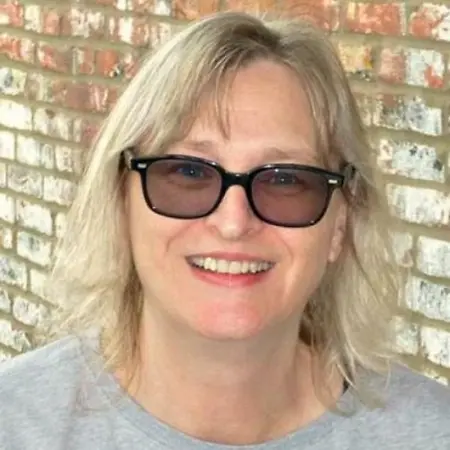
Karin Dalesky is a seasoned higher education professional and Senior Academic Advisor at the University of Washington Tacoma in Tacoma, Washington. With more than two decades of experience at the same institution where she also earned her degrees, she has built a distinguished career supporting student success through academic advising, admissions, recruitment, and program administration. She currently serves as a Lead Academic Advisor, guiding a team while continuing to directly support students in the School of Interdisciplinary Arts and Sciences.
Her work is deeply rooted in a commitment to access and equity in education, particularly for non-traditional students, first-generation college students, and military-affiliated learners. Karin is known for her approachable, authentic advising style and her ability to simplify complex academic systems so students can confidently navigate their educational pathways. She fosters a welcoming environment that encourages openness, trust, and personal growth, helping thousands of students achieve their academic and professional goals.
Karin’s professional philosophy emphasizes meeting students where they are and supporting them holistically through their academic journeys. Her long-standing dedication to the University of Washington Tacoma reflects her loyalty to her community and her passion for public-serving education. She is widely respected for her advocacy, student-centered approach, and her belief that education is a transformative milestone that can shape lifelong opportunity.
Her Interview
Ten minutes with Karin
01What do you attribute your success to?
I think trying to meet people where they are is a huge thing, because everybody's coming from different experiences and situations, and so really trying to meet people where they are. And again, being open-minded about things. I think the fact that I'm loyal - this is a Taurian trait, by the way - and I'm loyal to my campus, and I think that's really made a huge difference, at least for me, in what I do. I could have taken other positions throughout the years, but I haven't even really looked. I think I've interviewed maybe for a couple of different positions in my whole career at UW Tacoma, and I just never really wanted to leave. I've been in the same school for all this time. I do like to live in the past a little bit, because I just think it was a lot easier, and I like the idea of working at one place for a long time - it's like a lost art or something. That sort of mentality is kind of what has led to my success, I think.
02What’s the best career advice you’ve ever received?
Don't argue with the faculty - the faculty sort of have the run of things, although there's ways they can be persuaded. Be open-minded. And be open to change, and be flexible. Those are the things that have really helped me. I hate change, I really hate it. But when I accepted the fact that change is the norm, it was so much easier to deal with. When you're flexible and you can just kind of roll with things a little bit, it may not be your first choice of how to move through the world, but it really makes a difference, and it takes so much of the stress out of your life when you're not fighting that. Change is inevitable with everything. Being flexible has really got me a long way. And also, truly see other points of view, because everybody has something to say, and all voices really should be at least considered. You might not agree with what they're saying, but at least you're considering what they have to say and honoring them.
03What advice would you give to young women entering your industry?
A lot of people should not be too proud to take an entry-level position and work their way up, which is what I've done. You may start in an entry-level position, but you're gonna gain a lot of experience from that, and it's experience that's really invaluable. I learned a lot doing that, and when employers see that you're competent in these small tasks that they give you, then they give you more responsibility because they trust you and they know you're gonna get the job done. Taking an entry-level position is by no means a bad thing. I went from being a program assistant to doing event planning, faculty searches, scheduling, then I started working in admissions, and then I grew from there. An entry-level position can lead to so many other things and provide valuable experience that employers really love. You have to learn how to work as a team with people, and sometimes people you're not overly enamored with. You have to be flexible, and you have to learn the culture of the place that you're working at, especially if you want to continue to work there, and adapt. Adaptability is huge. And also be yourself. I think that has worked very well for me. I've always been very genuine. Being genuine, I think, is huge, and I think it's really served me well to honor myself and to be the best true self that I can be.
04What are the biggest challenges or opportunities in your field right now?
For people in the advising world, it's hard to get promotions and this sort of thing. You kind of hit a roadblock with that. Fortunately for us, these positions - there were three positions created within our school - and so that's been helpful, because of course, cost of living and a little bit more money is always helpful. Also, sometimes in this job, people think that if we're pointing out that there's problems, that we're just complaining about things unnecessarily, and it's really not that. We're really thinking about the students. It isn't like we're just wanting to complain about things just for the sake of it - these are real issues. We like to have data and proof of things, and we can usually provide it. But we could be viewed as a little bit uppity, because we are advocates - that's part of our job, is to advocate for students. It can come off as being a little like we should know our place. But from my standpoint, I will always advocate for students and what's good for them. That has occasionally, not so much now, but in the past, been a big challenge.
05What values are most important to you in your work and personal life?
I like to work hard, but I also work hard and I play hard. When I'm done with work, I'm done. It's like, okay, it's the weekend now, so now I'm gonna go play my music, and I'm gonna work hard at that, or I'm gonna go to this concert and really enjoy it, or I'm going to hang out with my friends and enjoy their company. I have great, great friends. Very fortunate. I've had friends that I've known since elementary school and maintain those friendships. Very fortunate to have had those people in my life. So those are the values - friendship, my family is pretty small at this point, but that's also really important to me, the people that are left. I like the work that I do, so it's really not that much like work. That was my goal when I decided I wanted to enter higher education - I wanted a job where it was actually something I didn't dread going in. I look forward to going in, and I look forward to meeting with my students and working with most of my colleagues.
Join Influential Women and start making an impact. Register now.