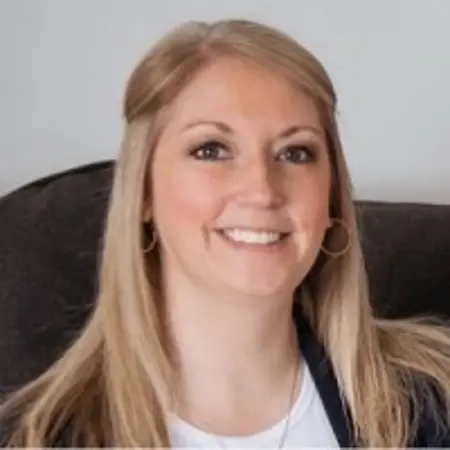
Influential Woman · Mental Health and Wellness
Karyn L. Skiba, LMSW
Co-Owner and Co-Founder + Clinical Therapist, Dynamic Wellness Collaborative
Orion Twp, MI 48360
Her Story
About Karyn
Karyn Skiba, LMSW, is a Co-Owner and Clinical Therapist at Dynamic Wellness Collaborative, an award-winning multidisciplinary wellness practice recognized as Best of the Best 2025 in Personal and Family Counseling. She co-founded the practice in 2021 alongside her partners and helped establish its physical location in April 2024 in the Detroit Metropolitan area.
In her role, Karyn maintains a full clinical caseload while also overseeing operations, supporting 1099 contractors, managing administrative responsibilities, and leading social media strategy and community engagement. Her work reflects a commitment to accessible, integrative mental health care grounded in both compassion and clinical excellence.
Karyn specializes in trauma-informed therapy, grief integration, perinatal mental health, and attachment-based couples work. She is a Certified Grief Educator through David Kessler and has advanced training in Internal Family Systems (IFS), Emotionally Focused Therapy (EFT), EMDR (in progress), and the Gottman Method. Her integrative approach reflects her belief that individuals are dynamic and benefit from personalized, flexible pathways to healing.
Beyond clinical work, Karyn is actively involved in expanding holistic wellness within her community. Dynamic Wellness Collaborative offers a multidisciplinary model of care, incorporating services such as esthetics, craniosacral therapy, EFT tapping, nutrition support, and pelvic floor physical therapy, emphasizing the connection between mental, emotional, and physical well-being.
She is an active member of the Lake Orion Chamber and participates in community outreach initiatives that promote mental health education and accessibility.
Karyn is currently preparing her first book, You Make Sense, along with a companion workbook for publication, and is also developing an adolescent-focused book, I See You and You Are Not Alone, centered on emotional understanding, identity, and relational experiences.
Her Interview
Ten minutes with Karyn
01What do you attribute your success to?
I attribute much of my success to the personal challenges and life experiences that have shaped both my perspective and my work. Experiencing loss and navigating difficult life transitions led me to pursue grief education and deepen my understanding of how people process pain, growth, and resilience.
My interest in perinatal mental health was also influenced by my own experiences, which strengthened my commitment to supporting individuals during vulnerable and transformative periods of life.
I have been fortunate to be surrounded by supportive mentors, educators, and a strong community that encouraged curiosity, growth, and connection from an early age. Those influences, along with my natural curiosity and desire to understand people more deeply, continue to guide my work.
Ultimately, my motivation has never been centered on recognition, but on continuing to learn, evolve, and find meaningful ways to support others. I am driven by the question of how I can best serve and contribute to the well-being of individuals, families, and the broader community.
02What’s the best career advice you’ve ever received?
The most impactful career advice I received came from people who saw my strengths before I fully recognized them myself. During a difficult time in college, when I was struggling academically and unsure of my direction, my mom encouraged me to consider social work. She helped me see that it was a field with many paths, all rooted in connection, support, and meaningful impact—qualities she had always seen in me.
That perspective was reinforced by a professor early in my social work education who recognized my passion for the work and encouraged me to continue developing it. Those moments taught me that sometimes the most valuable guidance comes from people who can reflect your potential back to you when you’re still trying to understand it.
The advice I carry forward is to stay open to direction, trust the process of growth, and allow your path to evolve as you gain clarity. My career has been shaped by following what feels meaningful rather than forcing a fixed plan, and that has ultimately led me to where I am today.
03What advice would you give to young women entering your industry?
Women entering this field bring a unique strength rooted in empathy, intuition, and the ability to create meaningful connection. While the work can be emotionally demanding and, at times, challenging, it is also deeply impactful and needed.
My advice is to stay grounded in who you are. You do not have to be perfect to be effective. The individuals you work with are not looking for perfection—they are looking for authenticity, understanding, and a space where they feel supported without judgment.
It’s also important to trust your ability to grow. There will be moments of uncertainty, self-doubt, and difficult situations, but those are often the experiences that shape your confidence and clinical voice over time.
Do not shy away from the complexity of this work. Instead, lean into it with curiosity, compassion, and strong boundaries. The combination of authenticity and professionalism is what allows you to show up in a way that is both impactful and sustainable.
04What are the biggest challenges or opportunities in your field right now?
One of the biggest challenges in the mental health field right now is the rapid rise of AI and social media as sources of information and support. While these tools can increase awareness and accessibility, they can also create a sense of quick answers or “instant solutions,” which may lead individuals to stop short of engaging in deeper, more meaningful therapeutic work. Human connection remains a critical part of healing, and that cannot be fully replaced.
At the same time, this shift presents an opportunity to reframe how mental health care is viewed and accessed. There is growing awareness, but there is still hesitation and misunderstanding around therapy. Part of the work moving forward is helping individuals see therapy not as something reserved for crisis, but as a space for growth, support, and self-understanding.
Another significant challenge is accessibility. Cost and insurance limitations continue to impact who can receive care, highlighting the need for more flexible and integrative models.
This is where I see meaningful opportunity. At Dynamic Wellness Collaborative, we are building a multidisciplinary approach that integrates therapy with other wellness services, supporting the idea that healing is not one-dimensional. Expanding access, reducing stigma, and creating more holistic, collaborative care models are key directions for the future of the field.
05What values are most important to you in your work and personal life?
Honesty and authenticity are central to both my professional and personal life. I believe in being genuine and transparent, even when conversations are difficult. While honesty is not always easy to hear, it creates a foundation of trust, clarity, and meaningful growth.
Over time, I have come to see that authenticity is one of my greatest strengths. I strive to show up consistently as myself, without needing to filter or adjust who I am to meet expectations. This allows the people I work with and those in my personal life to feel grounded in the relationship and confident in what I offer.
Alongside honesty, I value integrity and compassion. It is important to me that my words and actions align, and that I approach others with understanding and respect, even when navigating challenging situations.
These values guide how I connect with others, how I practice, and how I continue to grow both personally and professionally.
Join Influential Women and start making an impact. Register now.