Her Story
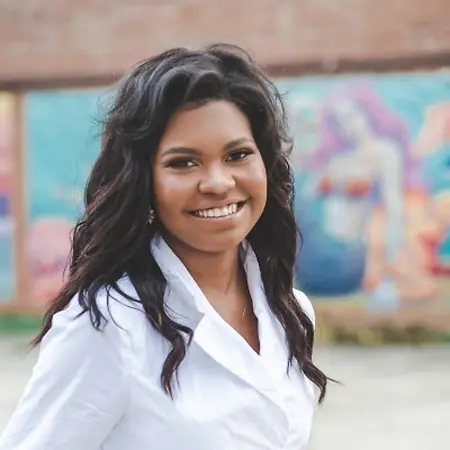
About Kasey
Kasey Sennett is an Environmental, Health and Safety (EHS) professional and Safety Instructor. With approximately five years of experience in the field, she specializes in occupational safety, industrial hygiene, and environmental compliance across multiple industries, including manufacturing, oil and gas, automotive, and semiconductor operations. Her work focuses on hazard identification, risk assessment, regulatory compliance, and safety training to promote safer and more efficient workplace environments. She is currently pursuing a Bachelor of Science in Industrial Technology with a focus on Occupational Health and Industrial Hygiene at Lamar University – Bachelor of Science (Industrial Technology, Occupational Health and Industrial Hygiene, in progress). She also holds an Associate of Science in Occupational Safety and Health Technology from Lamar Institute of Technology – Associate of Science (Occupational Safety and Health Technology, 2020). Throughout her academic and professional journey, she has completed multiple internships with leading organizations including Entegris, Tesla, TotalEnergies, and Owens Corning, and Industrial Safety Training Council, where she gained hands-on experience in process safety management, waste coordination, air and water monitoring, and EHS program support. Kasey’s professional philosophy is grounded in honesty, integrity, and continuous learning. She is passionate about strengthening workplace safety culture and ensuring that environmental and occupational risks are effectively managed across all levels of an organization. Drawing inspiration from her family’s strong work ethic and commitment to education, she is dedicated to advancing in the EHS field while advocating for persistence, professional growth, and increased representation of women in industrial safety and engineering disciplines.
Her Interview
Ten minutes with Kasey
01What do you attribute your success to?
I attribute my success to the incredible people who have supported and inspired me along the way. My mother has been my biggest influence - seeing her work as an EHS supervisor in the oil and gas industry for 20 years, especially as a Black woman in charge of a team in a very male-dominated environment like the refineries, has been amazing. She started late in her career after she had me and my sister, which shows that it's never too late to pursue what you want. My father, who is a welder in this industry, has always emphasized that the one thing people cannot take away from you is your education and your knowledge - that's been a guiding principle for me, especially when things get hard with the economy and job market. And my grandmother, who passed away last year, made me promise to not stop going to get my education. If it wasn't for that promise, I probably would have stopped a semester ago because I was so burnt out and tired. But I'm doing this for my grandmother to show her that I didn't give up. These three people have kept me going through all the moments when I questioned whether this field was really for me, and they've reinforced my commitment to education and perseverance even during the most challenging times.
02What’s the best career advice you’ve ever received?
The best career advice I've received comes from the important people in my life. My father, who is a welder, always told me that the one thing people cannot take away from you is your education - they cannot take away your knowledge. That's been so important to remember, especially with how the industry, market, and economy can be uncertain, but I can always show that I have education and knowledge. My mother also taught me by example that it's never too late to start - she began her career in EHS after she had me and my sister, and she's been doing it for 20 years now. And my grandmother, before she passed away last year, asked me to promise not to stop going to get my education. That promise became a source of strength when I was feeling burnt out and tired. If it wasn't for that, I probably would have stopped a semester ago. Together, these messages about the permanence of education, the possibility of starting at any point in life, and the importance of keeping promises to those who believe in you have shaped how I approach my career and my commitment to finishing what I start.
03What advice would you give to young women entering your industry?
My advice is simple: keep going. It took me from when I graduated in 2015 to now, and the journey has been far from linear. There were moments when I questioned whether the field was truly the right fit for me, especially when I encountered discouragement from others. I've been told many times from different leaderships that this career wasn't for me because of my personality. But instead of deterring me, those comments ultimately strengthened my resolve. I thought to myself, I've been doing this for years now - if I didn't know that this wasn't going to be for me, I wouldn't have continued. I wouldn't have gotten my associate's degree or be getting my bachelor's. My goal is to show them that I did it, because I could have given up and gone to a whole different career, but I didn't. So my message is clear: persistence matters. Even in moments of uncertainty or discouragement, showing up and continuing the work is what ultimately defines progress and success. And also, ask questions - it's okay to ask questions in this industry. People say there are no stupid questions, and sometimes there are, but if you feel like you need to know something, it's better to ask than to walk around not knowing the answer. You belong there just as much as anybody else in that room. Take up space.
04What are the biggest challenges or opportunities in your field right now?
One of the biggest challenges in the EHS field is that many sectors, particularly oil, gas, and industrial environments, remain male-dominated, which can limit representation and inclusion. At the same time, there is a strong opportunity because Environmental Health and Safety roles exist across so many industries, from manufacturing to energy to automotive. This creates space for greater diversity, increased leadership opportunities for women, and continued growth of EHS as a critical function in workplace safety and environmental protection.
05What values are most important to you in your work and personal life?
The values most important to me are honesty, authenticity, and integrity. I think one of my characteristics - and it shouldn't be a flaw in this industry but sometimes is - is that I'm too honest. I believe in being yourself and not putting on a false front. When I came into my current job, one of my coworkers told me they were scared of me because I seemed too intense, and I was like, I'm just being myself, this is who I am. I believe you should show who you are and be who you are. A lot of times when you're working for corporate America and corporate companies like Tesla, they don't want the truth and they don't want you to be honest. They say 'if you see something, say something,' but when I see something and say something, it's wrong. But especially in safety, if something doesn't seem right or safe, I'm going to say something. That's my integrity - I'm not going to compromise on safety or honesty just to fit into a certain box. Outside of work, I value staying active and maintaining a consistent fitness routine, which is an important part of my lifestyle. I also make time to travel and stay connected with friends who have moved to other cities, taking short trips to places like Austin and Houston to visit loved ones. And I have a strong appreciation for cultural experiences, particularly visiting museums, which I value as an opportunity to learn, reflect, and engage with art and history in a meaningful way.
Join Influential Women and start making an impact. Register now.