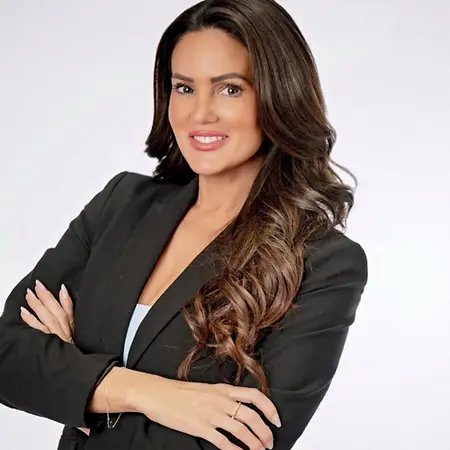
Her Story
About Katherine
Katherine Hoffmann is the CEO and Founder of SMART Reviews LLC, a company focused on medical and mass tort litigation services. She has spent approximately 20 years in the medical litigation field, beginning her career in clinical medicine working in an emergency room at a young age before transitioning into legal support work as a medical paralegal. She later gained additional experience at a defense law firm reviewing medical litigation cases and also worked in a lending-related firm before ultimately establishing her own company.
Through SMART Reviews LLC, she built a business centered on vetting claims in mass tort litigation to identify fraudulent submissions and support the development of legitimate cases. The company also conducts detailed case workups once validity is established. Under her leadership, the organization has grown to more than 200 employees, while she remains actively involved in day-to-day operations, including early-stage project and campaign planning to ensure accuracy, structure, and proper execution.
Her work is grounded in a strong emphasis on integrity, compliance, and process discipline within complex litigation environments. Beyond the legal and operational aspects of her role, she has also highlighted building a workplace culture that supports working parents, particularly working mothers, by offering flexibility alongside meaningful career opportunities. She is also connected to community and charitable efforts, including involvement with March of Dimes, reflecting a broader commitment to both professional standards and social impact.
Her Interview
Ten minutes with Katherine
01What do you attribute your success to?
I attribute my success to the strong foundation of goals, values, and ethics on which we built our company, and our commitment to staying true to those principles regardless of pressure or circumstance. In an industry where there can be significant financial incentives to compromise integrity, I have chosen to maintain transparency and resist practices that conflict with our standards. Although we faced challenges early on, I believe that consistently prioritizing ethics over short-term gain is what has allowed us to build a sustainable and successful organization.
02What advice would you give to young women entering your industry?
My advice to young women entering my industry is to find work you are genuinely passionate about and that feels meaningful in its impact, because purpose will sustain you through challenges. Stay focused on your “why” and don’t let external pressure or noise distract you from your goals, even when the environment becomes difficult or competitive. If you remain grounded in your values and consistent in your commitment, you will create the conditions for both personal success and long-term impact.
03What are the biggest challenges or opportunities in your field right now?
In the mass tort space, one of the biggest challenges right now is the influx of capital into the industry, which, while creating opportunity, has also made it more susceptible to unethical practices and fraudulent claims. This not only distorts the system but also directly harms legitimate claimants by reducing the compensation and attention they deserve. As a result, much of the focus has shifted toward addressing fraud and verifying claims, which can slow down resolutions and complicate settlements. At the same time, this presents an opportunity to strengthen safeguards, improve transparency, and ensure that the system ultimately serves and protects truly injured individuals.
04What values are most important to you in your work and personal life?
The values most important to me in both my work and personal life are transparency, grace, and personal responsibility. In my industry, I believe transparency is essential because so much of the legal space operates with unnecessary opacity, which can create confusion and lead to avoidable problems. I also place a strong emphasis on grace and accountability within my organization—recognizing that everyone is human, mistakes will happen, and what matters is how we take ownership, learn, and move forward. When those principles are established from the beginning, they shape a healthier culture built on trust, accountability, and mutual respect.
Join Influential Women and start making an impact. Register now.