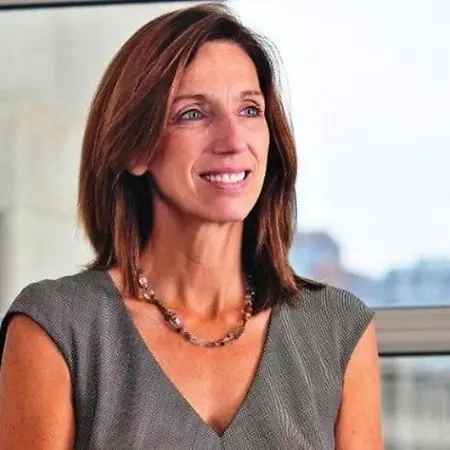
Her Story
About Kathleen
Kathy Karich is an accomplished executive leader and trusted advisor, who recently served as an Executive Partner at Gartner. With a distinguished 30-year career in Big Four consulting, she has consistently focused on serving state and local government and higher education clients, helping mission-driven organizations operate more effectively and deliver greater impact. After retiring from Deloitte Consulting in June 2024, she transitioned into her current role, where she serves as an advisor to C-suite leaders including CIOs, Chief Operating Officers, and University Presidents—bringing together her deep industry expertise and Gartner’s research to help organizations tackle their most complex strategic challenges. Prior to joining Gartner, Kathy spent 15 years at Deloitte Consulting as a Principal, where she held multiple leadership roles across technology, risk, and talent development while managing major client accounts such as the State of Michigan and Yale University. Earlier in her career, she served as Vice President and Managing Director at KPMG/BearingPoint, following foundational roles with the New York City Mayor’s Office of Management and Budget and the Children’s Health Fund. Throughout her career, she has led large-scale technology modernization and business process transformation initiatives for clients including the Commonwealth of Massachusetts, the State and City of New York, the Port Authority of New York and New Jersey, the New York City Housing Authority, and leading universities such as the University of Chicago, the University of Pennsylvania, the University of Rochester, Washington State University, Louisiana State University, and Texas A&M University System. Among her most impactful achievements is leading the implementation of an integrated justice system for New York City, enabling real-time communication across criminal justice agencies to significantly improve coordination and data sharing. In recognition of her leadership and impact, she was honored by Crain's New York Business in their 2018 inaugural class of "Notable Women in Accounting and Consulting." Kathy holds a Master of Public Administration from Columbia University School of International and Public Affairs and a Bachelor of Science in Business Administration from Boston College. Known for her commitment to excellence and passion for empowering organizations, she has built a reputation for guiding clients through complex change with clarity and purpose. Outside of her professional work, she enjoys golfing, traveling, and spending time with her family, reflecting a well-rounded approach to leadership grounded in both personal and professional fulfillment.
Her Interview
Ten minutes with Kathleen
01What do you attribute your success to?
I attribute my success first and foremost to my parents, who supported me and put such importance on education - my dad was an educator himself. Also, having a supportive husband throughout my career has been absolutely critical, especially as a working mom. And I've had strong sponsors in my career, both male and female, who made a huge difference. One sponsor relatively early in my career was a Vice Chairman I met by chance as my inner, no-window office was across from his corner office. Even though he was many, many levels above me, we happened to both come in really early to the office, so we got to know each other. He believed in supporting women before it was widely talked about as an important topic. He became one of my primary sponsors and helped me get a role based in New Zealand that completely transformed my career. His taking an interest in supporting me was a big part of my success.
02What’s the best career advice you’ve ever received?
Your career is a marathon, not a sprint.
03What advice would you give to young women entering your industry?
Seek out sponsors, that's absolutely critical. Also, speak up and don't be afraid to take calculated risks in your career. One of the smartest things I ever did was take a big risk when I had an 11-month-old son. I saw an opportunity to go to New Zealand for 18 months to work on an enterprise process and technology supply chain transformation project, even though I didn't have much experience in that area. I asked a senior leader who was a supporter of mine if he would endorse me for the role, and he did. I applied, interviewed and was selected for a leadership role on the project. Within a couple of weeks, my husband quit his job, and we moved to from New York City to New Zealand with our baby. People told me I was making a big mistake, but I knew the opportunity would give me valuable work experience and our family an interesting life experience. That was surely the case. We made life-long friends from our stay, and when we moved back to the U.S. I was completely refreshed with a new skill set. Shortly after our return, leveraging my New Zealand experience, I led the sale of a major enterprise resource planning (ERP) project to a multi-billion dollar public sector client in New York City, which was the first of many more to come. So my advice is: take calculated risks, get good sponsors, and don't be afraid. Those calculated risks will help your career.
04What are the biggest challenges or opportunities in your field right now?
It was amazing to me that in 2024, when I spoke on a women's empowerment panel at my office in 30 Rockefeller Center, it was pretty much the same conversation we were having 20 years ago. Women don't raise their hands to speak up or are not heard when they do. Women are reluctant to apply for jobs unless they're overqualified, while men will apply for jobs when they're underqualified. There are ample opportunities if you are good at what you do and have confidence, though it is important to also find the right sponsors to support and promote you.
05What values are most important to you in your work and personal life?
Honesty and integrity are really important to me. Also, helping other people advance and achieve their goals. That's not only important but incredibly motivating. I've seen people who seem to make a career pointing out the weaknesses or mistakes of others rather than positively contributing on their own. They advance by tearing others down. So I'd say making a positive impact and having integrity, building people up rather than bringing others down. It's so much more fulfilling.
Join Influential Women and start making an impact. Register now.