Her Story
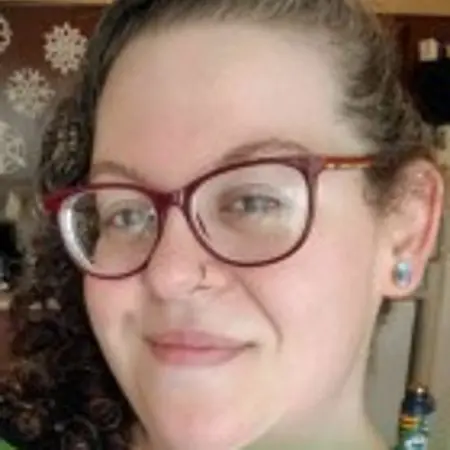
About Kathleen
I've been working professionally in writing and editing for about 11 years now, since I went to college for it. I'm a poet, fiction writer, and editor - I've had a few poems published and I perform spoken word poetry, but editing is really my main focus. When I work with fiction or memoir clients, my job is to take the story to the next level, find the gem of the work, and polish it for them by choosing different words and removing things that don't work. For corporate clients doing technical writing and editing, I make sure stories are clear for the consumer using plain language. My favorite achievement so far has been editing a book by Arielle Dominelli through several drafts until it was ready for submission, and they did get it published. I'm also the writing department lead for Skywind, the Elder Scrolls Renewal Project, a video game mod that's remaking Morrowind in the Skyrim engine. Since 2023, I've been leading teams on how to format work, review and edit, and treat one another, while letting them express creativity without going too far from the original work. I'm quite a reader, a bookworm, and I'm not just reading for entertainment anymore - I'm learning every time I pick up a book, whether it's nonfiction, self-help, fiction, or poetry. That pursuit of knowledge and curiosity is probably what makes me believe I was meant to be an editor.
Her Interview
Ten minutes with Kathleen
01What do you attribute your success to?
I attribute my success to the amount of books that I read. I'm quite a reader, a bookworm, and because this is something I love very much, I'm not just reading for entertainment anymore. I'm learning every time I pick up a book, whether it's a nonfiction how-to, self-help, a fiction novel, a book of poetry, or even just going to a spoken word poetry event. You learn something from the way other people put words on paper, and you learn something about humanity, which is why I decided to take up anthropology while I was in college. For me, that pursuit of knowledge and the curiosity and tenacity to seek out all these stories is probably the most important part, and I attribute that curiosity to what makes me believe I was meant to be an editor.
02What’s the best career advice you’ve ever received?
My advisor in college, Donna Steiner, told me that when we're writing, the actual physical act of writing is not the only part of the job. We don't need to be writing every single day, but what we do need to do is be paying attention to the world around us, to what we're consuming, to our creative inspiration, to input, and bring that back to the desk. That's the most important part. If we're going to be a writer, and even if we're an editor, if we bring back what we learned to the desk, then there's no way that we cannot move forward. That knowledge and that ability to be curious is what is going to push your career forward.
03What advice would you give to young women entering your industry?
I would say just don't lose hope and don't give up, and do not stop writing. Even if we are editors, even if our main job is to be writing stories, do not stop writing, because otherwise we lose focus on what it is to write a good story and to be a good editor. It's easy in a world like this, where things are very difficult in the field that we're in, in jobs in general, to get ground down. But we were meant to be writing, we have stories to tell, and we cannot stop. It's important.
04What are the biggest challenges or opportunities in your field right now?
The biggest challenge right now, I think, with the onset of AI, is that there are a lot of jobs out there training those models on literature and what people know from being editors and writers and readers. However, I am in the firm stance that this sort of thing is theft. There have been articles recently about the models taking literature that's already published, that belongs to other authors, and I think that is the biggest challenge, even though it also presents opportunities for people. It can be tempting, but one needs to really hold true to their ethics and values when approaching this situation. At the same time, right now I'm noticing a trend of different retellings, especially in the movie industry and TV industry, different things being remade. So I think an opportunity for writers and editors who are looking towards that sort of story and style is to go ahead and be writing the stories they want to tell, maybe retelling different older myths or older stories, or taking classics and making them modern in some way. That could be a really good opportunity moving forward.
05What values are most important to you in your work and personal life?
For me, I think being honest and having integrity is the most important thing. When I'm working with somebody else's work, a lot of the times it can be really tough to receive critique as an author, so I try to be kind but also honest. Here is what is not working, here is what we can do to fix it. Because at the end of the day, when you are sharing writing with someone, it is very vulnerable - you are sharing pieces of yourself, even if you are telling a story just in a fantasy genre or a sci-fi genre. It can be very difficult to have someone say this isn't working, but it's also important as an editor to say this isn't working, we need to fix it. We don't want to be telling our clients what they want to hear. We need to be telling them what they need to hear in order to do the work and get that work where it needs to be. Integrity also means not taking these ideas, which I've had editors myself do, and passing them off as their own. I've had to add a clause in recent times of just not using AI to do the work. That's part of integrity as well.
Join Influential Women and start making an impact. Register now.