Influential Woman · Mediation and Alternative Dispute Resolution
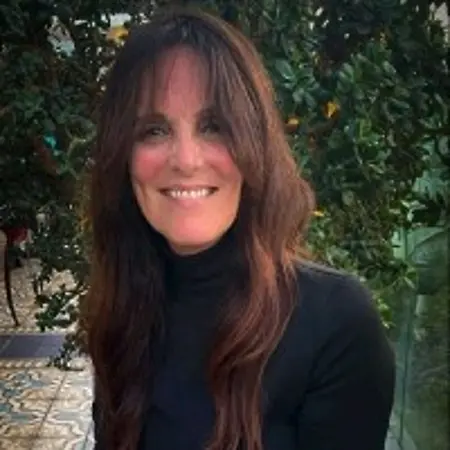
Kathleen Ruane Leedy
Mediator, Mediation Trainer, Kathleen Ruane Leedy Mediation Services
El Paso, TX 79902
Her Story
About Kathleen
Kathleen Ruane Leedy’s entry into mediation was serendipitous yet transformative. While residing in Buckhead, Georgia, she found herself in the company of pilot friends who were navigating the complexities of the AirTran and Southwest merger. As she listened to their frustrations, Kathleen offered insight on the types of questions that might have facilitated more productive discussions. Her friends, recognizing her intuitive approach, encouraged her to consider mediation—a field previously unfamiliar to her. That pivotal conversation marked the beginning of a new professional direction.
Kathleen began her formal mediation work in 2008, handling cases through the court system. She was deliberate in her approach, choosing to postpone opening her own practice until she had established an 83% settlement rate—demonstrating her commitment to consistent, measurable success. By approximately 2015, she launched her private practice, where she has since developed an outstanding reputation in high-conflict mediation, achieving a settlement rate of over 95% across more than 1,000 cases. Her caseload has included matters such as restraining orders, divorce proceedings, settlement conferences, and disputes involving individuals with prior incarceration.
A hallmark of Kathleen’s practice is her ability to foster emotional safety during mediation, allowing participants to navigate highly charged situations and reach resolution. She is guided by the principle that individuals who feel secure are better equipped to think clearly and choose constructive paths forward.
Prior to her career in mediation, Kathleen spent 22 years teaching wellness, health, and physical education at the high school level. She holds a Masters of Education from Shippensburg University, Shippensburg, PA (1989), and has completed over 500 hours of advanced mediation training and certification in both domestic and international settings.
In addition to her private practice, Kathleen is actively involved in training and mentoring mediators and law students worldwide. She leads 40-hour certification courses, teaches advanced mediation programs, judges at international mediation competitions, and shares the practical tools she has developed throughout her career. Her mission is to guide others from confidence to competence to mastery in the art and practice of communication and conflict resolution.
Her Interview
Ten minutes with Kathleen
01What do you attribute your success to?
I attribute my success to my willingness to embrace every opportunity, regardless of the challenges involved. Rather than turning down new experiences, I made it a point to say yes and focus on creating positive outcomes for others. My investment in the success of those around me led me to develop what I now refer to as mediator tools—practical strategies for listening, paying attention, challenging constructively, and understanding emotional dynamics.
A core principle I teach is that emotional reactions are often rooted in biology, not personality. Once individuals can move through those instinctive responses, they’re better able to engage thoughtfully and productively. By recognizing that emotional outbursts are biological rather than personal, I avoid assigning blame during mediation and instead guide people through the emotional process. This allows the reactive part of the brain to settle, so rational thinking can emerge.
Creating a sense of safety is central to my approach; when people feel secure, they’re much better equipped to solve problems and move forward. The tools I've developed are accessible to anyone—they simply need to be learned and practiced. My methodology involves encouraging people to experiment with different tools, build confidence through practice, and gradually progress from competence to mastery. This journey, from initial confidence to full mastery, is what I now teach to others.
02What’s the best career advice you’ve ever received?
The most impactful career advice I’ve received came from two individuals whose backgrounds couldn’t have been more different. Andrew Miller, a friend in the UK and a King's Counsel Mediator and Arbitrator, once remarked to me, almost in passing, “Mediation needs to move, Kathleen.” The simplicity of his statement resonated with me and left a lasting impression.
The other was Dick Calkin, an Attorney Mediator, Trainer, Author, and Speaker. Now in his nineties, he was the Dean of the Law School at Drake University in Iowa when we met, and was instrumental in establishing the university’s Mock Trial program. One afternoon, he told me, “Kathleen, you’re creating peace at your table.” I was so focused on the day-to-day demands of my work that I hadn’t realized the significance of what I was doing until that moment. His words struck me deeply, and I found myself unexpectedly moved. Both of these encounters fundamentally shaped my approach to my career.
03What advice would you give to young women entering your industry?
Begin with the foundational 40-hour mediation training. Once you have completed that, consider gaining practical experience in Small Claims Court. Think of it as an ideal environment to refine your skills — a place where you can practice, learn from mistakes, and know that unresolved matters can still return to the magistrate for resolution. Volunteering in this setting is invaluable, especially for those just starting out. Early missteps are part of the learning process and far preferable to making significant errors later in your career.
Expect challenges along the way, but each experience will help you improve. Personally, I did not feel ready to start my own practice until I was able to settle approximately 83% of my cases. I needed the confidence that came with consistent results before taking that step. My recommendation is to focus on skill development and hands-on practice, rather than seeking a permanent position immediately. Mediation requires both professional expertise and self-awareness, which only come with time and real-world exposure.
Be patient with your progress. There is no need to rush into private practice. Volunteer in court settings and treat mediation as a discipline that demands ongoing growth and ethical responsibility. In this field, your reputation is your most valuable asset — protect it carefully, as it will define your career.
04What are the biggest challenges or opportunities in your field right now?
One of the greatest challenges of my work is managing the emotional impact of hearing people’s stories and experiences. To maintain my well-being, I make a point of engaging in rigorous exercise, including yoga and weightlifting. My settlement rate consistently exceeded 95%, which reflects the dedication I brought to helping clients navigate through their difficulties, find clarity amid chaos, and ultimately reach meaningful agreements. I was deeply committed to both the individuals and the process, and this commitment required an intentional focus on self-care. At that time, I practiced hot yoga six days a week, which proved essential for maintaining both my physical and mental resilience.
05What values are most important to you in your work and personal life?
Curiosity has become a cornerstone of my approach, both personally and professionally. In mediation, you quickly learn that people’s stated wants—whether it’s the marital home or a specific car—are only surface-level positions. There’s always a deeper story beneath those demands. My training as a mediator has taught me not to rush to judgment, but instead to ask what’s motivating someone’s anger or distress without taking it personally or feeling intimidated. These skills foster a mindset that’s both less judgmental and more inquisitive.
I’ve also learned to recognize that strong reactions often aren’t a reflection of someone’s character, but rather a biological response to feeling threatened or unsafe. The brain is wired for self-protection, and when someone feels vulnerable—intellectually, emotionally, or physically—their reactions can be intense. Understanding this has helped me become more patient, both in my work and in my personal life. At the same time, these skills allow me to navigate conflict efficiently and perceive underlying issues with greater clarity. It’s a unique balance: increased patience paired with heightened awareness, both of which are invaluable when working through challenging situations.
Join Influential Women and start making an impact. Register now.