Her Story
About Kathleen
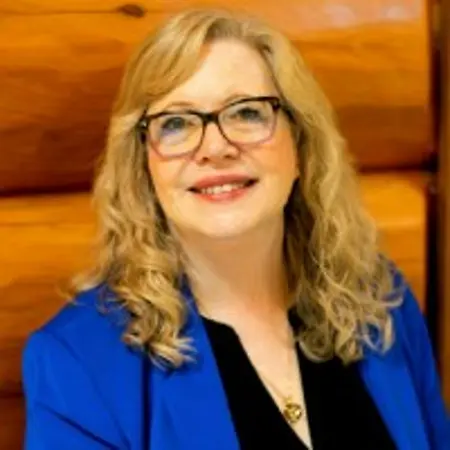
Kathleen West-Evans has dedicated nearly five decades to the field of vocational rehabilitation, building a career focused on creating meaningful employment opportunities for people with disabilities. As Director of Business Relations for the National Employment Team at Council of State Administrators of Vocational Rehabilitation, Kathleen coordinates efforts across 78 state and territorial vocational rehabilitation agencies to connect employers with talented candidates with disabilities. She is widely recognized for championing a “dual customer” approach that serves both the needs of businesses and the career goals of individuals, helping create long-term career pathways rather than one-time job placements.
Kathleen’s passion for this work is deeply personal. As a child, she experienced an undiagnosed hearing loss that led others to misunderstand her in school, until her mother advocated for the care she needed. That experience shaped Kathleen’s lifelong commitment to disability inclusion and advocacy. Throughout her career, she has worked at the local, state, federal, and national levels, including more than eight years with the U.S. Department of Education. She also played an important role in helping develop and codify business-relations language within the 2014 amendments to the Rehabilitation Act, strengthening the national focus on employer engagement in vocational rehabilitation.
Today, Kathleen continues to lead innovative partnerships with major employers across the country, including initiatives involving neurodiverse talent, assistive technology, accommodations, and inclusive hiring practices. Her work has helped expand employer-driven models with companies such as Microsoft, CVS, and Hyatt Hotels. Guided by both professional expertise and personal experience, Kathleen believes disability is only one part of a person’s story, and she remains committed to helping businesses recognize the skills, strengths, and potential that individuals with disabilities bring to the workforce.
Her Interview
Ten minutes with Kathleen
01What do you attribute your success to?
I would attribute my success to my family - a very strong family foundation. I was born in 1956, and I had a dad who encouraged me as a young woman to get my education. He was a carpenter, and he told me that your body will wear out before your mind does. That stuck with me. In high school, I had a science teacher, a woman named Sally Strand, who really believed that young women could succeed in science, and I had a track coach, Cecilia Trichillo. This was prior to Title IX, so when we competed, we had to borrow the boys' equipment, and every boy I beat quit the team. But learning to build that self-confidence with family support and having women role models who were already leading the way made all the difference. I continue to have support from my family today, and my husband is a wonderful man - we've been married almost 40 years. Our daughter is now a licensed psychologist who is a CODA, fluent in sign language, and just a very wonderful young woman. The women in my life early on, those role models, shaped who I am, and I hope that I'm doing my best to mentor other young women and men as well, continuing to support all people to achieve. You don't have to do that on the backs of other people - you can achieve and pull people together. You don't have to divide them.
02What’s the best career advice you’ve ever received?
The best advice I ever received was probably from my grandma. She would say, 'Tell me what I can't do and watch me do it.' Her family immigrated from Bohemia, and there was a lot of tragedy in that history - they had family members killed in the Holocaust, and they weren't even Jewish. It was about survival. That spirit of defiance and determination in the face of people telling you that you can't do something has guided me throughout my life and career. It's about proving that limitations others try to place on you don't define what you're capable of achieving.
03What advice would you give to young women entering your industry?
Learn and listen to your customers, whether they're individuals or their business, and build a team around you. That's the foundation of success in this field. You can't do this work alone, and you have to truly understand the needs of both the people you're serving and the businesses you're partnering with. It's about building those relationships and creating a support system that allows everyone to succeed together.
04What are the biggest challenges or opportunities in your field right now?
I think there are a lot of challenges at the federal level right now. Our program - a large part of our funding comes through the U.S. Department of Education, and I worked there for 10 years before I came into this role. So there's always the concern about what happens to our program - is it going to be moved? Is the department closing? Where are we going? What happens to the dollars and resources that are contributed from the federal level and the state level together? Beyond the funding uncertainty, the challenge is continuing to understand how important it is in a big system to focus on the needs of an individual, and not just assume that one program fits all. On the policy side, our law - the Rehabilitation Act - has been in place since 1920, focused on understanding that people can work after they acquire a disability and they don't have to be institutionalized. In 2014, when they amended our law, we had a chance through the work that we developed in our field to write legislation that defined how we work with business and that dual customer strategy. I had a chance to work with our legislative colleague and draft that language that's now in law, and it was driven by those of us doing the work in the field with real life experience. That's the kind of opportunity we need to keep creating.
05What values are most important to you in your work and personal life?
I think probably respect for all living things is at the core of who I am. Integrity and humility are essential values I try to live by. I have to say, I get tired of the egos - they take up a lot of room, a lot of space in a room, and a lot of energy. I guess because I'm so old, I have zero pushback anymore because I just walk away. I just can't handle it anymore. I believe we're stronger together. We can still have differences, but we have to have a core - and that's what's lacking, I think - the core beliefs of what's right and wrong. I also believe in caring for all living things, not just people. I was raised with strong family values, and the women in my life early on were role models who taught me that you don't have to achieve on the backs of other people. You can achieve and pull people together. You don't have to divide them. You don't have to step over someone to get to where you want to be.
Keep Exploring
More Influential Women · Washington


Join Influential Women and start making an impact. Register now.