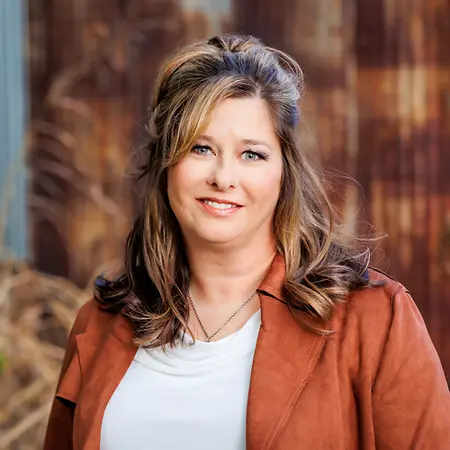
Her Story
About Kathy
Kathy Belk is a clinical informatics leader, health services researcher, and health technology strategist with more than 25 years of experience in healthcare data, analytics, and research. She is dedicated to improving healthcare through data-driven care redesign and is known for combining rigorous research with practical application to improve healthcare outcomes, operational performance, and the use of technology in care delivery. Her work has resulted in more than 100 peer-reviewed publications and presentations in scientific journals and conferences.
Early in her career, Kathy joined Premier, Inc. through a professional connection and became part of its rapidly growing informatics division. There, she contributed to innovative initiatives at the intersection of data, clinical workflows, and healthcare performance improvement, helping translate complex data into actionable insights for providers and stakeholders.
Over time, Kathy moved into increasingly advanced research roles, including serving as lead researcher for the Hospital Quality Incentive Demonstration, Premier’s pay-for-performance demonstration project with the Centers for Medicare & Medicaid Services. This work deepened her expertise in healthcare quality measurement, outcomes research, provider performance, and the use of data to evaluate care delivery and improvement initiatives.
Over time, Kathy moved into increasingly advanced research roles, including serving as lead researcher for the Hospital Quality Incentive Demonstration, Premier’s pay-for-performance demonstration project with the Centers for Medicare & Medicaid Services. This work strengthened her expertise in quality measurement, outcomes research, provider performance, and the use of data to evaluate and improve care delivery.
She later expanded into health economics and outcomes research, where she led and supported both traditional and innovative study designs across a wide range of topics and clinical areas. Through this work, Kathy helped generate evidence to evaluate the value, outcomes, economic impact, resource utilization, and patient access considerations associated with healthcare interventions across a range of clinical areas.
More recently, Kathy has led data science, analytics, and clinical technology initiatives focused on the effective development and deployment of clinical decision support technology. In this work, she has helped connect research, analytics, and implementation so that data-driven tools are not only scientifically sound, but practical, usable, and capable of improving care delivery in real-world settings.
About two years ago, Kathy launched her own healthcare consultancy, Health Clarity Solutions, where she serves as COO and Vice President of Data Science & Analytics Strategy. In this role, she leads advanced analytics, predictive modeling, and strategic partnerships that support innovation across the healthcare ecosystem.
Her Interview
Ten minutes with Kathy
01What do you attribute your success to?
I attribute my success to persistence, curiosity, continuous learning, and the great mentors I have had throughout my career. I have been fortunate to learn from people who were generous with their time, with their knowledge, and their experience. They helped me develop a wide range of skills, encouraged me to ask questions, to think critically, and pushed me to keep learning even when something felt challenging. They showed me that growth comes from being open to feedback, staying curious, and being willing to step outside of my comfort zone.
I would also attribute my success to my determination and strong work ethic – and to doing something that I love and that I believe is meaningful. Early in my career, I had the opportunity to work with some amazing management engineers who showed me that my strengths in data and analysis could be used to do meaningful work that directly affects patients’ lives. That lesson has stayed with me and continues to drive me, especially during challenging moments.
02What’s the best career advice you’ve ever received?
Two pieces of advice have stayed with me throughout my career: never stop learning and surround yourself with good people. Staying open and adaptable allows you to keep growing as your career evolves, embrace new ideas and skills, and continue finding new ways to contribute. Just as important is surrounding yourself with people who bring different talents, perspectives, and experiences, and who challenge and support one another. I have also learned the value of working with people who bring different talents, perspectives, and experiences, and who challenge and support one another. Success is not about being the best at everything. It is about knowing your own strengths, being humble enough to learn from others, and creating space for everyone to contribute and shine.
03What advice would you give to young women entering your industry?
The advice I would give to young women is to not underestimate yourself. There will be moments when the work feels difficult or the path is unclear, but persistence matters. Be willing to learn new skills, take on challenges, and trust that you are capable of figuring things out as you go.
I would also encourage young women to build genuine relationships and be intentional about maintaining them. Treating people well, being honest, and being dependable really does make a difference, but strong networks do not happen by accident. They take time, effort, and follow-through. Many of the opportunities I have had throughout my career have come from relationships built on trust, mutual respect, and staying connected over time. Looking back, many of the opportunities I have had in my career came from people who knew my work, trusted me, and were willing to open a door.
Finally, try not to get caught up comparing yourself to others. Focus on being the best version of yourself. And when setbacks happen, do not confuse them with stop signs. Some of the best opportunities come after rejection, confusion, or failure. Keep moving, keep improving, and keep asking what the experience is trying to teach you.
04What are the biggest challenges or opportunities in your field right now?
One of the biggest opportunities in healthcare data and research right now is the advancement of technology and AI. We have more data available than ever before, and new tools are allowing us to analyze information, identify patterns, and generate insights faster than we ever could in the past. If used responsibly, this creates a real opportunity to improve decision-making, support better outcomes, and help healthcare organizations move from simply collecting data to using it in meaningful ways.
At the same time, some of the biggest challenges are fragmentation and interoperability. Healthcare in the United States is still highly fragmented, and data are often spread across different systems, organizations, and formats. That makes information difficult to access, difficult to interpret, and sometimes open to inaccurate conclusions if the full context is not understood. This is especially challenging for smaller facilities that may not have the same resources, technology, or staffing needed to obtain and analyze data effectively.
Fragmentation also makes it harder to drive real improvement across the healthcare system. Providers, payers, and patients are not always operating under aligned incentives, which can make it difficult to turn insights into action. Even when the data point to opportunities for improvement, the structure of the system can make change slow and complicated.
And finally, rural healthcare is an area of great opportunity, and it is an area I care deeply about. I think it highlights both the challenges and opportunities in the field. Rural facilities often face the difficult task of expanding services and improving access while also maintaining financial stability. To make meaningful progress, we need new models for delivering care and new payment models that recognize the unique challenges rural providers face. The opportunity is not just to use more data or better technology, but to use those tools to create practical, sustainable solutions that improve access and outcomes for the communities that need them most.
05What values are most important to you in your work and personal life?
The values that are most important to me in both my work and personal life are integrity, curiosity, perseverance, and respect. I believe in doing the right thing, even when it is not the easiest path, and in being someone others can trust and rely on.
In my work, I value learning, asking thoughtful questions, and not accepting surface-level answers. I think meaningful progress comes from being willing to dig deeper, stay persistent, and continue improving. Personally, I try to bring those same values into my relationships by being honest, dependable, open-minded, and willing to grow.
Join Influential Women and start making an impact. Register now.