Her Story
About Kayla
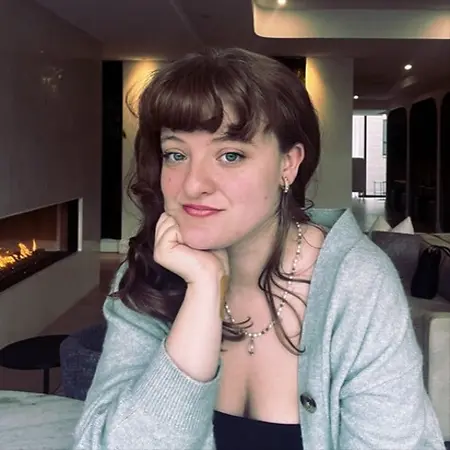
I've been in the social impact space for 12 years, starting when I was 18 years old. I founded Metamorphosis Collective while experiencing homelessness because I was not impressed with how existing nonprofits treated people receiving help. My whole professional career has been about helping people understand that just because you are receiving help does not mean you are morally inferior to the person giving you help. Everything I've done has been very thoughtful of my lived experience with homelessness, parent loss, and being in the foster care system. I've tried to use every trauma I've experienced to make sure that doesn't happen to someone else ever again. My main area of expertise now is larger level base building, working on a policy level rather than an individual level. I've moved from receiving services myself, to becoming a volunteer, then an intern, then an employee, then a founder. Now I work as a director helping other existing organizations through partner work. I'm about to start a campaign for the midterms through a partner organization. My typical day involves verifying resources are active and updated, reaching out to past and future partners for collaborative events, and recruiting volunteers. I'm really proud of where I am now - I thought I was going to have to go to college, and now I have no plan of ever doing that because of the past 12 years of experience I've built.
Her Interview
Ten minutes with Kayla
01What do you attribute your success to?
Honestly, not listening to people when they told me that I was being ridiculous. I was 18, I dropped out of high school, and I showed up to my aunt's doorstep and said I'm going to go to hair school and start businesses. Everyone around me was like, maybe make sure you have a house first, maybe house yourself first before you try and house the youth of Orlando. And I was like, but no, I could do both at the same time! And I did. I housed myself and I housed the youth of Orlando, and I am so glad that I did it that way. I understood mutual aid and that just because I was helping other people didn't mean it had to be at a detriment for me. This whole time I was getting myself professional clothing and making sure I had more stability at the exact same time that I was helping the community. That is why I've been able to be successful, because I have been able to also support myself. I've experienced bouts of homelessness throughout these 12 years and a lot of repeat traumas, but that has also shaped the way that I am able to help people. I wouldn't change anything about how it happened at all. The biggest reason why I've been able to keep going is because I have been able to watch myself grow at the same time as my organization. Dare I say, metamorphosize.
02What’s the best career advice you’ve ever received?
I had a coworker when I was working at a therapy private practice, and we had some differences in political opinions and ethical and moral opinions with the bosses who owned the practice. I kind of just reiterated what I'd heard in other environments before, which was, well, you know, if we take a strong stance on this, then we'll be isolating one group or the other. And this coworker said it's good to isolate one group or the other. Sometimes you have to do that in order to find the right places to be in your career. I think that was the most impactful advice, because I stopped trying to make myself fit into companies that did not have the same values and morals as me. Instead, I started being even louder and more open about my political leanings and my morals and my ethics. I found the people who were loud about it as well, and it has been the best career pivot for me in my life. I hope that everybody is able to reach that point in their career where they have enough confidence in themselves to be able to do that as well. You can either do the hard work of trying to impress corporate culture, or your boss, or your supervisor, or whoever it is, or you can try a bunch of different places and then find the right fit. It's basically that idea that you are interviewing a company as well as when they are interviewing you. Just to not give away your power, really.
03What advice would you give to young women entering your industry?
I would, number one, tell them to have the strongest boundaries you've ever had in your life, stronger than you would have with a kid. Think about your time, energy, and knowledge as a resource that you have to keep on lock and key. There is this mindset in the nonprofit and the social goods space, especially for women, that we should just give, give, give, give, give, with the least amount given back to us in return, just because we're passionate and we care about a cause. This will get you burned out, taken advantage of, and completely disoriented. You cannot live like that. I have never paid myself a salary from my organization. I've never, ever, not one dollar has been paid to me from Metamorphosis, and I would never recommend anybody do that to themselves. My number one thing I tell all women who are going into nonprofit or social goods space is make sure you're valuing your labor. Just because it's caring work, and just because it's seen as work that we should just want to do doesn't mean it should be unpaid. Have very, very strong boundaries. Make sure that you're keeping track of your time, even if you work for yourself, because I didn't realize I was working 60 hours a week until I started tracking it. Be a good boss to yourself. Model how you want to be a boss for others, and treat yourself that way first. You're not going to be able to be a good boss to anybody else if you can't even be a good boss to yourself.
04What are the biggest challenges or opportunities in your field right now?
The biggest challenge is the most obvious one for me right now, which is the dismantling of the federal government and the funding for these organizations. There's even some people who are saying that 501c3s are going to be on the chopping block and not even available as an option for organizations. There's just a lot of things changing very rapidly on a political level and also on a tax law level. I have never become a 501c3 for various reasons. I started realizing that my friends who did the 501c3 paperwork, now they can't have this project because their funder only funded it for this purpose. Their funders control who they can help and how they can help them. The biggest issue has been that nonprofits, at their core, are extraordinarily hierarchical. They're audited like 3 to 4 times more frequently. They do pretty much everything they possibly can to discourage you from helping the community, and they put you in a state of constantly being exhausted doing administrative work, instead of just becoming a for-profit and doing good work in the community anyways. I think the nonprofit space is actually going to slowly go away, and I don't think it's necessarily a bad thing.
05What values are most important to you in your work and personal life?
Meeting everybody with dignity. I think no matter what you do in your life, there's nothing that somebody can do to me that would make it so that I did not see them as a person anymore. I think that every living person has inherent dignity and value, and it's not based on how they can contribute to society, or capitalism, or a company, or the world, or anything like that. It's just because they are alive. My biggest thing is making sure that I'm treating everybody with dignity, and figuring out how to treat others with dignity more effectively. That is a big, big part of what I try to do in my personal and professional life.
Join Influential Women and start making an impact. Register now.