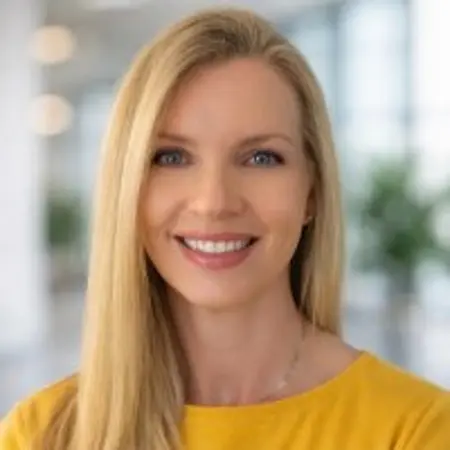
Her Story
About Kelly
Kelly Cunningham, BSN, RN, is a dedicated nephrology nurse and clinical educator with a remarkable journey into nursing later in life. After over 20 years as a certified pharmacy technician, with her last 6 years being at the Department of Defense, she pursued her Bachelor of Science in Nursing at Murray State University, graduating at age 50. Kelly began her nursing career in the ICU in 2019, right as the COVID-19 pandemic hit, which sparked her interest in nephrology after witnessing many patients experience kidney failure. Her persistence and determination helped her transition into dialysis nursing, where she has spent six years delivering exceptional patient care and leading meaningful improvements in clinical practice. During her tenure at DaVita Kidney Care, Kelly advanced from a dialysis nurse to Clinical Coordinator at the largest clinic in her region. She implemented staff education programs that significantly improved patient outcomes, achieving a 26% reduction in fluid overload among patients in just three months. Known for her commitment to mentoring and teaching, Kelly has served as a preceptor for new nurses and technicians, helping guide them through their professional development in nephrology. Her patient-focused approach emphasizes honesty, integrity, and proactive problem-solving, ensuring both safety and compassion in care delivery. Kelly is now taking on a new national role as a traveling clinical educator with Fresenius, where she will train healthcare professionals on a newly released dialysis machine starting in March 2026. Throughout her career, she has combined hands-on clinical expertise with a passion for education, making a lasting impact on both patients and colleagues. Her journey reflects resilience, lifelong learning, and dedication to improving patient outcomes, particularly in the field of nephrology, while continuing to advocate for professional excellence and innovation in dialysis care.
Her Interview
Ten minutes with Kelly
01What do you attribute your success to?
I would say my greatest support came from my family, my close friends, and a mentor who truly believed in me. A nurse practitioner I looked up to encouraged me to pursue nursing, and that planted the seed.
I didn’t grow up in a family where college was expected or pushed, so this path wasn’t always obvious to me. But with the support of my husband and children, along with guidance from nurse friends, I finally told myself, why not? Just believe in yourself.
I put in the work. Nursing school was challenging, but I stayed committed—and I graduated at the top of my class just before my 50th birthday.
Since then, I’ve made it a priority to give back. Through precepting and mentoring, I’ve encouraged others to pursue their own educational goals and step into their potential.
There is nothing more rewarding than watching someone else succeed and knowing you played even a small part in their journey.
02What’s the best career advice you’ve ever received?
The best advice I ever received came from a nurse who told me to stop listening to people who said nephrology was too hard to get into—and to just start calling places and putting myself out there.
She encouraged me to be proactive and persistent, and that advice truly changed everything for me.
I took it to heart. I reached out, applied, and followed up—even after being turned down at first. I didn’t let that stop me. I stayed persistent with one company in particular, and eventually they told me, “You know what—you’re very persistent. We’re going to hire you.”
That moment reinforced something powerful: believe in yourself, even when others don’t. Don’t let doubt—especially someone else’s—stand in the way of what you want.
Sometimes the difference between getting an opportunity and missing it is simply refusing to give up.
03What advice would you give to young women entering your industry?
Just do it. Believe in yourself and don’t make excuses—because you can do it.
It won’t be easy, but nothing worth having ever is. If I could go back to school at 45 and earn my BSN by almost 50, then so can any woman reading this.
Even if you don’t have a strong support system—lean on your faith. Go to God. Trust your beliefs. You will be guided exactly where you’re meant to go.
You are capable. You are strong. And it is never too late.
04What are the biggest challenges or opportunities in your field right now?
Dialysis nursing comes with many challenges, but one of the most significant is patient education. It is often surprising how many patients begin treatment with little to no understanding of their condition. Many arrive scared and overwhelmed, some without any prior history of kidney disease, suddenly facing kidney failure due to medication effects or other underlying conditions. They are thrust into an entirely new reality.
As dialysis nurses, our role extends far beyond clinical care. We become educators, counselors, and emotional support systems. We grieve with our patients, guide them, and help them learn a completely new way of living—one that supports their health and long-term success.
The opportunity—and responsibility—lies in ensuring every patient has the tools, knowledge, and support they need to succeed. In a dialysis clinic, where there may be 30 patients on treatment at once, each connected to life-sustaining machines, the stakes are incredibly high. We are responsible for 30 lives at any given moment, and even a small error can have serious consequences.
That’s why it is essential to build confidence and competence within the team. Every staff member must feel secure in their skills, and if they are not, it is our responsibility to guide and support them until they are. Creating that level of preparedness and trust is what allows us to provide safe, effective care in such a high-risk environment.
05What values are most important to you in your work and personal life?
I’ve always believed in leading with honesty and integrity, and it’s something I share with my coworkers, my patients, and my kids. If you make a mistake, speak up. Say something. Most things are fixable—but only if we’re honest about them.
I encourage an environment where people feel safe to be truthful. Tell me what’s going on, and I’ll meet you with that same honesty. “See something, say something” isn’t just a phrase—it’s how we keep each other safe. If something feels off, dig into it. Ask questions. You can’t fix what you don’t understand.
Just as important is how we treat one another. Everyone is carrying something these days, often more than we realize. That’s why kindness matters so much.
If you can be anything, be kind.
It doesn’t cost anything to smile. It doesn’t take effort to use kind words, hold a door, or buy someone a coffee. But those small gestures? They can change someone’s entire day.
The little things truly do make a big difference—especially in the world we’re living in today.
If you want, I can combine this with your previous piece into a powerful personal leadership statement or speech—they fit together really well.
Join Influential Women and start making an impact. Register now.