I learned to separate constructive feedback from personal criticism, viewing it as a growth opportunity, while staying confident in my values and what I bring to the table.
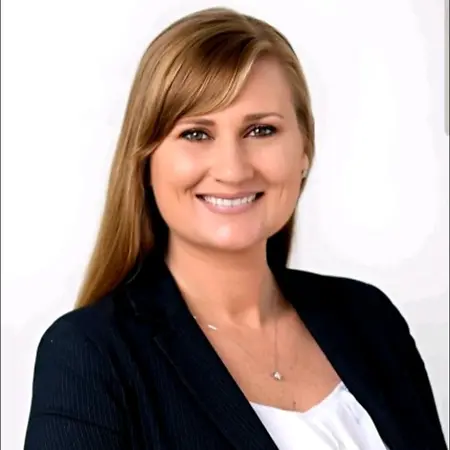
Kelly Johnson, MPA · In Her Own Words
Her Story
About Kelly
Kelly Johnson, MPA is a respected sustainability and operations executive whose career reflects resilience, adaptability, and a passion for innovation. She currently serves as Global Vice President of Corporate Sustainability and Operations at Realterm, where she leads the company’s global ESG+R strategy across its transportation-focused real estate portfolio. With more than 23 years of experience spanning construction management, sustainability, operations, public works, and organizational leadership, Kelly is known for building scalable programs that deliver measurable environmental and operational impact. Her leadership has helped position Realterm as an emerging leader in sustainable logistics real estate through initiatives focused on energy efficiency, resiliency, green building certifications, and long-term stakeholder value.
Kelly often describes her career path as anything but linear. She began at Baylor University on a softball scholarship studying Fashion Design before exploring multiple disciplines and ultimately earning a Bachelor of Science in Elementary Education. Despite this unconventional start, construction was always part of her foundation, with family roots tracing back to a master stonemason in Ireland. After returning to San Diego, Kelly began her career with the City of Carlsbad in construction management and inspection, where she became both the first female intern inspector for civil engineering and the first full-time female inspector hired into the role. In a traditionally male-dominated field, she built her reputation through technical mastery and discipline, gaining early exposure to California’s progressive building standards and energy-efficient practices—long before sustainability became a mainstream business priority.
Following a relocation to the East Coast, Kelly was recruited by Realterm to oversee two multi-million dollar airport development projects in New York and Chicago. Her focus on operational efficiency and sustainable design quickly distinguished her leadership. In 2021, she was asked to develop Realterm’s first corporate sustainability policy, which led to the creation of the company’s dedicated sustainability function under her leadership. During this time, she simultaneously managed large-scale construction projects while establishing long-term sustainability goals extending through 2050. Today, Kelly leads ESG+R investor presentations, delivers corporate-wide sustainability training, and partners across the organization to advance ESG+R initiatives globally. Under her leadership, Realterm’s sustainability platform has rapidly matured into a competitive program recognized alongside industry peers with decades of established operations.
Kelly holds a Master of Public Administration, a Women in Leadership certification from Cornell University, and remains actively engaged in industry and professional leadership initiatives.
Her Interview
Ten minutes with Kelly
01What do you attribute your success to?
I attribute my success to a willingness to challenge the status quo, take unconventional paths, and stay grounded in the quality and integrity of my work. I’ve never been afraid to move sideways in order to move up, and I’ve always stayed true to who I am.
My connection to the industry began early. I come from a family with deep roots in construction—traced back to my father’s great uncle, a master stonemason in Ireland—which gave me a strong foundation and respect for the craft. When I started as the first female civil engineering inspector in San Diego, I often heard, “Oh, honey, you just don’t know.” That only fueled my determination to prove otherwise.
A defining influence was my construction manager, Don Moore, who quizzed me every Friday on standards and specifications. His goal was simple: I should never have to open a spec book on a job site. That discipline built a technical foundation that continues to guide me today.
Early in my career, I believed I had to conform to succeed in a male-dominated industry. That changed when I worked for my first female leader, who showed me that authenticity and professionalism command respect. She helped me realize I wanted to be recognized for the quality of my work—not defined by my gender.
I’ve always held myself to high standards of ethics, accountability, and hard work. I view challenges as opportunities to learn and grow, and I’ve taken valuable lessons from both strong and difficult leadership experiences. I also believe success is a team effort—ensuring the sustainability team is set up to succeed is just as important as my own performance.
In 2021, I was asked to write Realterm’s first corporate sustainability policy, and soon after, I was asked to build and lead the sustainability function. While stepping outside my comfort zone in construction wasn’t easy, it was an opportunity to create something meaningful. Today, we’ve built a program that competes with organizations that have been focused on sustainability for decades.
02What’s the best career advice you’ve ever received?
The best career advice I’ve received came from two pivotal mentors, and together, their guidance has shaped how I approach my career.
Early on, my construction manager in San Diego, Don Moore, told me it’s okay to move sideways in order to move up. At the time, I was feeling stuck working in local government—there was a clear ceiling, and advancement opportunities were limited because few people were retiring. Don helped me reframe my thinking. He explained that long-term success isn’t always about climbing a straight ladder within one organization. Instead, lateral moves can expand your skill set, strengthen your experience, and ultimately position you for greater opportunities. That advice gave me the confidence to make decisions based on growth, not just title.
The second lesson came from my first female boss, which was a defining moment in my career. Up until then, I had been trying to fit into a male-dominated industry by blending in and being “one of the guys.” She showed me a different path. Through her leadership, I saw that professionalism, confidence, and authenticity command respect. She helped me realize that I didn’t need to conform—I needed to be true to myself while maintaining high standards.
That shift in mindset was powerful. It reinforced that I wanted to be recognized for the quality of my work and leadership, not defined by my environment. Watching her navigate her career gave me both reassurance and clarity that I could succeed without compromising who I am.
Those two lessons—being willing to take non-linear career paths and staying authentic—have guided every major decision I’ve made and continue to shape how I lead today.
03What advice would you give to young women entering your industry?
My advice to young women entering this industry is to pave your own path and challenge the status quo. One of the most important lessons I share—whether in the workplace or speaking to students—is to question the phrase, “This is how we’ve always done it.” In construction, sustainability, and property management, there is rarely just one way to reach a goal. Innovation comes from asking better questions and being willing to think differently.
You will hear “no” at some point in your career. When that happens, come prepared with the knowledge and research to find three different ways to turn that “no” into a “yes.” Confidence backed by competence is powerful.
I also encourage young women to invest in building strong technical skills early in their careers. That foundation not only strengthens your credibility, but also gives you the confidence to speak up, challenge ideas, and lead conversations.
Equally important is staying true to who you are. Early in my career, I thought I had to blend into a male-dominated environment to succeed. Over time, I learned that authenticity and professionalism earn far more respect. You want to be recognized for the quality of your work and your leadership—not defined by your gender.
Finally, don’t be afraid to take non-linear paths. Moving sideways can often create more meaningful growth than simply chasing the next title. Those experiences build a broader skill set and open doors you may not have expected.
And as you grow, share your story. Representation matters. By showing what’s possible, you help create a clearer path for the women coming behind you.
04What are the biggest challenges or opportunities in your field right now?
While progress has been made, there are still challenges in the industry—particularly the remnants of the “old boys’ club” that exist to some degree across many sectors. That dynamic is less pronounced than it once was, but it hasn’t disappeared. Women, like anyone, must prove themselves, but there is still a perception gap that often requires women to demonstrate their capabilities more consistently.
Through leadership programs, including my experience at Cornell, I’ve seen how accurately discussions around double standards reflect real workplace dynamics. Women are often more closely evaluated on how they present themselves, and traits like confidence and ambition can be interpreted differently than they are for men. Navigating when to push forward and how to be heard is a nuanced skill—and one that can take time to develop.
That said, there are meaningful signs of progress. There are more opportunities today than ever before, particularly as sustainability continues to grow within the real estate and construction industries. While construction has traditionally been slower to diversify, the shift toward sustainability is opening new pathways for women to enter and lead.
Within my own organization, we now have female representation at both the C-suite and board level—something that was far less common earlier in my career. Comparing my experience in government to where we are today in private real estate, the difference is significant. The opportunities are greater, the conversation is evolving, and the path forward is becoming more accessible.
Challenges still exist, but the trajectory is moving in the right direction—and that creates real momentum for the next generation of women entering the industry.
05What values are most important to you in your work and personal life?
The values that guide me—both professionally and personally—are ethics, hard work, honesty, and maintaining high standards without compromise. I hold myself accountable to delivering work that I’m proud of and ensuring the sustainability team feels that same sense of ownership and pride.
I believe success is a team effort. A big part of my role is making sure the team is set up to succeed. I invest in developing them—especially as many are newer to sustainability—and then give them the space to step up and lead. There’s nothing more rewarding than seeing them grow and succeed. That mindset comes from early in my career, when I was fortunate to have colleagues who took the time to mentor me, teach me technical skills, and help me build confidence. That experience shaped how I lead today.
Over the years, I’ve worked for both strong and challenging leaders, and I’ve learned from each of them. I don’t view any experience as negative—everything is an opportunity to learn, improve, and refine how I show up as a leader.
Outside of work, staying grounded is equally important. I make it a priority to spend time with my family—my husband and our kids—and to stay connected with the people who matter most to me, including my cousin and best friend, who are more like sisters. I also find balance by returning to the beach whenever I can. Growing up in San Diego, the ocean has always been a place where I can reset, clear my head, and recharge.
Those values and experiences keep me centered and allow me to show up each day as my best self—for the team, my family, and the work I care deeply about.
Join Influential Women and start making an impact. Register now.