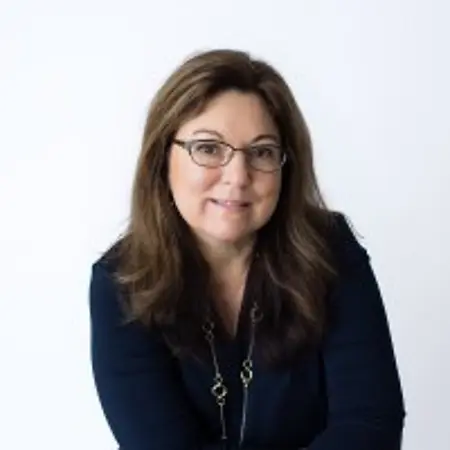
Her Story
About Kelly
Kelly Karki is the State Regulatory Manager at Purdue Global, where she oversees state authorization, reciprocity agreements, and regulatory compliance for the university’s online and distance education programs. In this role, she serves as a subject-matter expert on evolving higher education policy, closely monitoring federal rulemaking and guiding institutional leaders through complex regulatory requirements. Her work includes submitting program approvals to state agencies and ensuring the university remains compliant while expanding educational access for students nationwide.
Kelly brings an analytical and student-centered approach to regulatory strategy, emphasizing strong communication, thoughtful problem-solving, and pragmatic compromise. Having spent nearly 13 years at Purdue Global, she has developed broad expertise across multiple areas of compliance, working closely with university leadership and legal counsel to interpret regulations and draft key institutional documents. Her role touches nearly every aspect of regulatory operations for a national online university operating across multiple jurisdictions.
Her path to higher education compliance has been both unconventional and inspiring. After supporting herself from a young age and working in roles ranging from retail management to volunteering with a local fire department and completing EMT training, Kelly returned to school as an adult learner. She attended community college, earned academic honors, transferred to Loyola University Chicago, and completed a post-baccalaureate paralegal certificate. Now preparing to begin a Juris Doctor program, Kelly continues to expand her legal expertise while remaining passionate about helping institutions serve nontraditional and returning students—an experience that closely reflects her own educational journey.
Her Interview
Ten minutes with Kelly
01What do you attribute your success to?
I attribute my success to resilience and determination - those are absolutely key. I've always had this feeling that I'm capable of more, and I never let that go. My motto is you do what you can with what you have, and you just keep your eye on the prize. I went back to school when I was 30 because I knew I wanted more, and now at 50, I'm finally starting law school. I also believe that having a strong female network is so important - I have a good group of friends, and one is going back for her PhD after already having her JD, and another just finished her EdD in her early 50s. I'm a sponge when it comes to learning. I think it's so important that you never stop learning, because if you stop learning, you stagnate. Being adaptable and flexible to new things that come along is essential - you have to be willing to grow.
02What’s the best career advice you’ve ever received?
The best career advice I ever received came from a boss I had when I was 18. A customer came in with a complaint because one of our people had done a lousy job, and instead of just trying to fix it our way, my boss asked the customer, 'What do you think is fair? What would you want? What is your outcome? What do you think is fair?' I always think of that and try to look at things from the opposite side - what would the other person want? What do I think is fair? This advice has helped me tremendously in my position. When I'm drafting a document or trying to make something easier for our students, whether it's on our catalog or marketing site, I try to look at it through the lens of a student. I know what I want to convey, but I ask myself, does this make sense to a student? I attend the meetings, I have the regulation in my head, but if I had none of this knowledge and I look at it, does it just make sense to me? That advice from 30 years ago is still very fresh in my mind, and I use it in so many situations.
03What advice would you give to young women entering your industry?
One, be tenacious. Two, ask questions. There's so much, and so many little, tiny nuances in this field, and it's a very niche area, so you have to ask questions. And three, relationships are key. It's so important to grow your network. In online or distance education, I deal with people in all 50 states and the territories, and you need to be able to send an email where people know who you are. Attend your meetings, follow up with your people, and make good connections. Relationships are everything in this field.
04What are the biggest challenges or opportunities in your field right now?
The biggest challenges right now are that there's not enough people in this role - most of us are one-woman shows. Budgetary restraints in higher education is a big topic right now. Post-secondary education institutions are all cutting their budgets, so we have limited people. You're forced to be very proficient because you're the only one doing it. Another challenge I've noticed, and a colleague of mine mentioned this too, is that as a woman, you can have the same thought, same recommendations, same logic, but as soon as you have those credentials and letters after your name, people look and listen differently. I don't know if it's a sexist thing - I kinda tend to think so, but I could be wrong.
05What values are most important to you in your work and personal life?
Communication is definitely at the top of my list. The ability to see things from the other side is crucial - to negotiate or compromise, because sometimes you're not going to get everything your way. You have to give and take, and you have to be able to communicate effectively. I think you have to be open and willing to learn. Some people, especially now with things like AI, say 'I'm not gonna pay attention, this is how I've done it, I don't know what that is, this is what I'm doing.' But no, you need to learn this, you should want to learn this because it will make things easier for you. The ability to be adaptable and flexible to new things that come along is essential - you have to be, or you're gonna stagnate. If you don't grow, you stagnate in life.
Join Influential Women and start making an impact. Register now.