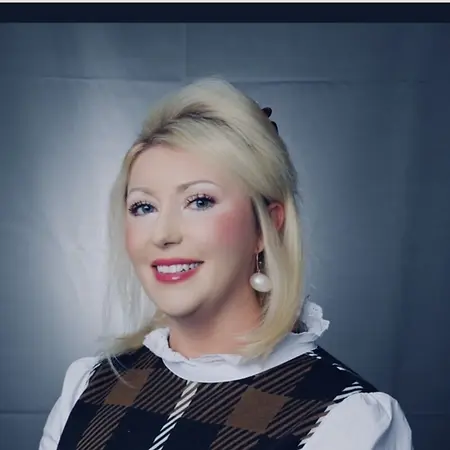
After trying everything, I realized that leadership is less about outcomes and more about impact. Sometimes the most important thing you can give someone is unwavering belief in their ability to grow.
Kelly Preston, MSN, RN, RNC-MNN, RNC-IAP, RNC-OB, GERO-BC, CNE · In Her Own Words
Her Story
About Kelly
Kelly Preston, MSN, RN, RNC-MNN, RNC-IAP, RNC-OB, GERO-BC, CNE, is an Advanced Educator at UPMC Washington with over 18 years of diverse nursing experience and more than four years in academic leadership. She specializes in maternal-newborn nursing and nursing education, while also contributing expertise in medical-surgical nursing, pediatrics, mental health, and geriatric care. In her current role, she collaborates with faculty in continuing education, curriculum coordination, and interprofessional collaboration across multiple campuses, supporting excellence in nursing education and clinical preparation. She is actively involved in institutional committees focused on executive leadership, simulation, curriculum development, and evidence-based practice, where she promotes innovation, quality improvement, and student success. Throughout her career, Kelly has built a strong foundation in both clinical practice and healthcare education. She began her nursing journey through a diploma program after high school and gained early experience in med-surg nursing, long-term care, and supervisory roles as a charge nurse and RN Assessment Coordinator working with Medicare and Medicaid systems. Her transition into education was shaped by her passion for mentorship and lifelong learning, leading her to earn a Master of Science in Nursing Education from Waynesburg University. She is currently pursuing a Doctor of Nursing Practice at Capella University, further strengthening her commitment to quality improvement, healthcare policy advocacy, and advancing nursing leadership. Beyond her professional responsibilities, Kelly is deeply engaged in maternal health advocacy and community service. She serves as a patient-family partner with MoMMAs Voices Maternal Mortality and Morbidity Advocates and collaborates with organizations such as Best Buddies and Global Links to support health initiatives. She is also a certified CPR instructor and active mentor, dedicated to preparing the next generation of nurses through evidence-based teaching and compassionate guidance. Outside of work, she enjoys spending time with her family, attending musicals, dining out, and traveling whenever possible.
Her Interview
Ten minutes with Kelly
01What do you attribute your success to?
My success is rooted in a genuine belief in people—their potential, their resilience, and their ability to create meaningful change. That belief has always driven me. I’ve worked hard throughout my career, and that work ethic has shaped who I am as a nursing professional. I don’t give up on others; I lead with a big heart, and I have been fortunate to have a family who supported and molded me into the person I am today. I also believe in focusing on what is ahead of me. As a nursing educator, I want the best for my students and my patients. At the core of nursing is caring for individuals and for humanity. A belief in humanity matters because it guides how we treat one another, how we collaborate, and how we navigate challenges—both personally and as a society. When we believe that people are fundamentally worthy and capable of growth, it becomes easier to listen, to stay curious, and to understand others’ experiences without judgment. In healthcare and education, trust is essential; these systems rely on the idea that people intend to act in good faith. When we trust that, we are more likely to stay engaged in improvement, advocacy, and innovation. Human relationships—and nursing relationships—thrive when we see others as worth knowing and worth supporting. My belief in humanity opens the door to belonging, collaboration, and shared purpose, and it is what continues to guide my work every day.
02What’s the best career advice you’ve ever received?
The best advice I ever received came from my mother. She always told me, ‘Whatever you choose as a career, make sure you truly love what you do.’ I took that advice to heart. I knew early on that caring for others was important to me, and I also felt drawn to teaching. I was not sure how those two passions would come together, but I stayed committed to both. Years later, I am grateful that my path led me to nursing education, where my two loves—nursing and teaching—have blended perfectly. I genuinely love what I do every day, and I feel I am making a difference. My mother’s advice has guided every major step in my journey, and it serves as a reminder to lead with passion, purpose, and heart.
03What advice would you give to young women entering your industry?
My advice would be to young women who want to enter the nursing industry (or nursing education), is to find mentors who lift you up. Surround yourself with nurses who encourage, teach, and inspire you. Strong mentors help you grow both professionally and personally. And one day, you’ll do the same for someone else. In addition, nursing requires advocacy—not just for patients, but for yourself. Speak up when something doesn’t feel right, ask questions, and trust your clinical judgment. Your perspective matters, even when you’re new. Believe in your voice and use it confidently.
04What are the biggest challenges or opportunities in your field right now?
The nursing profession is facing several major challenges right now, including workforce shortages, increasing violence and safety concerns, nurse faculty and clinical site shortages, financial and operational pressures across healthcare systems, rapid technological transformation, and shifting workforce expectations. These issues collectively impact patient safety, care delivery, and the overall sustainability of the profession. Across all these challenges, policy advocacy remains one of the most powerful tools for meaningful change. National organizations are actively working to strengthen the nursing workforce through legislative efforts to expand workforce visa opportunities and workplace safety protections. They are also pushing for increased funding and tax incentives to support nursing education, modernize curricula, and address faculty shortages. Additionally, advocacy efforts continue to focus on improving mental health support for nurses through the reauthorization of key behavioral health programs, and on ensuring safe, equitable, and effective staffing models in a rapidly evolving healthcare environment. I personally have been advocating for the Title VIII Nursing Workforce Development Programs, because supporting nursing education and strengthening the pipeline is essential for the future of our profession. I strongly believe that if we want to create real change, we must be engaged—speaking up, staying informed, and actively participating in public affairs. Advocacy ensures that nurses, not just policymakers or administrators, help shape the future of healthcare.
05What values are most important to you in your work and personal life?
The values that guide me as a nurse educator are integrity, compassion, professionalism, advocacy, and accountability. These values shape not only how I teach but also how I interact with students, colleagues, and the communities we serve. Integrity is the foundation of my teaching philosophy. I believe educators must model the ethical and professional behavior that students will carry into their nursing practice. Compassion guides how I mentor, support, and encourage students, especially when they are struggling or vulnerable. Learning to be a nurse is challenging, and compassion ensures that students feel seen and supported throughout that journey.
Professionalism is essential because students look to educators to understand what true professionalism looks like in our field. Maintaining high standards in both teaching and clinical practice shows students what is expected of them as future nurses. Advocacy is another core value—advocacy for students, for the profession, and for safe, patient‑centered care. This includes policy advocacy, supporting equitable clinical opportunities, and ensuring all learners have a fair chance to succeed. Finally, accountability is vital. I hold myself to the same high standards I expect from my students, which includes clear communication, fair evaluation, and consistent expectations.
These values don’t just guide my career—they guide me at home as well. While raising my daughter, I encourage her to be independent, honest, and confident. My husband and I share a strong work ethic, and we instill those values in her every day. We hope that by living these values, she will grow into a strong, courageous woman who knows the importance of integrity and compassion in everything she does.
Join Influential Women and start making an impact. Register now.