At 50, corporate America quietly shifts how it treats women executives. While men gain influence, women face subtle marginalization—not due to capability, but systemic bias. Gen X women must build optionality and independence to control their futures rather than wait for opportunities.
“
I didn't start Read Advisory Group because I had certainty. I started it because the pattern of firefighting was too clear to ignore.
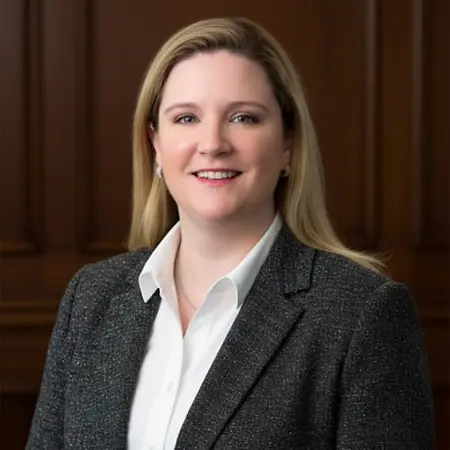
Kelly Jean Read · In Her Own Words
Her Story
About Kelly
Read Advisory Group
The Read Advisory Group helps founder-led and mid-market technology companies bring clarity and discipline back to operations when growth starts creating friction. Through Read Advisory Group, Kelly works with leadership teams to improve execution, strengthen accountability, and build operating rhythms that support sustainable scale. With executive leadership experience across M3, Global Payments, and AT&T, Kelly is known for simplifying complex problems and helping organizations address the issues everyone feels but few are willing to name.
Her Interview
Ten minutes with Kelly
01What do you attribute your success to?
I attribute my success to three things:
First, my mother, Dr. Tess Petix. She was a single mother raising two kids in the 80s and 90s, and she worked relentlessly to make sure we were raised with discipline, integrity, and a deep respect for education. She didn’t just tell us what mattered. She showed us.
Second, the school of hard knocks. I’ve had a great education in life, and it has not been cheap. I’ve made my share of mistakes, some of them significant, but I don’t carry regret. I pay attention, I learn, and I move forward. That’s a win in my book.
Third, my faith. The good Lord has given me both the courage to say what needs to be said and the judgment to know when silence is the better choice. Both have mattered more than I can quantify.
Between those three, I’ve learned that success isn’t clean, and it’s rarely comfortable. It’s built in the moments where you choose to be honest, take ownership, and keep going anyway.
02What’s the best career advice you’ve ever received?
The best advice I’ve ever received came from a former Massachusetts State Trooper who had been struck in the line of duty and permanently disabled as a result of his injuries. He was working as a guard for the governor at the time, while my mother led communications for the Governor’s Office, and he shared this with me over lunch.
He said, "No matter what, be a woman of your word. If you say you’re going to do it, do it."
It sounds simple, but it’s not. That level of consistency, especially when things get hard or inconvenient, is what builds trust. And in my experience, trust is what everything else in business and leadership is built on.
03What advice would you give to young women entering your industry?
Get very clear, very quickly, on the difference between being liked and being respected. They are not the same thing, and only one of them will build a career that lasts.
Do the work. Learn how the business actually operates, not just your role within it. The people who advance are the ones who understand how decisions get made, where value is created, and where things tend to break.
Be a woman of your word. Follow through. Do what you say you’re going to do, consistently. It sounds simple, but it will set you apart faster than almost anything else.
Don’t wait to be told you’re ready. You won’t be. Take the opportunity, figure it out, and own the outcome.
And finally, find your voice early. You don’t have to be the loudest person in the room, but you do have to be willing to say what needs to be said. That’s where your value is.
04What are the biggest challenges or opportunities in your field right now?
The biggest opportunity right now is also the biggest challenge, and that’s AI.
Organizations are moving faster than ever to adopt it, which is creating real potential for efficiency, better decision-making, and new ways of delivering value. But what I’m seeing is that the technology is outpacing the organization’s ability to actually operationalize it.
Teams are implementing tools without clarity on ownership, without alignment on how work should change, and without a clear definition of what success looks like. As a result, adoption is inconsistent, value is delayed, and in some cases, the organization creates more complexity instead of less.
That’s the gap.
The companies that will win are not the ones that adopt AI the fastest. They’re the ones that integrate it the most effectively, by aligning leadership, establishing accountability, and building the operating discipline required to turn capability into real business outcomes.
Right now, the opportunity is enormous. But it will only translate into results for organizations that are willing to do the less visible work of getting execution right.
05What values are most important to you in your work and personal life?
The values that matter most to me are faith, integrity, accountability, and clarity.
Faith is foundational. It shapes how I make decisions, how I treat people, and how I navigate both success and challenge. It’s what grounds me and gives me perspective when things are uncertain.
Integrity comes right alongside that. Being a woman of your word. If I say I’m going to do something, it gets done. That applies in business and at home, and it’s the foundation of trust in both.
Accountability is a close second. I believe in owning outcomes, not just effort. Things don’t always go as planned, but how you respond to that is what defines you. That mindset has shaped how I lead teams and how I show up in my personal life as well.
And then clarity. Most problems, in business and in life, come from a lack of it. When people understand what matters, what’s expected, and where they’re going, everything works better. When they don’t, things break down quickly.
At the end of the day, these values aren’t situational for me, they’re consistent. Whether I’m leading an organization, working next to my husband or raising my family, the standard doesn’t change.
Her Content Hub
Articles by Kelly
We Survived Hose Water and We’re Not Getting Benched Now
How Gen X women can build power and optionality before the corporate system decides to push them aside.

Somewhere around age 50, something subtle—but remarkably consistent—starts to happen in corporate America.
There’s no announcement. No policy. Nothing you can point to directly. Just a shift.
The men you’ve worked alongside for decades start to be described as “seasoned.” They’re tapped for board seats, advisory roles, and what’s often framed as their most influential chapter yet. And the women? They become… less central to the plan. Not because they’ve lost capability. Not because they’ve lost ambition. But because, somewhere along the way, the system quietly decides they’ve reached a natural stopping point.
Men, it seems, do not.
If you’re a woman in your 40s—or even look like you’re in your 40s—you don’t need anyone to explain this. You can feel it.
The conversations change. The opportunities become less defined. Feedback shifts from direct to… interpretive. It sounds something like:
“We’re thinking about fresh energy.”
“We’re evolving the structure.”
“We want to create space for new voices.”
All reasonable. All strategic.
And yet, in practice, these shifts tend to land differently depending on who you are.
What makes this moment particularly interesting is who it’s happening to: Gen X women.
The so-called “disgruntled generation”—though, to be fair, we prefer realistic.
We were raised on hose water and independence. We came home when the streetlights turned on—if anyone was keeping track. There was even a nightly PSA asking, “Do you know where your kids are?” which tells you everything you need to know about the level of parental supervision.
We figured things out because there was no alternative. We didn’t grow up expecting systems to work in our favor.
Which is why there’s something almost ironic about this moment.
After decades of building careers, delivering results, and, in many cases, quietly holding entire organizations together, many women find themselves being nudged—ever so subtly and very professionally—toward the margins.
We are encouraged to mentor, advised to be patient, and positioned as support rather than trajectory.
Often at the exact point when our experience is most valuable.
The real risk for executive women isn’t capability. It’s timing.
Because while we spend years thinking about retirement, almost no one talks about what happens at 50. This is when the traditional path can start narrowing—whether you’re ready for it or not.
And if your entire career has been built inside one system, one company, one trajectory, that narrowing can feel abrupt. Not because you don’t have options, but because you haven’t needed to use them yet.
Meanwhile, many of your male peers are entering what could generously be called their “portfolio era.”
They’re stacking roles, expanding influence, and turning decades of experience into flexibility and choice. They’re not stepping back. They’re being repositioned.
So the more interesting question isn’t about retirement. It’s this:
Where do you want to be at 50?
Not eventually. Not someday. At 50.
Do you want to still be waiting for the next opportunity to be offered to you, or do you want to be in a position where you have a say in what comes next?
Because those paths start to diverge earlier than most of us expect.
This isn’t about leaving corporate.
It’s about not being entirely dependent on it.
It’s about building something alongside your career that gives you leverage: a reputation that extends beyond your title, a network that isn’t tied to a single organization, and a way to create value that doesn’t require permission.
Call it advisory work, consulting, board participation, or something entirely your own. The label matters less than the outcome.
Ladies, think optionality.
If Gen X women have an advantage here, it’s this:
We were never particularly comfortable waiting to be chosen.
We adapt. We build. We figure it out—we always have.
The difference now is that instead of reacting when doors close, we have an earlier opportunity to decide whether those doors matter at all.
Join Influential Women and start making an impact. Register now.