Her Story
About Kelsey
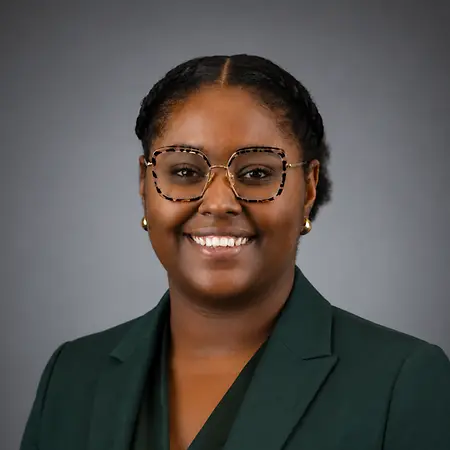
Kelsey Kimball is a Senior Deputy Title IX Coordinator and Investigator at the Florida Institute of Technology, with more than eight years of experience in higher education compliance, student advocacy, and campus safety.
Her career began at Florida State University, where she served as a Resident Assistant and first developed her passion for supporting students navigating complex issues related to discrimination, harassment, and institutional processes. After graduating, she joined Florida Tech in an insurance and compliance role before advancing into the Title IX office, where she has grown into a senior leadership position overseeing investigations, informal resolutions, and formal grievance procedures.
Over the past five years in the Title IX office, Kelsey has earned specialized certifications as an investigator, informal mediator, and hearing officer, allowing her to support the full scope of Title IX processes with fairness, consistency, and expertise. She also played a key role in establishing Florida Tech’s Equal Opportunity Office, expanding the institution’s capacity to address discrimination and harassment based on protected classes, including race, religion, national origin, disability, veteran status, and age.
Through this work, she has helped build institutional systems that promote accountability while prioritizing accessibility, transparency, and support for both students and employees.
In addition to her administrative and investigative work, Kelsey serves as an adjunct professor and frequent campus presenter, teaching first-year experience courses and leading educational sessions for student organizations, athletics, and campus groups. Her programming focuses on consent education, communication, boundaries, and the prevention of interpersonal violence. She is known for her approachable presence and intentionally welcoming office environment, designed to ensure students feel safe, supported, and heard.
Kelsey’s long-term goal is to expand her impact beyond her institution by developing a consulting practice that advances education, awareness, and best practices in Title IX and equity work.
Her Interview
Ten minutes with Kelsey
01What do you attribute your success to?
I attribute much of my success to my upbringing and the strong foundation my family created for me. I’ve always been very family-oriented, and I was fortunate to grow up surrounded by parents, grandparents, and relatives who were consistently supportive and present. We are a close-knit family, and my grandmother, in particular, had a significant influence on who I am today.
My family held high expectations, but in a way that encouraged growth rather than pressure. They emphasized doing what brought me fulfillment and taking pride in whatever path I chose. That mindset helped me develop a strong sense of identity grounded in my values, goals, and passions.
I’ve always been drawn to working with children, which led me to pursue a minor in Family and Child Sciences during college. I also volunteered with organizations supporting children with learning disabilities and early start programs, including programs in Tallahassee while studying in college which became some of my most meaningful experiences. Those opportunities helped shape how I view impact and the kind of work I wanted to pursue long-term.
My first year of college was one of the most challenging transitions for me, particularly being far from my family. There was a point where I truly questioned whether I would continue, but during that time, I leaned heavily on my mom and grandmother, speaking with them daily. Additionally, I built strong relationships with my Resident Assistant and another RA on a different floor, which developed into lasting friendships that continue to this day. Those experiences not only supported me during my transition to college, but also introduced me to the field of higher education. Serving as an RA myself further strengthened that path and provided an early connection to Title IX and student support work. My friends and my family helped me understand that growth often comes from stepping outside of comfort and committing to something even when it feels difficult.
While I’ve always had strong support, I also developed independence early on. I learned how to manage responsibilities and navigate challenges on my own, which contributed to my confidence and work ethic. Even now, that balance of independence and support continues to shape how I approach both my personal and professional life.
As I’ve gotten older, I’ve also come to understand the importance of building community beyond family. Since moving to the Space Coast, I’ve formed close friendships that have become an extension of my support system. Those relationships have been just as impactful in providing encouragement, perspective, and stability. Those friends have now become my family.
Ultimately, my success is the result of the people who have supported me along the way — family, friends, and mentors who have consistently reminded me of my purpose and encouraged me to keep going, even in difficult moments. Having that kind of foundation has made a lasting difference, and it’s something I deeply value.
02What’s the best career advice you’ve ever received?
The best career advice I’ve received is to know your value and stay grounded in your personal mission. When you are clear about the impact you want to make, that clarity becomes your compass—even when your current environment doesn’t fully reflect or support that vision. It taught me that not every space will be the right one for your growth, and that’s okay. If you don’t see opportunities to fully show up in your work or align with your purpose, trust that there will be environments where your contributions are not only welcomed but needed. When those opportunities arise, even if they feel uncertain or require a leap of faith, take them. Growth often comes from stepping into the unfamiliar and trusting that your values and expertise will carry you forward.
03What advice would you give to young women entering your industry?
I would say, honestly, to have faith and to make active plans for what you're wanting to do, but not to go too far into the future. One thing I've learned is the importance of living in the moment. We hear that a lot, and it can sound like a cliche, but I've realized those cliches exist for a reason because they carry truth. When I stay grounded in the present, I start to trust that things will happen the way they're supposed to. For me, that means knowing myself first before jumping into conclusions or decisions. It comes back to understanding my values and being clear about who I am. My mom always said it in a simple way: you can't expect someone to love you before you love yourself. That idea really became real for me as I went through self-discovery and started figuring out who I was. I reached a point where I wasn't necessarily focused on finding a relationship. I was more focused on becoming comfortable with myself. I honestly didn't expect to find my husband during that time. I had even reached a place where I thought I might be okay focusing on other paths in life, including adopting a child because I've always loved children and knew I wanted to be a mother. I wasn't really focused on the idea of a husband at that point. But then he came into my life, and it truly felt like a blessing I didn't know I needed. Since then, it has been one of the happiest parts of my life, and I can't imagine my life without him. What I've realized is that a lot of people, especially women in higher education and in professional spaces, reach a place where they are independent and driven, but sometimes that independence comes with overworking or pushing themselves too hard. We build strength, but not always in a way that allows us to rest or feel balanced. So for me, it's about being intentional with what I want in my life, both in work and relationships, and allowing myself space to pursue those things without draining myself. Setting those kinds of healthy boundaries, without guilt, is what helps me stay aligned with my purpose and what I want for my future.
04What are the biggest challenges or opportunities in your field right now?
The Title IX and civil rights landscape is currently defined by significant regulatory instability, shifting enforcement priorities, and evolving interpretations of sex-based discrimination, requiring practitioners to operate with a high degree of adaptability and legal awareness. Following the vacatur of the 2024 Title IX regulations and reversion to the 2020 framework, institutions must navigate ongoing ambiguity around key issues such as gender identity protections, grievance procedures, and jurisdictional scope. At the same time, reduced federal enforcement capacity and increasing backlogs have placed greater responsibility on institutions to develop consistent, equitable, and well-documented internal processes. Despite these challenges, the field presents meaningful opportunities to advance integrated civil rights models, strengthen support for pregnant and parenting individuals, and implement proactive, student-centered approaches that prioritize both access and compliance.
05What values are most important to you in your work and personal life?
Transparency is a core value I carry both professionally and personally. In my work in Title IX, transparency is essential, not just within our office, but across the entire campus community. I've seen how being open and clear has changed the dynamic of our office and how people receive information. It has helped remove the taboo surrounding Title IX and created a more approachable and informed environment. A big part of that is clarity. Title IX policies are often detailed and lengthy, sometimes 30 pages or more, but that level of detail is necessary. The steps must be clear, the process must be clear, and students need to know what to expect next. Many students come into these situations unsure of what to do or who to turn to, so transparency helps reduce confusion and fear. That same principle carries into personal life. I believe in being transparent with people so you are not left guessing what someone is thinking or feeling. In my close friendships, we often remind each other that we are not responsible for another person's emotions. We can act with good intent, but that does not guarantee a positive impact. This is something I also emphasize in Title IX education: intent versus impact. Your intention can be positive, but if the impact on the other person is negative, that impact still matters. In fact, the focus has to be on the impact, what the other person experienced and received, not just what was intended. Otherwise, we risk invalidating their feelings by saying that wasn't what I meant. This perspective has shaped both my professional and personal life. Whether it's in interpersonal conflict, counseling, or workplace communication, focusing on impact helps create more accountability and understanding. It shifts the conversation from defending intent to understanding experience. At the core of all of this is integrity and authenticity. When you are truthful and consistent in who you are and how you communicate, your actions and impact are more likely to align. Being authentic in leadership, policy, and relationships creates stronger, more meaningful connections. Ultimately, I've come to believe that when you live with transparency, integrity, and authenticity, things tend to unfold as they are meant to. My husband and I often remind ourselves that we trust the process, the idea that things will end up the way they are supposed to.
Join Influential Women and start making an impact. Register now.