Her Story
About Kenya
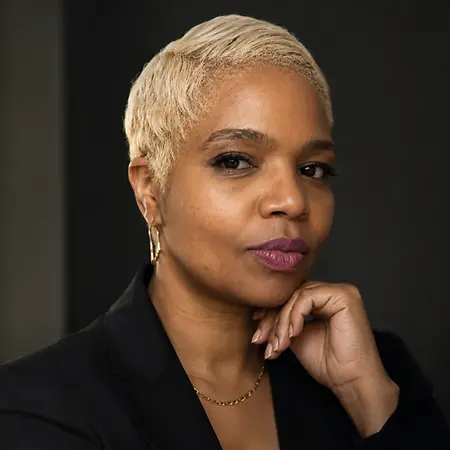
Kenya Hoover is the Founder and First Strategist of KL WorkLab, a women-centered, not women-exclusive applied firm where Kaizen + Lean meet leadership, operational clarity, culture, and execution. With more than 26 years of corporate and executive operating experience, Kenya works in the space most people do not see from the outside—the point where people, process, systems, culture, and decisions must move together for the business to move forward.
Her career spans global operations, business transformation, revenue assurance, Order-to-Cash, change leadership, and organizational growth. At NCR, Kenya led teams across six countries, scaled an operation from 20 to 70 people in 30 days, and helped recover more than $260 million in revenue while building the structure needed to support continued growth. At Sovos, she led Order-to-Cash operations through a major Salesforce CPQ and NetSuite transformation, helping improve billing performance, reduce late billing, and strengthen customer retention during significant organizational change.
Today, Kenya serves as Fractional COO to Infinite Technical Services, where she helps shape the operating infrastructure behind EV charging, micro data centers, private cloud, cybersecurity, wireless infrastructure, and AI-ready solutions. Her work reaches beyond advising. She helps leaders determine what needs to be built, establish the systems and operating rhythms required to support it, and move complex ideas from possibility into execution.
Kenya is a Certified Lean Six Sigma Green Belt and Kaizen + Lean Practitioner. Through KL WorkLab, she creates assessments, applied labs, leadership experiences, and practical operating frameworks that help founders, executives, and teams find the signal, remove what is blocking movement, and make the next clear decision.
She is also the creator of B.A.S.U.R (/be as you are/)., a leadership framework rooted in the belief that people should not have to shrink, perform, or abandon who they are to lead effectively. Across every part of her work, Kenya brings the same intention: Culture. Flow. Clarity.
Her Interview
Ten minutes with Kenya
01What do you attribute your success to?
I attribute my success to my ability to see what others often miss and to remain willing to step into work that is complex, unclear, or still being built. Throughout my career, I have learned to read the signal beneath the noise—whether that signal is hidden revenue, a broken process, an overwhelmed team, or a leader who knows something must change but cannot yet see the next move.
I have also never allowed a title, industry, or unfamiliar environment to determine what I am capable of contributing. I ask questions, learn quickly, listen closely to the people doing the work, and build from what is actually needed. That mindset has allowed me to move across industries, lead through significant change, and create structure where little or none existed.
Kaizen has shaped much of how I lead. I believe meaningful progress comes from paying attention, making intentional improvements, and continuing to move the work forward—even when everything cannot be solved at once. My success has not come from always having the answer. It has come from being willing to find the truth, make the next clear decision, and help people move with it.
Most importantly, I attribute my success to learning how to lead without abandoning who I am. I have built my career by being thoughtful, direct, curious, resilient, and unapologetically myself.
02What’s the best career advice you’ve ever received?
The best career advice I ever received did not come from a manager or mentor. It came from Dr. Maya Angelou at one of the lowest points in my career:
“Success is liking yourself, liking what you do, and liking how you do it.”
I had been let go from NCR in a decision that was not based on my performance. Even knowing that, I questioned every part of myself. I wondered whether I was good enough, whether I had misread my own capability, and whether everything I had built could disappear without warning. I experienced every wave of emotion—fear, anger, disappointment, embarrassment, and doubt.
Hearing those words forced me to look beyond the title, the company, and the decision someone else had made about me. I had to decide whether I still liked and trusted the woman underneath all of it.
About a week later, NCR rehired me. I went on to lead the global team that recovered more than $260 million in revenue. But the real transformation was not simply getting hired back or achieving that result. It was learning to remove the labels I had carried from my past—the shrinking, the doubt, the fear, and the belief that I had to become someone else to be successful.
That experience taught me that a career can validate your work, but it cannot define your worth. Success begins when you can stand fully in who you are, do work that matters to you, and lead in a way that does not require you to abandon yourself.
03What advice would you give to young women entering your industry?
Do not wait until the fear or hesitation disappears before you move. There may be moments when you enter rooms where few people look like you, where your experience is questioned, or where you feel pressure to prove that you belong. Move anyway—but move prepared.
Learn more than your assigned role. Understand how the business works, how decisions are made, how money flows, and where the real problems live. Ask questions, remain curious, and do not allow a title to determine the value you can bring. I have built much of my career by leading with the need, not the title.
You also do not have to shrink, over perform, or become a version of someone else to earn your place. Bring your full voice and allow yourself to learn as you go. A mistake is an experience, not an identity. Some of the greatest lessons in my career came from situations that did not go as planned.
Most importantly, make room for joy. Be serious about your purpose and your preparation, but do not become so focused on proving yourself that you forget to experience the work, the relationships, and the life you are building. You are allowed to be ambitious, capable, and fully yourself at the same time.
04What are the biggest challenges or opportunities in your field right now?
One of the biggest challenges is that businesses are moving faster than their people, processes, and operating systems are prepared to move. Leaders are under pressure to adopt AI, automate work, respond to shifting markets, and produce results quickly. But many organizations are introducing new technology before they have clearly defined the problem, simplified the process, prepared their people, or decided how success will be measured.
Technology is often not the real issue. The deeper challenge is alignment. Leadership may have one vision, employees may experience something entirely different, and the systems supporting the work may not reflect either one. When those pieces are disconnected, even a strong strategy can struggle to become consistent execution.
That challenge is also the opportunity. Organizations have a chance to stop treating transformation as something that happens to people and begin building it with the people closest to the work. That means asking better questions, making the invisible work visible, simplifying before automating, and creating operating rhythms that allow leaders and teams to learn and adjust as they move.
This is why I believe Kaizen + Lean are especially relevant in the post-digital era. The goal is not simply to do more, move faster, or add another tool. It is to find the signal, reduce unnecessary friction, protect human judgment, and make intentional improvements that the organization can actually sustain. The leaders who can connect people, process, technology, culture, and execution will have an extraordinary opportunity to shape what work becomes next.
05What values are most important to you in your work and personal life?
Authenticity is at the center of how I live and lead. I believe people should be able to bring the truth of who they are into their work without shrinking, performing, or becoming someone else to be accepted. That does not mean resisting growth. It means growing without abandoning yourself.
Integrity and accountability are equally important to me. I believe in being honest about what is working, what is not, and what I am responsible for changing. In business, I lead with the need, not the title. I value doing what the work requires, treating people with respect, and making sure decisions become meaningful action rather than remaining good intentions.
I also value clarity, curiosity, and continuous improvement. Kaizen has taught me that progress does not always require one dramatic move. It often begins with paying attention, asking better questions, learning from what is in front of us, and making the next intentional improvement.
In my personal life, I value family, presence, grace, and joy. My experiences as a mother, daughter, caregiver, leader, and woman have taught me that success means very little if I am not present for the people I care about or if I lose myself while pursuing it. I want the way I live to reflect the same values as the way I lead: honest, thoughtful, human, and fully my own.
Join Influential Women and start making an impact. Register now.