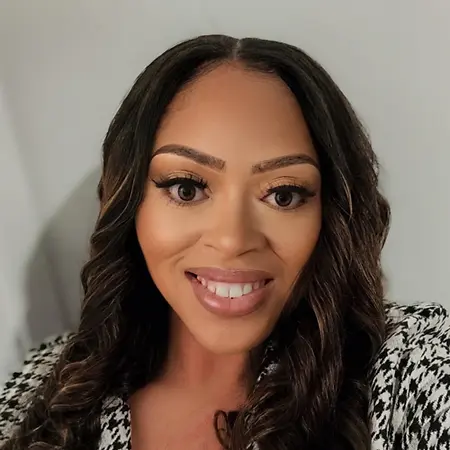
Her Story
About Keonna
I am an education leader, organizational improvement strategist, former educational consultant, and lifelong learner who believes strong organizations are built when we pay equal attention to people, purpose, and systems. My faith is foundational to how I approach both leadership and life, grounding me in service, compassion, perseverance, and the belief that the opportunities I have been given are meant to be used to help others thrive.
My career has taken me from the eighth-grade English classroom to educational consulting and school administration, with experience spanning instructional leadership, student services, family engagement, school culture, professional learning, organizational systems, MTSS, attendance, behavior, and continuous improvement. Today, as Vice Principal at Providence Cristo Rey High School in Indianapolis, I help lead schoolwide systems designed to strengthen student outcomes while creating greater clarity, consistency, and support for the educators and families who serve them.
One of my strengths as a leader is seeing both the immediate problem and the system surrounding it. I enjoy taking complex challenges, asking the right questions, using data and stakeholder perspectives to understand what is happening, and building practical solutions that people can actually implement. My consulting experience further developed my ability to work across teams, identify opportunities for improvement, facilitate professional learning, and translate strategy into sustainable practice.
My path into leadership is also deeply personal. I grew up surrounded by educators, including my grandmother, uncle, and mother, who taught me early that education can change the trajectory of a life. Later, the devastating loss of one of my students to gun violence challenged me to consider how I could influence change beyond the walls of my own classroom. That experience helped shape my decision to pursue broader leadership and systems-level work and strengthened my understanding of leadership as both a responsibility and a form of service.
I am currently pursuing doctoral study in Educational Leadership, with research focused on leadership sustainability, burnout, support systems, and the retention of early-career school leaders. I am particularly interested in how organizations can create conditions that allow talented people not only to perform well, but to grow, lead, and remain in the work.
I am also the creator of True North Academy, a developing high school concept centered on helping young people discover their purpose and design their futures. True North reflects my broader interest in school design, leadership, innovation, and creating educational experiences that prepare young people not simply to graduate, but to understand who they are, where they are going, and how they can contribute to the world around them.
At my core, I am a people person. I believe in high expectations, accountability, compassion, curiosity, laughter, and giving people room to grow. I take the work seriously, but I do not believe leadership has to be devoid of joy or personality. Some of the best progress happens when people feel challenged, supported, respected, and comfortable enough to be human.
As I continue growing professionally, I am especially interested in opportunities to contribute to education leadership, organizational improvement, strategy, consulting, leadership development, professional learning, and systems-level change. Ultimately, I hope to continue developing people, strengthening organizations, and building environments that are better because I had the opportunity to serve within them.
Her Interview
Ten minutes with Keonna
01What do you attribute your success to?
I attribute much of my success to my faith, persistence, curiosity, relationships, and a willingness to keep growing even when the next step has not always been obvious.
My faith has been the foundation beneath every season of my journey. It has given me perspective when plans changed, strength when circumstances were difficult, and the confidence to continue pursuing opportunities even when I could not yet see how everything would come together. I believe deeply that God has ordered my steps, including the ones I did not initially understand, and that many of the experiences that challenged me most ultimately prepared me for greater responsibility and purpose.
I was also raised around educators, including my grandmother, uncle, and mother, who demonstrated the transformative power of education and the importance of serving others. Their influence taught me perseverance, humility, compassion, and the responsibility that comes with being given an opportunity to lead.
My career has continually required me to grow. I have moved from teaching to consulting to school leadership, and each transition required me to become comfortable being a beginner again, asking questions, accepting feedback, taking calculated risks, and developing new skills.
One of the most significant moments in my professional journey was losing a student to gun violence. That experience changed how I viewed my responsibility as an educator and challenged me to consider how I could create impact beyond one classroom. In many ways, it helped me recognize a broader calling toward leadership and systems-level change.
I do not define success simply by a title, degree, or accomplishment. For me, success is walking confidently in my purpose, continuing to grow, using what I have been given to serve others, and creating opportunities, systems, and environments that allow other people to grow too.
02What’s the best career advice you’ve ever received?
The best career advice I have ever received came from my mother: “You don't get unless you ask.”
It is simple, but I have carried it with me throughout my career. Do not eliminate yourself before someone else ever has the opportunity to consider you. Ask the question. Apply for the role. Request the meeting. Introduce yourself. Advocate for what you need. Tell people what you are interested in learning, pursuing, or contributing.
That advice taught me to be willing to create opportunities instead of waiting for them to find me. It also works hand in hand with another lesson my mother gave me often: “This too shall pass.” Having the courage to ask does not mean every answer will be yes, every opportunity will work out, or every season will be easy. There will be exciting moments, disappointments, setbacks, and unexpected turns.
Together, those two lessons have shaped the way I approach my career: be bold enough to pursue what you want, grounded enough to accept what you cannot control, and resilient enough to keep moving when the path changes. Sometimes the answer is yes, sometimes it is not yet, and sometimes the closed door redirects you toward an opportunity you never expected.
03What advice would you give to young women entering your industry?
Give yourself permission to be ambitious.
Apply before you feel completely ready. Ask questions even when you worry they might sound obvious. Seek mentors, build genuine relationships, volunteer for opportunities that stretch you, and become comfortable entering rooms where you may initially feel like you do not belong.
Most importantly, do not shrink your aspirations to make other people more comfortable. There will be people who recognize your potential and people who only see you through the lens of what they believe you should be. Neither group gets to determine your ceiling.
At the same time, remain teachable. Confidence and humility can coexist. You can believe deeply in your ability while still recognizing that there will always be something new to learn, someone you can learn from, and another version of yourself still developing. Take the opportunity. Learn from the mistake. Celebrate the win. Laugh along the way. Keep becoming.
04What are the biggest challenges or opportunities in your field right now?
One of the most significant challenges facing education is sustainability. We cannot continue asking educators and school leaders to solve increasingly complex academic, social, operational, and community challenges without also examining the systems, resources, professional development, and organizational conditions surrounding their work.
Leadership and educator retention, student engagement, chronic absenteeism, academic recovery, organizational capacity, and equitable access to opportunity are not isolated issues. They are deeply interconnected, and meaningful improvement requires us to address them that way.
At the same time, I believe these challenges create tremendous opportunity.
Education organizations now have access to stronger data systems, emerging technologies, artificial intelligence, more intentional approaches to professional learning, and growing opportunities for collaboration across schools, communities, higher education, nonprofits, and industry. Used thoughtfully, these resources can help us move from continually reacting to problems toward designing stronger, more responsive systems that anticipate needs and support long-term success.
I am particularly interested in how organizations develop, support, and retain strong leaders. If we want sustainable improvement for students, we must also create sustainable environments for the adults responsible for leading that improvement.
The future of education will require leaders who can connect strategy, people, technology, data, instruction, and organizational culture rather than treating each as a separate initiative. The opportunity is not simply to introduce more programs or tools, but to build coherent systems in which people have the clarity, capacity, and support to use them well.
05What values are most important to you in your work and personal life?
My values are deeply rooted in faith and in the belief that leadership is ultimately an act of stewardship. I do not view the opportunities, influence, abilities, or relationships I have been given as things meant only for my own advancement. I believe they carry a responsibility to serve well, lead with integrity, create opportunities for others, and leave people and places better than I found them.
That belief shapes the way I approach relationships and accountability. I care deeply about people, and I believe meaningful change begins with trust, but caring for people does not mean lowering expectations or avoiding difficult conversations. In many cases, genuine support looks like offering honest feedback, creating clear and thoughtful systems, removing barriers, and helping people recognize strengths and possibilities they may not yet see in themselves. To me, compassion and accountability are not opposites; some of the strongest leadership exists where the two meet.
I also try to remain committed to growth, both in myself and in the people around me. I never want experience, a title, or an accomplishment to convince me that I have arrived. There will always be another question to ask, another perspective to consider, more wisdom to seek, and another opportunity to become a better version of myself. I want to remain teachable enough to evolve and secure enough to help others do the same.
My faith has also taught me a great deal about perseverance. I have learned that difficult seasons are not always evidence that something has gone wrong. Sometimes the experiences we would never choose are the very ones that refine us, redirect us, deepen our compassion, and prepare us for responsibilities we could not yet see. That perspective allows me to keep moving forward while trusting that I do not have to understand every part of the path in order for it to have purpose.
And through all of it, I want there to be joy. I take my responsibilities seriously, but I never want accomplishment to come at the expense of actually experiencing the life I have been blessed to live. There should be room for laughter, celebration, family, gratitude, personality, rest, and appreciating the people who make the journey meaningful.
Ultimately, I hope the way I live and lead reflects a life grounded in faith, expressed through service, strengthened by perseverance, and centered on people. I want my journey to demonstrate that ambition and humility can coexist, that excellence does not require sacrificing empathy, and that meaningful leadership can be both purposeful and deeply human. Most of all, I hope to remain open to where God leads me, knowing that sometimes the life and impact meant for us extend far beyond what we could have imagined or planned for ourselves.
Join Influential Women and start making an impact. Register now.