Her Story
About Kiaira
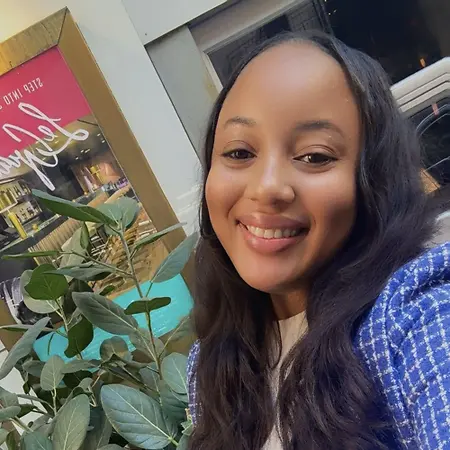
Kiaira Smith-Whittaker, MPH, is a dedicated maternal and child health advocate, public health consultant, and project management professional based in Washington, D.C. With nearly a decade of experience across public health, nonprofit organizations, and federal partnerships, she has built a career centered on advancing health equity and improving outcomes for underserved communities. Kiaira currently serves as a Public Health Project Manager at the American Public Health Association, where she leads complex, CDC-funded initiatives focused on adverse childhood experiences, injury and violence prevention, and community health systems. Known for her strategic approach and innovative thinking, she brings expertise in program development, stakeholder engagement, and cross-sector collaboration. Prior to her current role, Kiaira held leadership positions that further strengthened her impact in maternal and child health. As a Program Manager with the National Healthy Start Association and Prenatal Health Education Manager at The Leaguers, Inc., she oversaw large-scale programs aimed at reducing maternal morbidity and mortality while supporting families through education, advocacy, and community-based services. She has managed multidisciplinary teams, coordinated national initiatives, and developed resources, trainings, and partnerships that connect healthcare systems with the communities they serve. Her work reflects a deep commitment to addressing social determinants of health and creating sustainable, community-driven solutions. Kiaira is also the founder of P.S. Community Transforming Consulting LLC, a firm dedicated to helping organizations strengthen their impact through grant management, program strategy, and community engagement. Her passion for this work is deeply personal, inspired by the loss of her mother to maternal mortality—a driving force behind her mission to ensure no family is left without support or access to quality care. She holds a Master of Public Health in Maternal and Child Health from Mercer University and a Bachelor of Science in Health Science from the University of Hartford. Through her leadership, advocacy, and lived experience, Kiaira continues to champion change and empower communities to thrive.
Her Interview
Ten minutes with Kiaira
01What do you attribute your success to?
I attribute much of my success to my father, who raised me and my two brothers as a single parent during a time when that was far less common. After my mother passed away, he led our family with extraordinary courage, resilience, and vision. He not only advocated for my mother when her concerns were not taken seriously, but also took bold action to seek accountability during a time when that was especially uncommon. He strategically moved us from New York to a more suburban area in Maplewood, New Jersey, which opened up opportunities for education. He pushed us in school, kept us organized, and put us in the best Catholic schools that are top-ranked in New Jersey. One of my brothers went to St. Benedict's and ended up graduating college from Dartmouth, I have a brother who went to military academy, and I went to Marylawn of the Oranges. With the support of my grandmother and a strong village around us, he built the foundation that shaped me into the leader I am today. I also believe much of my journey has been defined by my willingness to bet on myself. Whether it was moving to Atlanta within two weeks for Grad School, knowing no one or stepping into new opportunities without fear, I learned early that growth requires courage. That mindset of taking risks, trusting myself, and moving forward with purpose has shaped both my leadership and my life.
02What’s the best career advice you’ve ever received?
The best career advice I received came from my father, who encouraged me to move with intention and pursue my accomplishments early. He reminded me that, as a woman, it was important to build a strong foundation in my career as soon as possible, especially before other life responsibilities began to take shape. That advice inspired me to pursue my master’s degree at a young age and invest deeply in my professional growth. It taught me the importance of establishing a strong foundation early in my career, and that mindset has continued to guide me ever since.
03What advice would you give to young women entering your industry?
The advice I would give to women entering public health is to be bold, be prepared, and never underestimate the value of your voice. Public health is deeply meaningful work, but it also requires strategy, resilience, and the ability to lead in spaces where your ideas may be challenged. I would encourage women to invest in their education, build strong relationships, and develop expertise that makes their presence undeniable.
I would also say not to wait for permission to lead. Step into opportunities early, trust your instincts, and be willing to take chances on yourself, even before you feel fully ready. Some of the most defining moments in my career came from saying yes to opportunities that stretched me. Lastly, stay grounded in your purpose. When your work is connected to something bigger than yourself, it gives you the strength to keep going and the clarity to lead with impact.
04What are the biggest challenges or opportunities in your field right now?
One of the biggest challenges I have faced, and one that continues to show up in this field, has been being underestimated because of my age. When I earned my master’s degree at 24, I quickly realized that many people did not take me seriously, despite my education, skills, and commitment to creating meaningful change. There were moments when people would make comments that centered more on how young I looked than on the value I brought to the table, which often felt dismissive of my qualifications and leadership.
As a young professional stepping into leadership spaces, I often had to work twice as hard to prove that I belonged there. That experience taught me resilience, confidence, and the importance of letting my work speak for itself. It also strengthened my ability to lead with clarity and purpose, even when others underestimated me.
More broadly, I believe one of the challenges in public health today is that systems do not always fully recognize the value of community champions. Through initiatives like Champion of Change an APHA & CDC collobration, my goal is to help elevate those voices and demonstrate that community-driven work is not only valid, but essential. Real progress happens when we bridge the gap between government systems and the people doing the work on the ground. That connection is critical to creating lasting, effective change.
05What values are most important to you in your work and personal life?
The values most important to me are service, vision, and accountability. I define leadership as exactly those three things: being willing to step forward and create direction, making space for others to grow and thrive, and having the ability to move people forward with ideas to help shape communities and create positive change. I'm all about staying organized because I cannot start my day without a to-do list. If there's not a to-do list, I don't know how that day's going to go. I value making things personable because sometimes in business meetings, people forget that we're all human. I believe in connecting families to resources, building long-lasting friendships, and creating meaningful and impactful communication. I'm a champion of trying new things and taking chances on myself. Most importantly, I value ensuring that communities don't feel left out and that their voices are heard. That's the entire purpose of my consulting business is making sure people have access and support. I believe that not one person can do everything by themselves, but when you have a team or a community, more effective change gets made. Public health is called public health because you get to help multiple people at once and create change within communities and systems together.
The values that guide me most in both my work and personal life are service, vision, accountability, and compassion. To me, leadership is not simply about holding a title. It is about having the courage to create direction, the discipline to follow through, and the humility to make space for others to grow and thrive. I believe the strongest leaders are those who can move people and ideas forward in ways that create meaningful change for entire communities.
I value excellence, organization, and intentionality because impactful work does not happen by chance. It requires clarity, preparation, and a deep sense of responsibility. At the same time, I believe in bringing humanity into every space I enter. In business and leadership, people can become so focused on deliverables that they forget the importance of connection, empathy, and making others feel seen. For me, meaningful leadership must always be both effective and deeply personal.
My work has always been rooted in service, whether through maternal and child health, injury and violence prevention, health equity, national program management, or community-centered consulting. Across every role, I have remained committed to connecting people to resources, building strong partnerships, and creating communication that leads to action. I also value courage, especially the courage to take chances on myself, step into new opportunities, and trust that growth often begins outside of comfort.
Above all, I value making sure communities are not overlooked, unheard, or left behind. That belief is the foundation of my consulting business and the driving force behind my career in public health. I know that no one person can create change alone, but when communities, partners, and systems work together with shared purpose, transformational change becomes possible. That is the legacy I hope to build through both my leadership and my life.
Join Influential Women and start making an impact. Register now.