A reflection on the critical relationship between nonprofit leader wellbeing and organizational health, exploring how funders can reshape systems to prioritize sustainability over burnout.
“
After a health crisis forced me to step down from leading a nonprofit, I learned that unhealthy leaders cannot lead healthy teams. It starts from the top.
Kim Berry Jones · In Her Own Words
Her Story
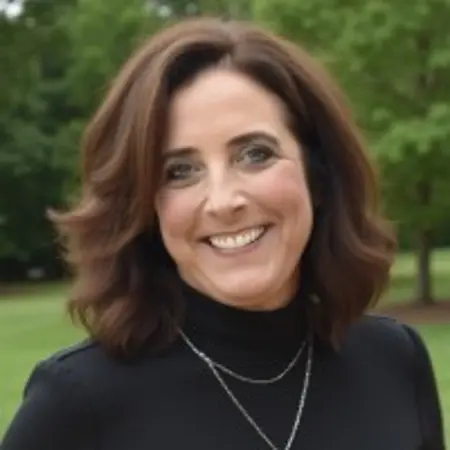
About Kim
Kim Berry Jones is the President of The Kinship Fund, a trust-based philanthropy organization dedicated to transforming traditional giving models through relationship-centered, equity-driven partnerships between funders and nonprofit organizations. She is a best-selling author of Empathy Impact and a recognized leader in philanthropy, nonprofit strategy, and systems change. In her work, Kim focuses on reshaping philanthropic power dynamics by advancing approaches rooted in trust, shared accountability, and the belief that communities closest to the work are best positioned to lead sustainable, meaningful impact.
Kim’s professional journey spans four distinct and deeply interconnected careers that together form the foundation of her current leadership. She spent 20 years building and operating a marketing firm, followed by more than a decade leading and scaling a nonprofit organization focused on anti-trafficking and social impact. These experiences were further enriched by her leadership roles in higher education and nonprofit advocacy, including executive work within Point Loma Nazarene University’s Center for Justice & Reconciliation. She also contributes to civic and social impact governance through board service with San Diego County Crime Stoppers and California Against Slavery. Collectively, these roles reflect a career defined not by a single trajectory, but by a progression of skill-building experiences across storytelling, organizational leadership, and systems-level change.
A writer at heart, Kim has consistently used storytelling as a central tool across every stage of her career, recognizing it as essential to influence, connection, and impact. Her marketing background strengthened her ability to shape narratives that engage audiences and mobilize resources, while her nonprofit leadership deepened her understanding of how stories can drive funding, policy attention, and community action. She is a contributing author to the multi-author book Empathy Impact, where she reflects on the power of kindness in action and shares the origin story of a friendship that helped inspire the creation of The Kinship Fund. Kim identifies as a “startup builder,” viewing her current chapter as the culmination of her diverse experiences—each one contributing essential skills that now enable her to lead with clarity, creativity, and a systems-thinking approach to philanthropy and social change.
Her Interview
Ten minutes with Kim
01What do you attribute your success to?
I attribute my success 100% to relationships. I really believe everything comes down to trust and relationships. I'm a very open person with integrity who does what I say I'll do, so I've had a lot of success building trusted relationships in every job I've been in. In all the different career areas I've been in, I've recognized that it all comes down to having solid, trusting relationships. That's how I think we succeed, but it's also how we build something that's meaningful and effective - by being trustworthy, doing what we say we'll do, and respecting other people and what they bring to the table.
02What’s the best career advice you’ve ever received?
In my very first job, I was 22 years old and was promoted to a management position just over a year after I started, which was insane now that I think about it. The Human Resources Director at the time looked at me and said, 'You'll never apply for another job again.' I didn't know he meant - it made no sense to me at the time - but that's been true. I've never actually had to apply for a job. I've created my own pathway. That wasn't so much advice as permission. It stayed with me because it reminded me along the way that there are different ways to move forward and up in a career besides applying for jobs and looking for other ones. There are other ways to manifest that, which I've really experienced.
03What advice would you give to young women entering your industry?
I think always have someone behind you and someone ahead of you. Always have a younger woman behind you that you can mentor and support, and then have someone you can look up to as an example and someone that can mentor you. This has been probably one of the biggest pieces of advice I give myself and to every other woman I work with. It's an important way to give back, but also to receive.
04What are the biggest challenges or opportunities in your field right now?
I think the biggest challenge in philanthropy is that we're still operating under very traditional models that have been in place for probably 100 years, and they don't work in today's environment. It's the very traditional power-over structure of philanthropy, where you have to prove your worth as a nonprofit to the folks that are holding the money. In my opinion, it's just clearly not working. It's not helping nonprofits be sustainable. I think things need to shift, and there are folks working on that, including me in this space, but there's a long way to go.
05What values are most important to you in your work and personal life?
I think that we're people before we are employees, and it's always people over programs. I always approached that in the nonprofit with my team - I always told them, you know, you're people before you are the program that you lead. I think that's about balance. I personally had a health crisis coming out of the nonprofit space because I didn't have good balance, and so now I advocate for the well-being of nonprofit leaders. I do a lot of talking and work around that, and we do very specific work at the foundation to support our partners' well-being. Learning to have a good balance is so important. I actually had a young professional just reach out to me and say she had heard me tell my story, and it had really changed her idea about success and how to move up in the world, because she was doing it at a personal cost to her well-being. When I talked about that, she said it impacted her trajectory, which was wonderful to hear. If I can help someone avoid the pit I fell into by doing really important, valuable work, but at my own expense, then I'll feel really happy about that.
Her Content Hub
Articles by Kim
When leaders break, organizations follow
Why supporting nonprofit leader wellbeing is essential to creating lasting community impact.
The pressures on nonprofit organizations have never been greater.
Shrinking funding.
Rising demand for services.
Staff pushed past the point of exhaustion.
And at the center of it all are leaders expected to hold everything together while quietly coming apart.
I know this because I lived it.
Leading a nonprofit taught me a hard truth: an unhealthy leader cannot build a healthy organization—no matter how much they care, how hard they work, or how worthy the mission.
That lesson shapes everything we do at the Kinship Fund.
Wellbeing is not a program we offer our nonprofit partners—it is embedded in how we operate. We provide multi-year, unrestricted funding because leaders should not have to spend their limited energy jumping through annual grant hoops or squeezing their work into narrow requirements. We listen—deeply and consistently—because those carrying the weight hold the wisdom. We are not close enough to the daily work of our partners to have all the answers, and we do not pretend to be.
One of our most important initiatives is what we call the Third Space Model—gatherings we are building alongside our partners where nonprofit leaders can breathe, connect, and be seen. Not to strategize, report, or perform competence, but simply to rest and exist in community with people who understand the weight of this work.
We are already seeing what happens when leaders are given that permission: trust forms between organizations, new collaborations emerge, and leaders return to their teams with something restored.
But supporting individual wellbeing is only part of the work.
The harder conversation is about the system that makes this necessary in the first place—a system that expects nonprofit organizations to do more with less, that attaches status to being overworked and underpaid, and that too often excludes the very leaders doing the most critical community work from the tables where decisions are made.
Funders have more power in this system than we sometimes acknowledge.
We can choose to fund differently.
We can choose to listen more and require less.
We can choose to treat the wellbeing of the people we support not as a luxury, but as a condition for the kind of lasting impact we all say we want.
Thriving organizations need thriving leaders.
That is not a soft idea.
It is the whole point.
Join Influential Women and start making an impact. Register now.