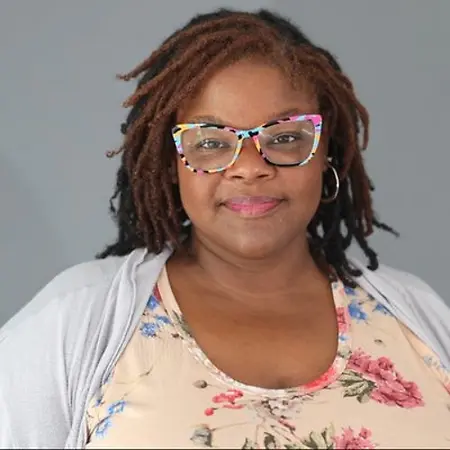
Influential Woman · Education
Dr. Kim Pinckney
Instructional Design, Performance Improvement, and Education Advocacy Expert, KP Solutions & Consulting LLC
Williamstown, NJ 08094
Her Story
About Dr. Kim
Dr. Kim Pinckney is an instructional design and technology expert, performance improvement consultant, and inclusive learning advocate based in the Greater Philadelphia area. She specializes in designing equitable, systems-based educational solutions that support neurodivergent learners, educators, and organizations across K–12, higher education, government, and industry settings. With a Ph.D. in Instructional Design & Technology from Old Dominion University, she brings a strong foundation in learning theory, needs assessment, evaluation, and human performance improvement to her work. Her career reflects a commitment to transforming educational systems through inclusive, research-driven, and practical design strategies.
Throughout her professional journey, Dr. Pinckney has held leadership and consulting roles across education and government, including serving as an Adjunct Professor at Wayne State University and as Associate Director with the New Jersey Education Association (NJEA). She also leads her own consulting practice, KP Solutions & Consulting LLC, where she supports program development, instructional strategy, and organizational change initiatives. Her work extends into workforce development and advocacy spaces, where she has contributed to large-scale initiatives focused on inclusive curriculum, professional learning, and neurodiversity-affirming practices. She is also a recipient of the International Society for Performance Improvement’s Distinguished Dissertation Award, recognizing her scholarly contributions to the field.
Dr. Pinckney’s professional philosophy centers on inclusion, belonging, and systems-level transformation. A former middle school Spanish teacher, she is deeply committed to ensuring that educational environments are designed to accommodate diverse learners rather than requiring learners to conform to rigid systems. Her advocacy is shaped both by professional expertise and personal experience as a parent of a neurodivergent child, which strengthened her dedication to neurodiversity-affirming and culturally responsive education. Across all her work, she emphasizes that effective learning environments must be humane, accessible, and designed so that every individual has the opportunity to thrive.
Her Interview
Ten minutes with Dr. Kim
01What do you attribute your success to?
I attribute my success to a lifelong sense of feeling different, which ultimately pushed me to carve my own path. Growing up in environments where I often felt like I didn’t fit in—both within my family’s sports-centered dynamic while I was drawn to the arts... and as one of the only Black students in my community—forced me early on to develop self-awareness and independence. Over time, I learned to stop viewing those differences as limitations and instead recognize them as strengths, especially my voice and perspective. I learned that while my earlier attempts at assimilation may have benefitted me, it also cost me a great deal. It blocked my own unique gifts, perspectives, and authenticity. Through intentional self-work, I began to align with my gifts and embrace what once set me apart, and that shift from trying to fit in to fully owning who I am is what has driven my success.
02What advice would you give to young women entering your industry?
My advice to young women entering this industry is to prioritize alignment over everything else. Focus on the intersection of your skills, your passions, and what is both fulfilling and financially sustainable for you. There’s no single moment where everything is figured out after graduation—this is an ongoing process of checking in with yourself and making sure your choices still match who you are and what you value. When you lead with alignment, you may still face challenges, but you’ll maintain clarity, purpose, and direction.
03What are the biggest challenges or opportunities in your field right now?
The biggest opportunities in my field right now center on building more inclusive systems and infrastructure that truly support diverse learners and educators. There is a growing need—and opportunity—to intentionally center autistic and neurodivergent voices, not only in conversations about support but in leadership and decision-making roles. Expanding access and creating meaningful pathways for neurodivergent professionals is essential to ensuring these systems are more equitable, representative, and effective.
04What values are most important to you in your work and personal life?
The values most important to me in both my work and personal life are inclusion, belonging, alignment with purpose, lifelong learning, and work–life balance. I prioritize creating spaces where people feel seen, supported, and valued, while also ensuring that my work stays connected to a deeper sense of purpose. I believe in continuously learning and growing, and I also place a strong emphasis on maintaining balance so that I can show up fully in both my personal and professional life.
Join Influential Women and start making an impact. Register now.