Her Story
About Kimberly
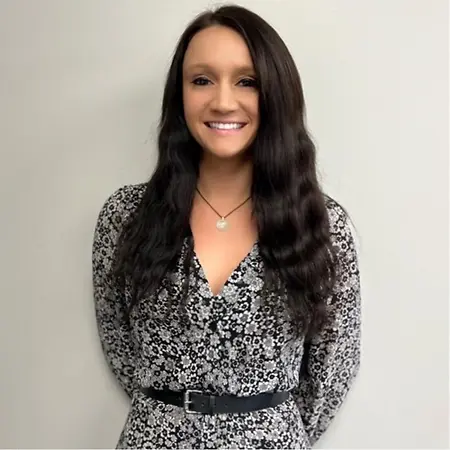
Kimberly Braasch is an experienced F&B leader with 16 years in hospitality and 10+ years in leadership roles. She leads food and beverage operations at Glacier Park Lodge, overseeing multi-outlet seasonal services.
One of her true passions is creating and executing comprehensive onboarding and training programs for her teams. “I’m a firm believer that in order to hold a team accountable it’s our jobs as leaders to provide them with the tools necessary to be successful, to the very best of our ability, while ensuring clear expectations are clearly set.”
Known for operational excellence and team development, she has implemented revenue-driving programs that also created a positive culture amongst her teams. “My goal every season is that every one of my team members leaves feeling more confident with who they are as a professional, knowledge is power and it’s our jobs to teach them.”
Kim has also excelled within the financial aspects of her operations and has year over year success maintaining strong cost controls while exceeding her departments goals. She understands the importance of consistency when it comes to managing processes for herself & within her teams. She implements new and necessary standards along with SOPs in order to continue improving all aspects of their operations. “I’ve learned when it comes to financial success, labor management is crucial and if not done properly it not only can have a negative impact on our bottom line, but also on your team’s morale”.
A Robert Morris University graduate, she received her Bachelors degree in Business Management & Administration as well as a Softball scholarship. Kimberly has progressed through almost every food & beverage related position over the last 16 years she’s been working in the industry, bringing deep expertise in service execution.
She maintains a 70-75% staff retention rate stating “What I’ve learned over the years as a leader is your number one priority is the team, no matter what. Take care of your people, teach them, get to know them, we’re all humans first & foremost, do this and everything else will fall into place, trust me”. One of the many reasons Kim has been recognized as an Influential Woman of 2026.
Her Interview
Ten minutes with Kimberly
01What do you attribute your success to?
“I attribute my success as a leader to growing up in the industry from the ground level and truly loving the team environment that hospitality creates. I started in entry-level roles—banquet server, host, food runner—and those experiences shaped how I lead today. Having worked every position, I understand the pressure points, the pace, and what support actually looks like on a shift.
Early on, I also realized how much I enjoy supporting and developing others. I’ve been fortunate to work alongside some incredible female leaders who modeled strength, accountability, and empathy, and they had a huge influence on my leadership style.
I’ve always believed that sometimes you have to demand to be taught. Ask questions, seek feedback, and challenge yourself—and the people around you—because that’s where real growth happens. I encourage my teams to do the same.
Finally, I don’t shy away from hard work. I’ve built my career by working fiercely toward my goals: putting in long hours, picking up shifts when needed, and intentionally stepping outside my comfort zone. In my experience, growth happens when you’re uncomfortable—and that mindset has consistently pushed me, and my teams, to a higher level of performance.”
02What’s the best career advice you’ve ever received?
“The best career advice I’ve ever received actually came from my coaches when I was playing sports. They knew what I was capable of, and when I wasn’t giving 100% or performing to my potential, they didn’t let it slide. They were tough, they held me accountable, and they pushed me—because they believed in me.
That mentality stuck. I’m incredibly grateful to the coaches who built that standard into me, because it’s carried directly into my professional career. I don’t shy away from high expectations, and I value leaders who challenge people to be better rather than keeping things comfortable.
Alongside that, I’ve always embraced a guiding principle: take care of your team, and everything else will fall into place. That mindset has shaped how I lead—investing in people, supporting their growth, and holding them accountable in a way that’s fair and motivating. When you truly take care of your team, you create trust, consistency, and long-term success.”
03What advice would you give to young women entering your industry?
“My biggest piece of advice for young women entering this industry is to be very intentional about who you surround yourself with. Build a circle of people who are just as motivated, supportive, and driven as you are—because that environment will shape how you see yourself and how you grow.
One of the biggest challenges young leaders, especially women, face early on is confidence. Believing in your own value can be difficult when you don’t yet have years of experience behind you. And the reality is, there will be moments when someone questions your ability or doesn’t see your potential the way you do. How you respond to those moments has a huge impact on your development as a leader.
As a female leader, one thing I always say is: if you feel it, say it. If something happens that makes you feel mistreated, uncomfortable, or unfairly challenged—speak up. Your feelings are valid, and if it happened to you, there’s a good chance it could happen again, to you or to someone else. A leader once told me, ‘If I don’t know about something, how can I help fix it?’—and that stuck with me.
I’d encourage young women to seek advice from people they trust, talk situations through, give yourself time to reflect, and remember that ultimately, only you can stand up for you. Advocating for yourself isn’t a weakness—it’s a leadership skill.”
04What are the biggest challenges or opportunities in your field right now?
One of the biggest challenges—and opportunities—in our field right now is the complexity of operating within seasonal properties. You’re not just managing restaurants, bars, and banquet operations; you’re building an entire ecosystem in a very short window of time. Teams arrive from across the country, many of them having never worked together before, and suddenly they’re living and working alongside 200+ other seasonal staff members in a brand-new environment.
We spend months preparing—planning staffing models, training programs, service standards, and operational systems—but when the season begins, everything happens at once. Onboarding, training, guest experience, leadership development, and day-to-day execution all collide in real time. There are a lot of moving parts, and the margin for error is small.
That said, this environment also presents an incredible opportunity. Food and beverage professionals tend to thrive in fast-paced, high-energy settings, and seasonal operations bring a level of controlled chaos that pushes people to grow quickly. You learn how to lead decisively, communicate clearly, and build culture on the fly. In many ways, it accelerates development—both individually and as a team.
While it can be demanding, it’s also deeply rewarding. There’s something powerful about watching a group of strangers come together, find their rhythm, and deliver exceptional experiences under pressure. And if you’re in this industry long enough, you realize most of us secretly love that chaos—it’s where we do our best work.”
05What values are most important to you in your work and personal life?
“Family is at the core of everything for me. Having a strong support system has shaped who I am, both personally and professionally, and it’s something I continue to value deeply. Knowing where you come from and having people who support you unconditionally gives you the confidence to lead, take risks, and show up fully for others.
In my work, reliability and trust are non-negotiable. I believe in being someone your team and coworkers know they can count on—especially in high-pressure environments. Consistency builds trust, and trust is the foundation of any strong team. If people know you’ll show up, follow through, and support them when it matters, everything else becomes easier.
And finally, especially in seasonal work, I value the ability to stop, breathe, and really look around. We work in fast-paced, often chaotic environments, but we also get to live and work in some of the most incredible places in the world—national parks and destinations most people only experience on vacation. When things start to feel overwhelming, I try to reset by reminding myself, I can’t believe I get to do this for a living. That perspective grounds me, brings gratitude back into focus, and helps me lead with clarity and appreciation rather than stress.”
Join Influential Women and start making an impact. Register now.