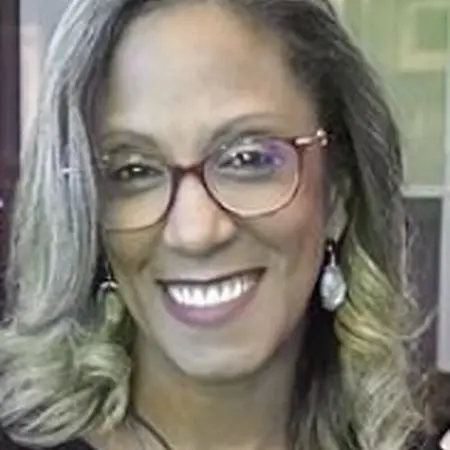
Her Story
About Kimberly
Kimberly Curseen, MD, FAAHPM, is a physician leader and educator specializing in palliative and hospice care. She serves as Director of Supportive and Palliative Care Outpatient Services at Emory Healthcare and Director of Palliative Care at the Winship Cancer Institute of Emory University, where she provides clinical leadership for programs supporting patients living with serious illness. In addition, she is a Professor in the Division of Palliative Medicine in the Department of Family and Preventive Medicine at Emory University School of Medicine.
Dr. Curseen trained in internal medicine and geriatric medicine before completing fellowship training in geriatrics, ultimately building a career focused on improving quality of life for patients facing complex and life-limiting conditions. Board-certified in Internal Medicine, Geriatric Medicine, and Hospice and Palliative Medicine, she is known for her patient-centered approach to care, emphasizing emotional support, communication, and shared decision-making. Her clinical and academic work bridges geriatrics and palliative care, helping patients and families navigate serious illness with dignity and clarity.
Beyond her clinical and academic roles, Dr. Curseen is a national leader in hospice and palliative medicine. She serves as President of the American Academy of Hospice and Palliative Medicine (2026), where she advocates for workforce development, health equity, and improved access to serious illness care. Her leadership philosophy centers on authenticity, emotional intelligence, and service, shaped by her personal background and commitment to community. She is widely recognized for advancing compassionate care models and mentoring the next generation of palliative care clinicians.
Her Interview
Ten minutes with Kimberly
01What do you attribute your success to?
I always say there are two Americas, and I came from the other one. One of my biggest drivers, if I'm completely honest, is the people who depend upon me. Things just have to get done, because people are counting on that. My parents really instilled in me a sense of community, and I got to see at a very young age how the puzzle pieces are put together and how things can be so fragile. I vowed to myself that if something was going to fail, it wouldn't be because of me. If I committed to it, I would do my level best to make it a success. The drive comes from a very deep understanding that the life I get to live is very fragile, and so many people don't get those opportunities. I worked really hard, but a lot of things had to break my way. I had helping hands, and a few decisions go differently, this could be a whole different story. My dad was a human rights advocate for people with mental health disorders in Virginia, and I watched him move through the world with unconditional positive regard for all sides and a sense of patience. He told me, 'I believe everybody here is trying to do the right thing. My job is to help them do that, even when they don't know how to do it.' He saw where he fit into that fabric and took the frustration and vitriol head on, redirecting those passions. Things have to get done, and I want to do my part and make sure that the things I'm responsible for don't let people down.
02What advice would you give to young women entering your industry?
I would tell young women to spend some time investing in emotional intelligence. We do a lot of things to educate ourselves and make sure we have the education and skills, but if you do not know how to manage people, if you don't understand how to communicate and take perspective, everything will be 10 times harder. A lot of the ability to lead, when you really break it down, is how to deeply listen, how to take perspective, and how to take the emotional temperature in the room. Once you understand those things, it's so much easier to move through the workplace and through your life. There's a lot of pressure to change who you are, to lean in, be assertive, and do all these things you're supposed to do. But I believe, and this has served me well, that you should accept yourself as I am. I'm not a very loud talker, I may hang back, I don't self-promote, but yet I'm successful because I accept myself as I am, and I think that projects an air of confidence. I don't have to fundamentally change who I am. Those qualities, you lean into. I'll never walk in a room and be the loudest person, but with my quiet voice, I can speak in your ear and turn that cruise ship without having to be the person who has their hand on the wheel. Balance who you are fundamentally and be okay with that. Strengthen all the beautiful things that make you you, and then add other tools in your toolbox that you can whip out when you need to and put them back when you don't. The worst thing in the world is to do all this work, get to right where you want to be, and be just as miserable. Sometimes you spend a little more than you could afford to do this thing.
Join Influential Women and start making an impact. Register now.