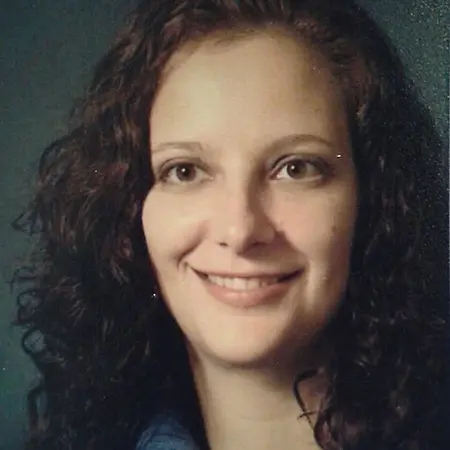
I combined my childhood dream of reporting with my love of wildland firefighting into a new career as a Public Information Officer. I wouldn't be where I am if I had given up.
Kimberly Kaschalk · In Her Own Words
Her Story
About Kimberly
I started my career as a news reporter right after graduating college in 2002, working full-time in journalism until around 2013. I had worked my way up to lead reporter when the company that bought our paper decided to cut everyone making decent money, and I was one of the people they let go. I was fortunare to have the opportunity to keep working as a freelance reporter. Around that same time, I had joined my local volunteer fire company because they needed people for the Swift Water Rescue Team, and since I grew up on the river, I knew it like the back of my hand. After losing my full-time reporting job, a friend suggested I try wildland firefighting since I was athletic, didn't mind getting dirty, and loved camping and hiking. I started as a firefighter type 2, basically a grunt with a pack on my back, and deployed with 20-person crews all over the U.S. fighting wildfires. After doing that for about 4 or 5 years, that same friend asked where I wanted to go with my career, and suggested I become a public information officer since I had a news background. Now I'm one of the leads in the public information section on wildfire incidents. Our whole purpose is to get information to communities being affected by wildfires, to the firefighters working on the fire, and to deal with media both nationally and internationally. We do community meetings, post daily maps and updates, and answer questions from people affected by wildfires and natural disasters. I've worked my way up from a field public information officer to a complex public information officer, where I'm a the leader in the public information shop, in charge of that particular branch. I just completed an extremely difficult training course (CIMC) in the middle of March - they only do 2 of these classes a year with only 12 information officers going through annually, and being one of those 12 people was a huge honor. I've also been a structural firefighter since 2012, then switched my focus to wildland firefighting around 2014 or 2015. At the end of March, I was promoted to copy editor at my local news agency here in Pennsylvania.
Her Interview
Ten minutes with Kimberly
01What do you attribute your success to?
Drive, dedication, and support from friends and family.
02What’s the best career advice you’ve ever received?
The best career advice I've ever received is to always be willing to learn and self-assess. Even if you think you're doing a job successfully, look at that job and ask yourself, okay, this was very successful, but are there things I could have done better? What did I learn that I could take with me next time to make things even more successful? So just always, always be in that learning mindset, always be ready to learn. Even the newest, most junior person you deal with can teach you something, if you're willing to learn. It's not just that I'm teaching other people, they teach me something, too. Be in that learning mindset, always be willing to learn.
03What advice would you give to young women entering your industry?
Don't be afraid. There's so much stigma out there, so much 'oh, are they gonna judge me because I'm a woman?' or 'can she really do this job?' or 'she's coming in here, she's gonna change the whole dynamic of everything.' I always tell people, make them see you as good at whatever you're doing. Make them see you as a good firefighter. Make them see you as a good news reporter. Make them see you as a good person, as opposed to a woman firefighter, or a woman reporter, or a woman. Make them see the job that you're doing, not your gender. Do that to the best of your ability and earn that respect. Don't be afraid to stand up for yourself, and don't be afraid to try something new, even if it's not a traditional female role.
04What are the biggest challenges or opportunities in your field right now?
Every fire's different. Even if you're in an area you've been to before, where the fire is burning, what the fire's doing, the political aspects of it, it's always different. We're dealing with not only the public, but we're dealing with the local municipal government entities, state government entities, federal government entities. So just trying to make sure we're getting them clear and accurate information, and we're getting it out in a timely fashion is definitely the challenge.
As far as news reporting and editing, more and more news organizations are closing or being bought by larger entities. They cut the staff and force those who are left to do more with less. It's a struggle to find good, unbiased news sources that do "old school" reporting and present both sides of the issue fairly and equally.
05What values are most important to you in your work and personal life?
You need to be able to communicate with people on their level. I tend to be very direct, and sometimes that can come across the wrong way. It's definitely about making that connection to people, whether it's my staff here in Pennsylvania, or whether it's out on a fire. Making that connection, being genuine, getting them to trust you, and to understand we're doing these things for a reason - that's important in both my personal and professional life. We've really lost our ability to communicate with each other face-to-face because of text messaging and other technology. I think that hands-on, personal connection is definitely something that is both a challenge and is very rewarding. You can really change somebody's original perception of not just you, but the job you're doing by talking to them, rather than at them, and by listening to them. That interpersonal communication is something that's lacking in our society.
Join Influential Women and start making an impact. Register now.