Explore what defines true leadership beyond titles and authority. Discover how great leaders inspire through integrity, empathy, and service, creating lasting impact by empowering others to reach their potential.
Her Story
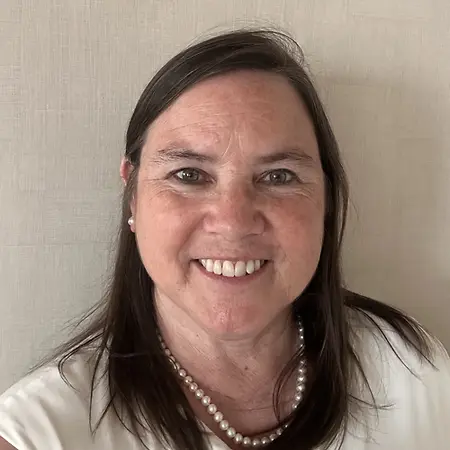
About Dr. Kimberly
Dr. Kimberly Rapacz, EdD, CISM, has devoted more than 42 years to service within the U.S. Department of Defense, beginning with 30 years on active duty in the U.S. Army and continuing with over a decade as a government civilian. Since 2014, she has served as a senior operations officer for the aid Army and as the Director of Mission Support Staff (G6), acting as the civilian deputy to a senior Army commanders’ staff facilitating critical information technology readiness and operations. In this role, she leads efforts in IT procurement, governance, and industry engagement to ensure mission-ready tactical networks that support operational forces. Her work focuses on aligning military requirements with emerging commercial solutions while sustaining secure, resilient communications environments. She has received the Medal of Merit in recognition of her contributions through AFCEA, highlighting her role in strengthening collaboration between defense and industry. Her academic and professional foundation reflects a lifelong commitment to learning and strategic leadership. She earned a Doctor of Education in Organizational Leadership from Argosy University, along with multiple master’s degrees in Computer Information Systems from Boston University, International Relations from Troy University, and Strategic Studies from the United States Army War College. She also holds a Bachelor of Arts in International Relations from the University of Washington. In addition, she is a Certified Information Security Manager through ISACA and maintains a ham radio operator license, reflecting both technical depth and practical communications expertise. Beyond her professional duties, Dr. Rapacz is actively engaged in professional and community organizations, including Zonta International, where she supports initiatives advancing women and girls. She also contributes to mission-focused collaboration between government and industry through AFCEA activities and ISACA. She also participants with music organizations and is on the board of Directors for All Frets. A musician at heart, she plays multiple instruments including banjo, ukulele, clarinet, saxophone, and harp, and enjoys gardening, farming, genealogy research, and geocaching. Her career reflects a consistent theme of service—combining technical leadership, mentorship, and a commitment to contributing to something larger than herself.
Her Interview
Ten minutes with Dr. Kimberly
01What do you attribute your success to?
I am a big goal achiever in that regard and self motivated, but I have to really attribute the support that I've had through the years to my family, and especially when I was in the service, the sacrifices they made for enabling me able to do what I do. Because, success doesn't come individually, it comes with a team. You know, as they say, it takes a village. Well, it really does. You can't just acquire things on your own. I mean, I am self-driven, so I have to say, personally, that's something I can selfishly say, that, hey, based on my drive. But, you know, I didn't do everything by myself. I was given opportunities, and if I wasn't given those opportunities, I don't know that I would have excelled, or that I would have gotten to the places I have in my career.
02What’s the best career advice you’ve ever received?
The best career advice I received was to be technically proficient and never stop learning. Working in a male-dominated Army IT environment, I learned that confidence is built through knowledge, preparation, and performance. When you consistently deliver results and take care of your people, opportunities and leadership roles naturally follow.
I was told early in my career that I didn’t need to fit someone else’s mold to be successful. I could lead authentically while remaining technically competent, approachable, and mission-focused. That advice helped me navigate a male-dominated field, build strong teams, and mentor the next generation of IT professionals.
03What advice would you give to young women entering your industry?
Invest in your reputation, relationships, and continuous learning. Skills may get you the job, but character, professionalism, and the ability to work with others are what create long-term opportunities. Be willing to take on challenges outside your comfort zone, seek mentors, and never stop growing.
04What are the biggest challenges or opportunities in your field right now?
I think some of the biggest challenges in the IT field is the rate of change. Right now, we see the use AI as an example, because we're looking at it. Technology is happening so fast that it is hard to keep up with the change.
So what you know today may not necessarily be relevant or help you what you're doing tomorrow.
iI think another challenge for any field is maintaining the work-life balance, but more so in the technical fields, because especially if you're in a leadership position, you need to be constantly learning, and you need to mentor others.
You need to have the focus on what's happening in your work, but then you don't want to, like, spend all your hours at work, and then you're not balancing yourself, or you might get burnt out, or just not spend enough time with those that have been there to support you. to sum it up, the biggest challenge really is the speed of change. For example, there is growth in one area, and then you have to, like, keep up with it. But it's also an opportunity, you know, because technology allows you to continuously grow and innovate and help others solve important problems. So, like I said, it's both a challenge and an opportunity.
05What values are most important to you in your work and personal life?
I think honesty is really up there, and honesty kind of goes with a lot of things. Honestly, you know, the definition of that is really kind of integrity. So, I mean, one of the things we learned in the military is we have a kind of an acronym called LEADERSHIP. L is for leadership, and then D is for development, and then R's for respect, and S for service, interfaith and selfless service.
So if you kind of put that together, I mean, you know, one of the values is honor, but it's also the integrity. It's really kind of doing the right thing even when someone's not looking. And just probably another one is I value the kind of the service, you know, where I dedicated my 30 years of life. I didn't expect to do that. It was just four years to help pay for education, and then it evolved into something I just really enjoyed. But you are contributing something really, you're contributing to something bigger than yourself when you take that oath and do work, either just working for the government or working in the government as a military member. And I think another value I have, too, is just being compassionate and understanding and supporting others really through their challenges, because it's not like someone hasn't had something happen to them. It's not like it hasn't happened to somebody before. So, you know, you need to, as I get a little bit older, I realize, you know, having a little, being more empathetic to someone's situation is good. Not sympathetic, but empathetic to really kind of understand them as well.
Her Content Hub
Articles by Dr. Kimberly
Leadership
True leadership is measured by the positive impact you have on others, not by your title or position.

Good leadership is not measured by titles, rank, or authority—it is measured by the positive impact we have on the lives of others.
Great leaders inspire confidence, lead by example, and earn trust through honesty, humility, and consistency. They understand that leadership is about serving others, listening with empathy, and making decisions that reflect integrity, even when the path forward is difficult.
By encouraging those around them to grow, succeed, and believe in themselves, leaders create a legacy that extends far beyond their own accomplishments.
True leaders recognize that every challenge is an opportunity to learn, and every setback is a chance to demonstrate resilience. They celebrate the successes of their team, take responsibility when things go wrong, and never stop learning themselves.
When people feel valued, respected, and empowered, they are inspired to give their very best.
Leadership is not about being the loudest voice in the room—it is about being the steady presence others can trust, the example they choose to follow, and the light that helps them discover their own potential.
Join Influential Women and start making an impact. Register now.