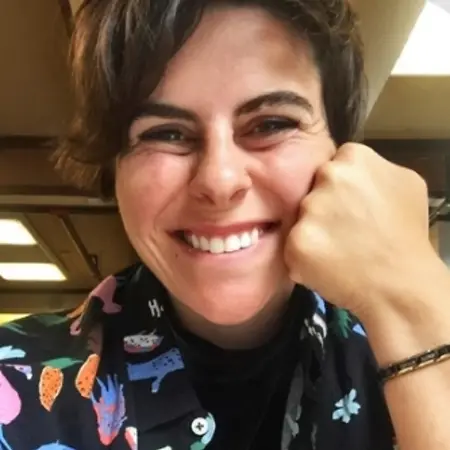
Her Story
About Kimi
Kimberly Diedrich, AICP, is a Transportation Planner II at HNTB in Oklahoma City, where she has worked for approximately three years. In her role, she engages in a diverse range of responsibilities, including performing safety analyses, developing accessibility plans for major events, and preparing grant applications to help smaller communities advance roadway expansions and sidewalk improvements. She also contributes to NEPA (National Environmental Policy Act) projects, ensuring the protection of natural and cultural resources, and coordinates with the State Historic Preservation Office on mitigation strategies.
Kimberly thrives in dynamic environments, embracing opportunities to learn and adapt, and finds fulfillment in tackling complex transportation and planning challenges. Prior to joining HNTB, she spent four and a half years as an Architectural Historian with the Oklahoma Department of Transportation’s Cultural Resource Program. During that time, she recognized a need for greater community engagement in infrastructure projects, which inspired her to pursue a degree in planning to make a meaningful impact on the communities she serves.
Her academic background in anthropology and public history informs her approach to planning, allowing her to thoughtfully integrate cultural heritage, equity, and community priorities into transportation projects. Kimberly holds a Master’s in City, Urban, Community, and Regional Planning from the Christopher C. Gibbs College of Architecture, as well as a Master’s in History from Texas State University. Her research, including her thesis “Make El Paso Great Again: Correcting the Alternative Memory in the Border City,” highlights historically marginalized voices and reinforces her commitment to inclusive urban design.
Passionate about infrastructure connectivity, sustainable mobility, and community identity, Kimberly collaborates closely with colleagues and stakeholders to create resilient, accessible, and thriving communities.
Her Interview
Ten minutes with Kimi
01What do you attribute your success to?
I really attribute my success to my parents growing up. I was never a great student, and it wasn’t until later in life that I was diagnosed with ADHD. When you’re not diagnosed as a child, you end up developing your own coping mechanisms—figuring out how to study and how to actually learn, which sounds simple, but really isn’t.
What made the biggest difference was having parents who encouraged my creativity and learning instead of putting me down for not getting the best grades. Rather than asking, “Why aren’t you doing better?” they would shift the conversation to, “How can we help you learn this?” That mindset helped shape my sense of self-worth. It taught me that if I didn’t understand something, it wasn’t because I wasn’t capable—it was because I needed to approach the topic differently.
Having that kind of support allowed me to grow and really flourish later in life. Now, when I approach challenging work tasks—such as learning new technical skills—I draw on that foundation by keeping a repository of notes and giving myself the time and grace to learn.
02What are the biggest challenges or opportunities in your field right now?
I think one of the biggest challenges in my field, especially in more corporate environments, is understanding that what you believe is best isn’t always what the client is requesting. It’s important to understand your role within the work environment and how you contribute to the overall process and implementation of a project.
In planning, there are many different career paths, public, private, and nonprofit. I’ve been fortunate to gain experience across all three, which has given me a broader perspective on how different organizations operate and how they work within existing policies and requirements.
At times, that can be challenging. As a planner, there are moments when you may disagree with current policies or the way certain programs, like grant funding, are structured. It can be difficult to see communities that need and deserve resources face barriers due to changing requirements or policies.
What I’ve learned, though, is the importance of stepping back and recognizing that you are still contributing to meaningful work, even if you don’t agree with every aspect of the process. Sometimes, the fulfillment doesn’t just come from the final outcome, it comes from the process itself and how you help move things forward.
It’s about maintaining perspective, finding value in the day-to-day work, and remembering the broader impact of what you’re contributing to, while also holding onto a sense of gratitude for the role you play in that process.
03What values are most important to you in your work and personal life?
A value that I believe is most important in both my work and personal life is humility. I think that if you believe you are the smartest person in the room, you’re selling yourself short. As a planning practitioner, I know I will never know everything. The residents of a community will always have insights that I may not, because we each bring different lived experiences that shape how we interact with our environment.
I also genuinely love learning, and I think that has made me naturally curious and open-minded in both my professional and personal life. These values allow me to approach challenges from different perspectives and remain open to others’ viewpoints. In turn, that helps me develop more thoughtful, well-rounded solutions that aim to benefit the broader community.
Join Influential Women and start making an impact. Register now.