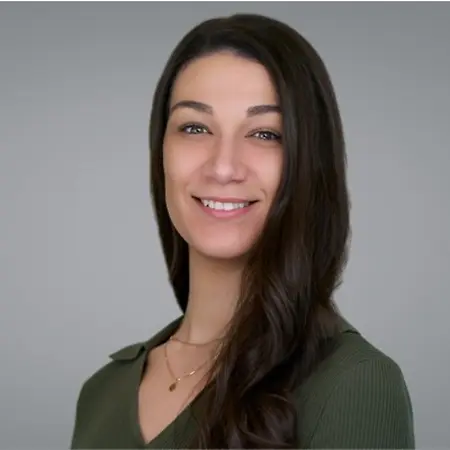
Her Story
About Kina
Kina Focareto is a first-generation college graduate from Cincinnati, Ohio. She graduated from the University of Cincinnati with a Bachelor's in Communication and went on to earn her Master's in Business Psychology from Franklin University. Kina began her career in academic advising 10 years ago in Germany as an Education Counselor serving active-duty military, veterans, federal employees, and dependents. As a military spouse who previously struggled with the Higher Education landscape, she was able to see the cross-section of first-generation college and military-affiliated students’ challenges in accessing higher education. She was drawn to the counseling role because she wanted to reduce the barriers that service members and veterans experienced in attempting to access their education benefits and build their academic resiliency. Navigating the complex environment of research, admissions, enrollment, graduation, and career preparation requires strategy, proactive planning, and support, none of which she had personal experience with during her pursuit of post-secondary education. In Kina's role as Academic Director, she supports the students who don’t understand the system. Providing support through a strategic lens is precisely why she chose to support vulnerable and/or marginalized communities from the onset of her career. Strategy is the key to optimizing the college experience to reach a student’s career and life goals. Without it, many students are left behind in the wake of their peers who had the means and support necessary to make the system work for them, not against them.
"I want to inspire introspection, self-reflection, and systemic change… no matter how incremental. I love to influence people to adopt a growth mindset. I strive to expand minds to absorb realities as experienced by all walks of life, so we can grow a community built on empathy, understanding, and commitment to enhancing the well-being of all."
Her Interview
Ten minutes with Kina
01What do you attribute your success to?
I believe success is the result of many bold and brave choices. Choices that not only apply to me, but also to the choices made by the veterans I assist each day.
-Our choice to pursue
-Our choice to persist
-Our choice to push through
-Our choice to prioritize
-Our choice to progress
Success is not just an isolated event. It is built through repeated, strategic, and intrinsically motivated decisions.
I believe my success as a higher education advocate stems from understanding and leveraging brain function, emotional attunement, and neuroplasticity to form a genesis of positive interactions with post-secondary enrollment. Treating students from a systems perspective and addressing needs as a function of support allows me to successfully navigate through barriers that have prevented them from achieving their goals in the past.
02What’s the best career advice you’ve ever received?
Not all paths are linear. I think too often we view the path to career success as one that is inherently direct. Any deviation from this path feels like failure. This discounts all other experiences gained in seeking an alternative route. Those experiences are ones that shape us into the professional we strive to be. I often consider this when working with military and veteran students. Seeing their experience as an asset rather than a limitation helps me adjust my perceptions of everything adult learners have to offer the job market and higher education environments. Military and veteran students are resilient, adaptable, and intrinsically motivated, and they bring with them a repertoire of transferable life skills that contribute to their success. Identifying those strengths and the barriers preventing them from accessing and persisting through program completion allows academic advisors to facilitate success.
03What advice would you give to young women entering your industry?
Passion and a drive to make a difference. If you are not intrinsically motivated to make a difference for your students, then you are likely in the wrong industry. A critical element of success in the field of higher education is to genuinely care about the people you serve. I have been working in the field of military and veteran education for over 10 years now, and I have seen many community organizations and resource outlets for active-duty military and veterans that are in name only. Often, and unfortunately, these organizations are staffed by people wholly uninterested in providing genuine assistance. The passion is missing. Their mission is unclear. How can we establish trust, service, and support when we are not driven by a sense of empathy and respect for what we do? Therein lies the significance of support resources being driven by individuals who have a passion to make a difference in the community they serve.
In this field, we have the ability to impact lives each day. I have seen the transformational power of advising and witnessed veterans flourish with it.
04What are the biggest challenges or opportunities in your field right now?
The past several years in higher education have seen tremendous disruptions, from financial constraints and new systems of learning to social and political volatility; higher education support has been forced to adapt to an increasingly erratic landscape. Student support leaders play a critical role as a bridge among students, faculty, stakeholders, and the government. I’ve learned a great deal about the trends that schools are grappling with, as well as the challenges and opportunities specific to veterans.
- Focusing on the opportunities that can be harnessed from this dynamic change in the industry allows student support services to proactively confront systems of inequity.
- With education and labor forces collaborating to strengthen career trajectories and opportunities, post-secondary institutions and training programs have the unique opportunity to drive systemic change. It is no longer acceptable to provide credentials isolated from labor market demands. Cross-functionality between credentials that have a real-world impact on career attainment drives an increase in economic mobility for those students who the system was never created to benefit. Student support programs are essential to actualize this movement.
- Maintaining and enhancing the funding for these programs is an ongoing battle that leaders like the Council for Opportunity in Education (COE) President, Kimberly Jones, continues to work tirelessly to demonstrate to Congress.
- Now more than ever, it’s essential to continue to face changes with a growth mindset. Continued flexibility, training, and development have allowed me to face the new and evolving realities of my role as a higher education advocate. Playing into my excitement for new learning opportunities has enabled my sustainable, solution-focused outlook on the future of higher education access, retention, completion, and actualizing career goals for students.
05What values are most important to you in your work and personal life?
Honesty, respect, empathy, and justice are values that I prioritize in my personal life and at work.
- When I think about how I live, I try to be honest in how I perceive the world around me, and I am thoughtful in my responses. Whether that is in answering a question about life from my daughter, or in receiving a question about a service or function that I am not fully equipped to speak on. Thankfully, I love to become a subject matter expert and strive to feel prepared to confidently speak on many topics that are even remotely related to my field, so researching and putting in the work to provide honest and thoughtful answers to questions is a strength I value immensely. This tends to build a trusting relationship between me and others, allowing me to better assist those in need. -
- With that comes respect. Honoring each individual as positively contributing some element to the framework that I operate within and demonstrating the value I see in them is extremely important to me, especially with the demographic I regularly work with. In valuing empathy, this is imperative as well. Listening attentively to understand and not to immediately solve problems can be extremely beneficial in establishing a high-functioning relationship. It's important to understand how every person’s experience in this life is unique and how their story manipulates the degree to which they are willing to receive help.
- The overarching theme I value is a sense of justice. Advocating for disadvantaged students means confronting the systemic injustices of our education system and enhancing the quality of military and veteran support services. These values have guided me throughout my work and personal life. I align with organizations and partners who share a similar value system and prioritize a mission of service to our communities.
Join Influential Women and start making an impact. Register now.