Her Story
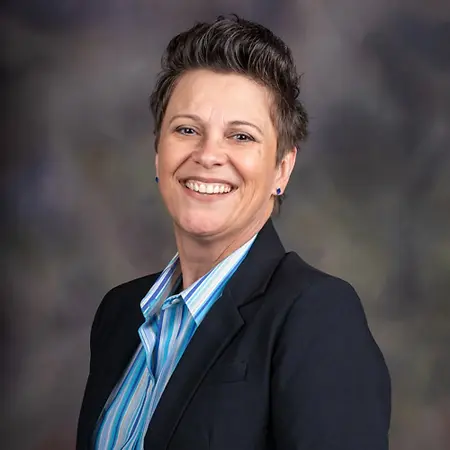
About Kristi
Kristi Rickman’s journey in higher education began in 1998 as a student at Texas A&M University-Commerce, where she also began working part-time in the Admissions Project Center. What began as a student job eventually became a career spanning more than two decades in professional higher education roles focused on student development, access, advocacy, and student success.
Today, Kristi serves as Dean of Student Success at College of the Mainland in Texas City, Texas, where she leads efforts across Academic Advising, Career Services, Veteran Services, TRIO Student Support Services, Guided Pathways, Accessibility Services, and Transfer Services. Before joining College of the Mainland, she spent more than nine years at the University of Houston-Clear Lake, advancing from Associate Director of Academic Transfer Advising to Director of Transfer Advising & Student Transitions. Earlier in her career, she held leadership and student affairs roles at Texas State University’s Round Rock campus and Florida SouthWestern State College, with experience spanning advising, enrollment management, student conduct, new student orientation, career services, veteran benefits, financial aid, behavioral intervention, and crisis response.
Kristi’s leadership philosophy has been shaped by people who saw potential in her before she fully recognized it herself. After an unsuccessful first attempt at a large university, she returned home and worked for her uncle, Dr. Herndon Gideon, at his chiropractic practice, where her work as a receptionist, chiropractic assistant, and billing specialist gave him an opportunity to see her abilities firsthand. Dr. Gideon encouraged her for more than a year to return to college, ultimately helping her believe that she was capable of more. An early supervisor later taught her that even the smallest details communicate how much an institution values its students. At the chiropractic practice, she also met Paula, who became a dear friend and taught her about love, humor, kindness, and the importance of being fully herself. Later, mentors and colleagues such as Dr. Rehbein and Ki challenged her to recognize her own leadership and, in Ki’s words, to “stop being so polished” and simply be herself.
Those lessons continue to shape how Kristi leads. She believes leadership is not about performing a role or having the most impressive title in the room; it is about what happens to other people because you were in the room. She thrives where the map is not finished—listening, assessing what is not working, building solutions, bringing people together, and creating systems that make it easier for others to succeed.
Kristi is also active in professional service through the Texas Academic Advising Network (TEXAAN) and serves as a Board Director for the Southwest Spanish Mustang Association (SSMA), supporting the preservation and promotion of Colonial Spanish Mustang heritage.
At the heart of her work is a belief shaped by her own experience as a student: “I was once the student who needed someone to help me find my way. Now I have the privilege of helping other people find theirs.”
Her Interview
Ten minutes with Kristi
01What do you attribute your success to?
I think my success comes from a combination of resilience, curiosity, relationships, and a willingness to figure things out, but those qualities were shaped by some very early experiences.
I grew up on a 250-acre ranch in a very rural part of southeastern Oklahoma, where I learned early that if something needed to be done for the animals or the property, I had to figure it out. We couldn't just call someone to fix something when it broke. My mother taught me, “You can figure anything out if you just use common sense,” and my father taught me to consider what the other person might be experiencing. Those lessons have stayed with me throughout my career.
However, when I was accepted to Oklahoma State University, a city and university I had never visited, my confidence in my abilities quickly began to decline. My mom gave me a paper map of Oklahoma and highlighted the route I would take to Stillwater, and I drove there on my own. I followed the map and made it to Stillwater, but once I arrived, I had no idea how to navigate the university itself. I spent nearly six hours driving around campus trying to find the building where registration was being held. I missed the start time, became overwhelmed by everything that was happening, and eventually found a pay phone and called my brother to come help me.
I didn't understand then that I wasn't incapable of college. I simply didn't know how to navigate the institution.
I eventually left Oklahoma State believing I wasn't “college material.” I returned to my hometown and worked for my uncle at his chiropractic clinic. He believed otherwise and encouraged me for more than a year to try college again. Eventually, I enrolled at Paris Junior College, where I encountered faculty and staff who helped me believe in myself and find my path.
Those experience have shaped almost everything I've done professionally. I've spent my career helping students navigate systems that can sometimes feel overwhelming or confusing. I've also discovered that I'm someone who thrives when the map isn't finished. I enjoy listening, assessing what isn't working, building solutions, bringing people together, and figuring out how to make things better.
So I attribute my success not just to perseverance, but to the people who believed in me, the willingness to keep going when something doesn't work, and the ability to turn difficult experiences into something that can help someone else.
I was once the student who needed someone to help me find my way. Now I have the privilege of helping other people find theirs.
02What’s the best career advice you’ve ever received?
The best career advice I’ve received was very simple: “Stop being so polished. Just be you.”
Early in my career, I spent a lot of energy trying to figure out what a professional leader was supposed to look and sound like. I was very polished, very careful, and very conscious of how I presented myself.
A colleague, Ki Yendell, the former Director of the College of Science and Engineering Advising Office at UHCL, eventually challenged me on that. Ki told me that we were doing hard work as Directors and that I didn’t need to perform leadership for the people around me. She encouraged me to relax, have fun, and simply be myself.
That changed the way I lead. I realized I didn’t need to become a leader by performing what I thought leadership looked like. I needed to trust who I already was.
Since then, I’ve learned that authenticity and professionalism aren’t opposites. I can have high standards, make difficult decisions, and lead complex work while still being compassionate, humorous, approachable, and completely myself.
I didn’t need to become a leader. I needed to stop performing what I thought a leader was supposed to be.
03What advice would you give to young women entering your industry?
Don’t wait until you feel completely ready to step into leadership.
Some of the most important opportunities in my career came before I felt fully prepared. I learned by asking questions, finding people who knew more than I did, listening carefully, and being willing to figure things out. You don’t have to know everything before you take the next step.
I would also encourage young women not to spend too much energy trying to look like the leader they think they’re supposed to be. Learn your strengths, build relationships, stay curious, and allow your authentic personality to be part of your leadership. You can be professional and have high standards without losing the qualities that make you uniquely you.
And don’t underestimate the importance of advocating for yourself and for others. There were times in my career when other people saw my potential before I did. Eventually, I learned to recognize it myself. When you recognize your own value, you become much better equipped to recognize and advocate for the value in others.
Finally, find people who will tell you the truth, not just people who will tell you what you want to hear. Some of the most meaningful growth in my career came from people who challenged me while still believing in me.
You don't have to become someone else to be a successful leader. You need to discover who you are, trust what you bring to the table, and be willing to keep growing.
04What are the biggest challenges or opportunities in your field right now?
One of the greatest opportunities in higher education is making the student experience easier to navigate without lowering expectations.
Students are often navigating complicated institutional systems while simultaneously balancing work, family responsibilities, finances, transportation, technology, and other demands. Sometimes the challenge isn’t that a student lacks ability or motivation; they simply don’t understand how the system works or where to go for help.
That’s something I understand personally because I was once that student. I could follow a map to my university, but I didn’t know how to navigate the institution once I got there.
I think institutions have an opportunity to look at their processes through the student’s eyes and ask, “Where are we creating unnecessary barriers, and how can we make this easier to understand?”
Technology and data also provide tremendous opportunities to identify students who may need support earlier and connect them with resources. But technology should enhance relationships, not replace them. At the heart of student success is still a person who feels seen, supported, and confident that someone will help them find a way forward.
05What values are most important to you in your work and personal life?
Authenticity, compassion, responsibility, curiosity, and service are the values that guide me most.
Authenticity is important because I believe people can tell when you’re genuinely showing up versus simply performing a role. I’ve learned that I can be professional, have high standards, and lead complex work without losing the qualities that make me who I am.
Compassion reminds me that everyone is carrying something I may not know about. I believe we can maintain high expectations while still treating people with dignity, kindness, and understanding.
Responsibility comes from how I was raised. On our family ranch, animals depended on us every day, and I learned that when something has been entrusted to you, you take care of it. Today, I think about students, employees, programs, and systems in much the same way. If something has been entrusted to me, I want to take good care of it.
Curiosity keeps me learning and questioning whether there might be a better way to do something. It is one of the reasons I enjoy working in environments where the map isn’t finished—I’m naturally curious about what isn’t working, why it isn’t working, and what we might do differently.
And service is at the heart of how I see leadership. My parents modeled service for me throughout my childhood, and it has remained central to how I approach both my work and my relationships. I don’t believe leadership is about what I can accomplish for myself. It’s about what becomes possible for other people because I was willing to show up and do the work.
Ultimately, I want to leave people and the organizations I’m part of better than I found them.
Join Influential Women and start making an impact. Register now.