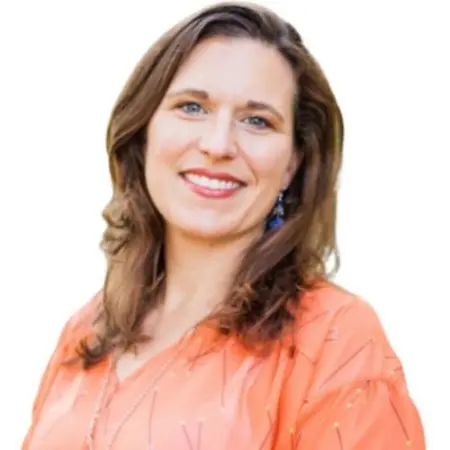
Her Story
About Kristi
My background is in chemical engineering, and I've spent my entire 23-year career at General Mills, which has been an incredible journey. What led me to this industry was my love for being able to personally relate to the products I'm creating - I wanted to connect as both a consumer and a creator, which is very different from the bulk chemical companies I interned with earlier. Manufacturing is an incredible space where I'm able to really see things be created, from engineering and design all the way through to knowing I helped put it on the shelf for others. What's kept me at General Mills so long is the ability to have multiple careers all within the same company - I've spent time in manufacturing, design-build, and our broader global supply chain. My main area of expertise is engineering leadership and project engineering, where I'm incredibly passionate about unlocking business challenges and opportunities through technical solutions. I spend a lot of time understanding our businesses and consumers, then helping find solutions for how we bring products to market and manufacture them. My role is really that connector, breaking down barriers, enabling others, and helping move projects forward. I work at the interface of R&D and our business functions - they'll come with a product they want to launch, and my job is to figure out how to make it manufacturable and repeatable on a scale where we can make 300 or 1,000 of these a minute. Recently, I've transitioned into our food service division, which means we're selling to restaurants and bakeries rather than retail. I'm now learning all about flour manufacturing, and I get to work much more closely with our sales team to solve customer problems like back-of-the-house kitchen challenges. Even 23 years into my career, I'm still learning completely new parts of food manufacturing, which is a testament to the breadth of opportunities at General Mills.
Her Interview
Ten minutes with Kristi
01What do you attribute your success to?
I think some of my most notable achievements have really been the relationships I've built and the people I've fostered or mentored along the way. As I look back, it's those relationships that have come through some of the technical pieces. What I'm most proud of is helping others along their career path, watching them grow and go, and really being that connector to helping them find or uncover what's next. I love helping people stretch beyond what they thought was possible and just going through that journey with them. That's probably been my most amazing achievement.
02What are the biggest challenges or opportunities in your field right now?
I think the challenges we face are also opportunities. AI is a big one that's front of everybody's mind - the challenge is that everyone's still learning about it and it's changing very rapidly, but the opportunity is that it could really unlock how quickly we can take information into insights to improve our processes or improve our manufacturing. Another place where we have challenges is that technology beyond AI is changing so quickly and improving. It's almost making it where it could change our asset bases and how we look at assets. When I first started with the company, you'd buy something and you're gonna have it for 20-plus years. Now, you buy something and 3 to 5 years, it's obsolete. So how do we continue to stay competitive and recognize that, or take advantage of that? I think we're going to see the industry as a whole see some really interesting things come up in the next 5 years. Is it renting and leasing equipment versus buying? Does support look differently? From a broader standpoint, there's definitely still a feeling of leadership and depth of talent shortage, even in this way post-COVID world. We knew that boomer generation was retiring, and we're starting to feel that more and more. How does that show up? Is AI a way to help with that? I just think we're going to see a lot of things look differently as those three dynamics come together.
Join Influential Women and start making an impact. Register now.