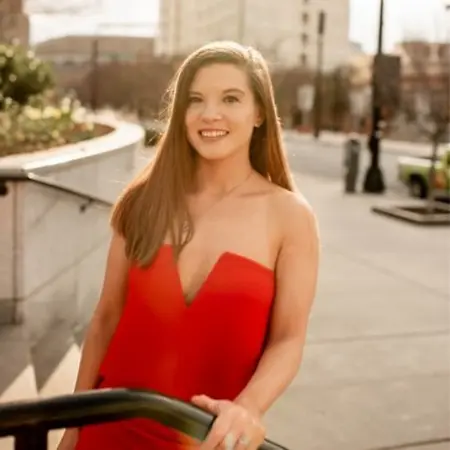
Her Story
About Kristin
I've been working as a registered EEG technologist for 5 years now, and honestly, I never even knew this field existed when I started my healthcare journey. I had originally planned to go into something else in healthcare, but chemistry turned out to be a harder course than I was led to believe. When I was looking for a new program to get into, I told myself to throw me into something that doesn't have chemistry, but I can still do patient care, and that's how I found neurodiagnostics. What I do is put wires on patients' heads and run tests looking for any kind of seizure activity or abnormalities in the brain. I work in a hospital right now, and my days are never boring. Sometimes we can have up to 10 patients total monitoring, but then we also do shorter studies which are 30 minutes, and we can do as many of those as needed throughout the day. One of my most notable achievements was getting my registry, because it's technically our boards, and a lot of places you don't have to get it, it's not required, but I decided to sit for my boards just a couple months after I graduated. Passing that and getting the letters behind my name was a big A-plus for me. I'm currently studying for additional boards now so I can get more certifications. I was also featured in the ASET or ABRET magazine during Neurodiagnostics Week, where they highlighted some of us technologists.
Her Interview
Ten minutes with Kristin
01What do you attribute your success to?
I would say probably my education, because when I came to work, I kind of got thrown in the deep end, and I think that was probably the best thing for me, because that way, it really put me to the test. If I hadn't been thrown in the deep end, then I wouldn't know what I know now. My education gave me the foundation I needed to handle being tested right away in a real hospital setting, and that experience of being challenged from day one is what helped me grow so quickly in my field.
02What’s the best career advice you’ve ever received?
The best career advice I've ever received is to make sure you do what's good for you. You can be at a job for so long, but then you have to do what's best for you. I've come to learn that I love this career field, and if I want to continue to do what I'm doing, I have to expand my wings and just keep putting me first and going for my goals. It's about not getting stuck somewhere out of loyalty when you need to think about your own growth and what you need to thrive.
03What advice would you give to young women entering your industry?
Keep going, and make sure you put yourself first. Don't worry about being selfish, but if you want to do this field, you have to think of yourself, put yourself first. Just keep going, keep climbing that ladder. No matter what anybody says, no matter who tries to pull you down the ladder, just keep going. Don't let anyone discourage you or hold you back from pursuing your goals in this field.
04What are the biggest challenges or opportunities in your field right now?
The opportunities in my field are incredible. There's all kinds of learning and growth you can get in neurodiagnostics. You don't have to just work in a hospital, you can also work from home and monitor from home, which gives you a lot of flexibility. The biggest challenge, though, is that there's not a lot of people who know about our field, so there's not a lot of technologists out there. The people who were in this field 20-some years ago are now creeping up on retirement, and there's no new technologists to come up and take their place, because it's such a quiet and very, very small field. We're facing a real shortage of trained professionals as the older generation retires.
05What values are most important to you in your work and personal life?
Work-wise, my patients come first, no matter what. I'm a very, very empathetic person, and I am also empathetic in my personal life, too, but work-wise, my patients are my goal and my priority. In my personal life, I always just try to make sure that God is first, and He's at the center of my life. He's the reason I am where I am. Empathy drives everything I do, whether I'm caring for patients at work or showing up for the people I love in my personal life, and my faith is the foundation that keeps me grounded.
Join Influential Women and start making an impact. Register now.