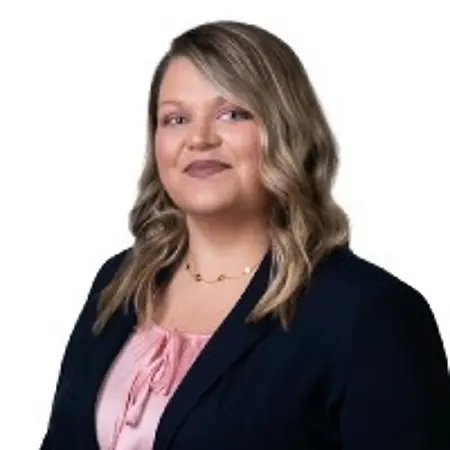
A powerful reflection on overcoming adversity without maternal support, transforming personal pain into purpose, and becoming the strong woman needed to inspire the next generation.
Her Story
About Kristina
Kristina Meulebroeck, MBA, SHRM-CP, CPP, SPHR, is a seasoned HR and payroll executive with over two decades of experience across nonprofit organizations, government, healthcare, and school districts. She specializes in Total Rewards, enterprise HR strategy, compensation governance, workforce analytics, and healthcare HR transformation. Throughout her career, Kristina has partnered with executive and finance leaders to align HR strategy with organizational objectives, regulatory compliance, audit readiness, and long-term talent retention. Her leadership philosophy combines disciplined governance with human-centered change, building scalable systems while empowering teams and fostering trust. Currently, Kristina serves as the Director of Payroll and Workforce Data Processing at Fairview Health Services, where she leads a $3.2M function overseeing 28 professionals. She has modernized payroll and workforce data processes across 12 hospitals and affiliates, strengthened regulatory readiness, and rebuilt team engagement. Prior to this role, she created a payroll consulting department within an accounting firm, developing advisory services and securing major healthcare contracts. Kristina finds healthcare particularly rewarding because it allows her to apply her expertise in payroll, HR, regulatory compliance, and legal matters creatively to support both employees and patients while helping the organization remain sustainable. In addition to her professional accomplishments, Kristina is pursuing a Master’s in Legal Studies at Texas A&M University, focusing on healthcare policy and compliance. Upon December 2027 graduation, she will continue on to purse a JD. Her organization has supported her academic pursuits by connecting her with the chief legal officer, providing mentorship on the many ways a law degree can be applied in healthcare. Her extensive hands-on experience enhances her legal studies, allowing her to bridge practical application with foundational knowledge. Passionate about creativity, efficiency, and sustainable solutions, Kristina is committed to leveraging her expertise to strengthen organizations, support people, and positively impact the broader healthcare community.
Her Interview
Ten minutes with Kristina
01What do you attribute your success to?
I’ve always attributed my success to two things: a commitment to making the world a better place and a clear sense of the legacy I want to leave behind. For me, that legacy has never been about titles, achievements, or what I could bring to an organization on paper. It has always been about people. What I hope others remember is simple: “I had someone who believed in me. I had someone who opened a door for me. I had someone who helped me see something in myself that I couldn’t yet see.” I never had that growing up, and maybe that’s why I’ve always been determined to be that person for others. I believe deeply that someone has to be the one who says, “This isn’t okay,” or the one who challenges people to rise to their potential. Someone has to hold the line on integrity, push for growth, and remind others of what they’re capable of. That belief — and that commitment to lifting others up — has guided every step of my career. Helping people see their own potential is not just part of my leadership philosophy; it’s the legacy I hope to leave behind.
02What’s the best career advice you’ve ever received?
The best professional advice I ever received came early in my HR career from a director who shaped the way I think about leadership and integrity. She taught me that no matter your title or where you sit in an organization, you always have the ability — and the responsibility — to apply your ethics and sense of right and wrong. And you have to be able to live with the choices you make.
I remember a situation involving a well‑liked employee whose actions were, behind the scenes, deeply unethical. Taking the ethical stance put a target on my director’s back and made her unpopular for a time. What she said has stayed with me ever since: "What this person did was truly unethical. Even if no one else knows it, I do. And at the end of the day, I’m proud of myself. I can look in the mirror. I don’t need to be liked — I need to be ethical." That moment shaped my entire approach to leadership. It taught me that integrity is often quiet, often lonely, and sometimes misunderstood — but it is never optional. It also helped me understand why I’m drawn to regulatory and compliance‑focused work. Those structures exist for a reason. They protect people, ensure fairness, and create accountability even when it’s uncomfortable. You don’t have to fall in line with what others think. You can be the person who stands on principle, even when it’s not popular. And you can be proud of that. That lesson has guided me throughout my career, and it continues to ground me in the work I do today.
03What advice would you give to young women entering your industry?
Finding a mentor can be one of the most valuable steps in anyone’s career. A strong mentor not only understands your goals and challenges, but also helps you see what you’re capable of, even when you’re not sure yourself. But mentorship alone isn’t enough. You also have to keep pushing forward, especially when the path gets difficult. Along the way, you will face rejection. You will be told you’re not the right fit, not the most qualified, or not the smartest person in the room. Those moments can be discouraging if you let them define you.
The truth is, you can’t allow other people’s perceptions to determine your potential. You have to keep moving, keep learning, and keep believing in your own ability to grow. Confidence isn’t about never hearing “no” — it’s about refusing to let “no” be the end of your story.
When you stay committed to your goals and grounded in your own sense of worth, you build resilience. And resilience is what carries you forward long after the doubts and setbacks fade.
04What are the biggest challenges or opportunities in your field right now?
One of the most pressing challenges in healthcare right now is financial sustainability. Across the country, organizations are working tirelessly to remain stable and diverse while still delivering the highest level of care to their communities. It’s a difficult balance — trying to stay financially viable while upholding a mission rooted in compassion, access, and quality.
Healthcare faces pressures that few other industries experience. The stakes are higher. The margins are tighter. And the expectations from patients, regulators, and communities continue to grow. Every decision carries weight, and every challenge has a human impact.
I’ve seen this firsthand. Many of our hospitals are located in Minneapolis and St. Paul, and during major events in those cities, our teams were on the front lines supporting staff in ways that went far beyond traditional operations. We were helping employees navigate fear, uncertainty, and rapidly changing circumstances — all while ensuring they could continue caring for patients safely and without violating HIPAA or other critical regulations. Supporting employees through those moments was eye‑opening. It’s one thing to watch events unfold on the news from a distance. It’s entirely different when you’re working directly with the people living through it — people who are scared, exhausted, and still committed to showing up for their patients.
Those experiences brought the challenges of healthcare into sharp focus. They reminded me that financial sustainability isn’t just about budgets or spreadsheets. It’s about ensuring that the people who care for our communities have the support, resources, and stability they need to keep doing their work. It’s about protecting the mission while navigating realities that are often unpredictable and deeply complex.
Healthcare will always face unique pressures, but what gives me hope is the resilience of the people within it. Even in the hardest moments, they continue to show up with dedication, compassion, and strength. Our responsibility as leaders is to create systems that support them — financially, operationally, and emotionally — so they can continue delivering the care our communities depend on.
05What values are most important to you in your work and personal life?
As I’ve moved through my career and my life as a parent, I’ve realized that the values that matter most to me aren’t just ideas I talk about — they’re principles I try to live. And what’s been most inspiring is seeing those values reflected back to me through my children, often in moments when I least expect it.
Choosing Courage, Even When Fear Show Up
One of the beliefs I hold closest is that growth requires us to step into the things that make us uncomfortable. Fear is a natural part of being human — but it doesn’t get to be the author of our decisions. What’s powerful is how I’ve watched this idea take root in my kids. Every now and then, I’ll hear them say something like, “You just have to push your way through,” and they’ll attribute that mindset to me. I never sat them down for a formal lesson on courage. But they absorbed it anyway — through the way I navigate challenges, through the choices I make, through the moments when I push forward even when it’s hard. Hearing them repeat those words reminds me that courage isn’t taught in speeches. It’s taught in how we live.
And it’s a reminder that the things we model quietly often become the lessons that last the longest.
Giving a Voice to Those Who Don't Have One
The second value that defines me is the commitment to stand up for people who can’t stand up for themselves. Whether in the workplace or in life, I believe deeply in advocating for those who are overlooked, unheard, or unsure how to speak up. And again, I see this reflected in my children. They notice when someone is left out. They step in when someone is struggling. They find ways to lift others up — sometimes in small, subtle ways, and sometimes in ways that take real courage. Watching them do this reinforces how important this value is in my own work. Supporting people isn’t just a professional responsibility — it’s a personal calling. It’s about creating space, offering support, and helping others find their voice when they’re not sure they have one.
The Legacy of Values Lived, Not Spoken
What I’ve learned is that values aren’t passed down through perfectly crafted conversations. They’re passed down through consistency. Through the choices we make when no one is watching. Through the moments when we choose courage over fear. Through the times we stand up for someone who can’t stand up for themselves. These values shape how I lead. They shape how I parent. And they shape the kind of impact I hope to leave behind — both in my family and in the teams I support. If my children grow up believing in courage, compassion, and advocacy — and if the people I work with feel supported and seen — then I know I’m living my values in a way that truly matters.
Her Content Hub
Articles by Kristina
Becoming the Woman I Needed Most
From absence to strength: how I became the woman I needed to be.

I didn't grow up with a mother who told me I was capable or worthy. I didn't have a woman who pushed me, believed in me, or showed me what strength looked like. Instead, I learned early what it meant to rise without a hand to hold.
But that absence became my turning point.
When no one shows you the woman you can become, you begin building her yourself. You learn to stand firm. You learn to trust your voice. You learn to believe in your potential long before anyone else does.
Eventually, you become the woman you once needed.
Today, I lead with conviction because I had to learn it on my own. I advocate fiercely because I know the cost of silence. I push others to rise because I remember what it felt like to be underestimated. My strength wasn't inherited—it was built.
Many influential women share this truth: We are shaped not only by those who supported us, but also by those who didn't. We turned gaps into grit. We turned pain into purpose. We became the women we needed so the next generation wouldn't have to.
I became her—for myself, for my children, for my team, and for every girl who deserves a woman who believes in her.
And that is the power of becoming.
A powerful reflection on personal transformation and resilience. This piece celebrates the girl within who refused to be diminished and became the courageous woman standing firm today, honoring her journey through adversity.
I Am the Woman I Am Because of the Girl I Used to Be
From Girl to Woman: How My Past Built My Power

I didn’t become this woman by accident. I became her because of the girl I used to be — the girl who learned early what it meant to be doubted, dismissed, underestimated, and told to shrink herself to make others comfortable. The girl who was expected to stay quiet, stay small, and stay grateful for whatever space she was given. The girl who was told she was “too much” and “not enough” in the same breath.
That girl walked through trials that would have broken many. She faced people who didn’t believe in her, who spoke to her as if her dreams were unrealistic, who treated her ambition as a flaw instead of a strength. She endured the comments, the condescension, and the subtle and not-so-subtle reminders that she was “just a woman.”
But here’s the truth:
Every one of those moments built the woman I am today.
The woman I am was shaped by the girl who kept going even when no one was clapping.
The woman I am was strengthened by the girl who had to learn to clap for herself.
The woman I am was empowered by the girl who refused to let other people’s limitations become her own.
I am who I am because she refused to give up.
She learned to speak up when it was easier to stay silent.
She learned to stand tall when others tried to cut her down.
She learned to trust her own voice when the world tried to drown it out.
And eventually, she learned the most important lesson of all:
The people who underestimated her were never the measure of her worth.
Today, I carry that girl with me — not as a reminder of pain, but as a reminder of power. She is the reason I lead with conviction. She is the reason I advocate fiercely. She is the reason I open doors for others, especially those who have been told they don’t belong. She is the reason I stand firm in rooms where women are still expected to apologize for taking up space.
I honor her every time I choose courage over comfort.
I honor her every time I refuse to shrink.
I honor her every time I rise — not in spite of what I went through, but because of it.
I am the woman I am because of the girl I used to be.
And I will never forget her.
A reflective exploration of deferred dreams and the courage to pursue them later in life. Discover how detours can strengthen your path and why fulfillment comes from answering what still calls to you.
When She Realized Her Story Was Still Being Written
From Deferred Dreams to Delayed Beginnings: Why It's Never Too Late to Answer What's Calling You

There is a quiet kind of grief that comes with believing a dream has expired—not because it wasn’t important, but because life seemed to decide it wasn’t possible. It doesn’t announce itself loudly. It settles in slowly, disguised as practicality, responsibility, and gratitude for the life you do have. For years, I carried that grief without naming it, assuming that wanting more—wanting something different—meant I was ungrateful for all I had already accomplished.
Law was my first dream.
When I graduated from high school, I was certain of it. I wanted to pursue law—to advocate, to argue with purpose, to use words and reason as tools for impact. But certainty doesn’t insulate you from reality. Life intervened the way it often does: financial pressures, family responsibilities, and timing that never quite aligned. The dream didn’t end in a dramatic way; it simply went quiet. I told myself it wasn’t the right season, that other paths were more realistic, that perhaps this was one of those dreams meant for other people.
So I redirected my ambition.
I earned my Bachelor of Science in Business. Later, I completed my MBA. These were not small accomplishments. They required discipline, sacrifice, and perseverance—and I was proud of them. From the outside, my story looked like a successful one: steady progress, meaningful credentials, and a clear professional trajectory. I checked the boxes that mattered. I did what responsible, motivated people do when life reroutes them.
And yet, somewhere beneath the pride, something remained unfinished.
I tried to rationalize the feeling. Not everyone loves their work, I told myself. Not every dream is meant to be realized. I reminded myself of how far I had come, of how fortunate I was to have achieved so much. Still, there was a persistent sense that I had built a life adjacent to who I was meant to become—not wrong, but not complete.
The turning point didn’t come with a grand revelation. It came quietly, through exhaustion.
I was tired of explaining away the longing I felt. Tired of dismissing it as nostalgia or impractical idealism. Tired of believing that seeking fulfillment beyond what I had already achieved was indulgent or irresponsible. I realized that the question I was avoiding wasn’t “Should I be grateful?”—because I was—but “Why does this still matter to me?”
The answer was unsettling and freeing all at once: because my story wasn’t finished.
I began to understand that detours don’t invalidate destinations; they often prepare you for them. The years I spent building knowledge through my B.S. and MBA hadn’t taken me away from law—they had strengthened the foundation I would eventually bring to it. My understanding of business, systems, people, and decision-making wasn’t a replacement for my original dream; it was context. Depth. Readiness.
Realizing that changed everything.
Going to law school wasn’t about reclaiming a teenage ambition or proving I could still do hard things. It was about honoring a part of myself I had set aside out of necessity—and recognizing that necessity no longer defined me. I had grown, not away from my dream, but into it.
Starting law school later than I once imagined did not mean I was behind. It meant I arrived with intention. With clarity. With lived experience that no textbook could provide. I wasn’t chasing the future I once pictured; I was choosing the future that finally fit.
That was the moment I saw my life differently—not as a story with closed chapters I wasn’t allowed to revisit, but as one still unfolding, still responsive to courage and honesty.
Sometimes we think new possibilities belong only to new beginnings: graduation, youth, clean slates. But the truth is, possibility often waits for us in the middle of lives we’ve already built. It shows up when we stop assuming it’s too late and start asking whether we’re willing to listen to what’s still calling us.
For me, the realization was simple and profound: fulfillment doesn’t come from checking every box—it comes from answering the questions that refuse to stop asking themselves.
And some stories don’t end when we think they should.
They pause—until we’re ready to write the next chapter.
Join Influential Women and start making an impact. Register now.