Her Story
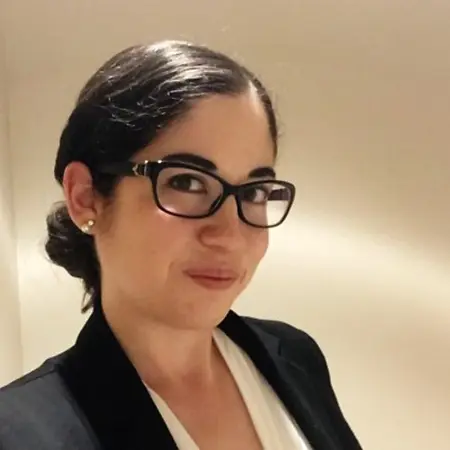
About Kristina
I've been in the learning and development field for 10 years, and my journey has been anything but traditional. I started in customer service at a flight academy, but I was really drawn to the courseware department where pilots were being trained. I made friends with everyone there and jumped at the first opportunity to move into that role, where mentors helped me learn instructional design before it was even a formal degree program. That experience opened my eyes to my true passion: helping people understand how the brain actually learns. As someone who is neurodivergent with ADHD, I've had to become an expert in my own brain, and that personal journey has deeply informed my professional work. I'm a huge advocate for recognizing that every brain works differently and learns differently, and I believe that understanding the learning sciences is absolutely critical to creating effective learning solutions. Today, I work as an associate professor at a university, do instructional design work, and create social media content for clients in various industries. What drives me most is being able to connect with my peers and help them have those aha moments about how learning really works. I love seeing the light bulb click when people realize they can design solutions that actually help learners succeed, rather than just pushing out slide decks and calling it training. My background includes a master's in communications from USC, a MicroMaster certification in instructional design and technology from University of Maryland, and a technical writing certification from UTA. I've served as VP of Communications for an ATD chapter and actively participate in the Global Learning and Development Community, where I love hearing perspectives from professionals around the world. Whether I'm teaching, designing learning solutions, or creating content that helps companies gain genuine fans, my goal is always the same: to connect authentically with people and help them succeed.
Her Interview
Ten minutes with Kristina
01What do you attribute your success to?
I genuinely attribute all of my success to God. I had a complete different plan of action than I thought I'd be taking, and I think the ADHD turned that world upside down, but God made lemonade out of the lemons. My original direction was architecture, so I'm still in design, it's just a very different version of design. Through all the hardships of having this brain type, it's brought me closer to Him, and I'm very grateful that He has turned essentially a lot of sorrow into something where I can help bring light to other people that are in a similar struggle or journey. I remember being in the DFW area and just being crushed because this brain was messing up so much in my life, and I went to the public library begging for help. I got led to Carol Dweck's book on mindset, The New Psychology of Success, and that was phenomenal. He brought the right people to me and had me pay attention to things. I would also add in my dad, who was a pilot for American Airlines. I learned from a very young age to love what you do. He was always a kid in a candy store for me, he absolutely loved flying, and you could hear it in his voice on the announcements. That always stuck out to me. Whatever I'm doing, it's because I love it, not because I have to. I never got that viewpoint that work was hard or challenging in a bogged down way, it's interesting and challenging like a puzzle I have to figure out. I definitely attribute that attitude and perspective from him.
02What’s the best career advice you’ve ever received?
From a professional standpoint, my husband has always been very supportive and has basically told me that I'm so much more capable than I give myself credit for. He's helped me understand that the hardships I go through or see can do wonders and pave the way for somebody else. It's about fine-tuning the balance of how much you give yourself in, so you're not burning out, but what you're actually able to give over and in many ways mentor. So that way it's a way of giving back, you're paying something forward.
03What advice would you give to young women entering your industry?
You definitely need to go get the degree and you need the experience as well. It's not always fun, but when you're starting out, you have to find opportunities, even if they're volunteer work. You have to build that portfolio, and it is so critical. I don't mean just creating an e-learning example, it really needs to go beyond that in showcasing your critical thinking behind it. If you're passionate about it, express that in your portfolio as well. It's really important to show the process from start to finish, what you were thinking, what you were going through, your challenges, how you overcame things. It doesn't strictly have to be writing, you could create a vlog showcasing behind the scenes. My big proponent to these women is that it's become fairly predominant as a women-driven area, so yes, you're up against other women and that's very challenging, but you can still connect with them. You can still lift each other up. It doesn't have to be this competitive thing that I think corporate tends to make it, and it doesn't need to be that way. I would invite them to seek out opportunities to be creative. If you're not finding it where you are, that's okay, but find an outlet. If that means creating something on your own on the side, then go for it and do that. You never know what doors that can open up for you. Don't ever think you're tied to the desk, because that's not true. And there's enough room at the table for all of us.
04What are the biggest challenges or opportunities in your field right now?
The biggest challenge with learning and development right now that I see is the lack of bringing in the learning sciences, or applying the learning sciences, or actually, let's take a step back to the root of the problem: choosing to learn about the learning sciences and choosing to learn how the brain actually learns. That to me is the biggest culprit, because if you don't have that, that's the root, that's setting up for what kind of learning solutions are going to actually make a difference. I think we are too caught up with the whole e-learning thing and thinking that going through a bunch of slides is gonna solve things. I had a mentor from day one that was like, you need to analyze if this is actually a learning opportunity or solution type of thing, or is this a business process that's actually having a problem. You have to actually figure that out, but everyone today seems to be like, oh, we have this change, okay quick, make an e-learning slide. I didn't realize we're not in the Matrix yet, like we can't just hook something up and learn how to fly a helicopter. If the goal is to obtain the information into long-term memory, guess what? Then you have to understand how memory works in the brain. Memory consists of attention and awareness and short-term and working memory, there's a whole pathway to get to that point. There's a lot of people that think they get it, and people need to be careful that just because somebody wrote a book doesn't make them the end-all be-all expert. What is their background? What did they go study?
05What values are most important to you in your work and personal life?
Success is always coming down to the proponents of duty, obligation, and responsibility. It's always having that at the forefront of your mind. The values of empathy are so important. It's important that you're connecting with people, and you need to hone in and continuously practice that humanness and embracing the humanness. Mistakes are made, and that's okay. Take that in for what it is, as a learning experience, a learning opportunity. Learning is endless, it's ongoing. Those are things that I kind of view both at home and in the working world.
Join Influential Women and start making an impact. Register now.