Her Story
About Kristina
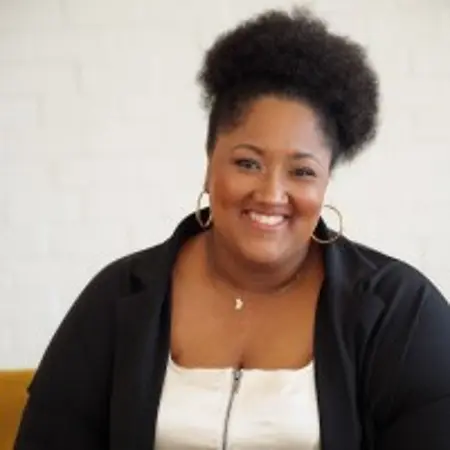
Dr. Kristina Sterling is a Social Emotional Learning and Inclusive Practice Specialist, equity advocate, and child advocate based in Garland, Texas. With over 16 years of experience in education, her path began unexpectedly during the 2008 financial crisis when she stepped into a long-term substitute role—what started as a backup plan quickly became her calling. Drawing on her background in sociology and psychology from the University of North Texas, she advanced from interventionist to classroom teacher, gaining firsthand insight into how inequities shaped by zip codes impact student outcomes.
These experiences inspired her to influence educator preparation at a broader level. Dr. Sterling earned her Master of Education from Lamar University and her Doctor of Education in Transformative Leadership from the University of New England. She now serves as Educator Success Manager at Passage Preparation, where she partners with teacher candidates, programs, and districts to strengthen certification outcomes and improve teacher readiness.
In addition, she leads KCS Educational Consulting and Professional Development and works with Equity & Beyond to design and implement equity-centered instructional and professional learning systems. Her work focuses on preparing educators to effectively serve all learners, with a particular emphasis on special education and inclusive practices.
Dr. Sterling is also the co-founder of ABSA Cares, a nonprofit organization that provides sports and global travel opportunities for underserved youth, expanding access and exposure beyond traditional boundaries. Recognized as an Outstanding Special Education Teacher by the National Association of Special Education Teachers, she brings both professional expertise and lived experience to her work, shaping systems, mentoring educators, and advocating for equitable opportunities that create lasting impact for students and communities.
Her Interview
Ten minutes with Kristina
01What do you attribute your success to?
I would honestly say I've worked very hard, and I know that sounds cliche, but I do work hard. More than anything though, I'm very much a relationship person, so building positive relationships is the backbone to anything. Building those positive relationships with people who can then help to impact change is a big piece. I've also met some really amazing people along the way, and working in partnership with them to build resources and increase impact has been key. But at the end of the day, I definitely would say relationships are what I attribute my success to.
02What’s the best career advice you’ve ever received?
The best piece of advice I've ever received is an expression that I came across not too long ago, but it really hit home: don't let the bad days win. That simple phrase has become something I hold onto, especially in education where challenging days are inevitable.
03What advice would you give to young women entering your industry?
I would say it's important to recognize the power within your own voice and your own leadership. Teaching and education is a majority female field, but what we don't often acknowledge is that the leadership positions are not. Even though teachers and the majority of people in universities' schools of education are women, we're not the majority when it comes to leadership roles, which is kind of concerning. So I would really emphasize understanding that piece and also recognizing that you don't have to have principal, administrator, executive, or CEO in front of your name to actually create change or make a difference. I think sometimes we get a little too caught up in people's titles. Your voice has power, regardless of where you sit in the system.
04What are the biggest challenges or opportunities in your field right now?
The biggest challenge in education right now is funding. There's never enough money for our kids, and it affects everything from kids' access to resources, to teachers trying to access resources, to getting good qualified teachers in the classroom and getting them access to support resources for their certification exams. Funding has always been a big thing for education, so it's not sudden, but it really is always going to be a persistent challenge. As for opportunities, I would say we have the chance to look at our systems differently. We can't have an education system that lives and breathes by one thing because it's just not sustainable and it's not good for our kids. We potentially have the opportunity to think about what we can do so that we're not always holding our breath every few years when grants are going to run out or when administrations change. How do we create a system that doesn't send us into panic mode every few years to make sure that our kids, especially our kids in special education who need those additional supports, are going to maintain the support they need? Because for some reason, that seems to be the funding that comes up or potentially is decreased first, as if it's not important.
05What values are most important to you in your work and personal life?
In my work life, I value honesty, hard work, and personal responsibility. If I'm bringing my A-game, or attempting to bring my A game because we all have off days, my hope is that your goal is to bring your A-game as well. Personal responsibility is huge because I've had multiple experiences of people wanting to put blame on someone else when they should have owned what happened. When you're able to just own your mistakes instead of listing ten reasons why it was someone else's fault, it goes a lot easier. We're all human and we all make mistakes, but bringing another person down is just a bad look. Respect is important on both the work and family side because even when we disagree all day long, keeping it respectful is key. Discourse is part of the game, but disrespect does not have to be. With family, loyalty is also going to be important. And in education specifically, if you're not flexible, you're dead in the water. I've literally had experiences where I set up my entire classroom and came in the next day to be told that wasn't my classroom anymore and had to move everything. You could teach 4th grade math one year and come back to be assigned pre-K. If you're not able to just roll with it and say okay, I guess we're doing this, you're going to drive yourself crazy. A school system is a system built by humans with humans working for it, and because of that, nothing's guaranteed.
Join Influential Women and start making an impact. Register now.