A clinical psychologist reveals how hidden childhood wounds and unconscious patterns silently control our lives, and shares her framework for gaining clarity, reclaiming choice, and redesigning your existence with honesty and purpose.
Verified Member
Influential Woman · Psychology
Kristine Danback
Clinical Psychologist/ Founder and CEO, Random Thoughts Psychological Therapy PC
NYC 06812
2Articles published
7Awards received
Her Story
About Kristine
Kristine Danback known for her direct style, clinical depth, and use of humor to reduce shame, focuses on helping clients make lasting character changes rather than simply managing symptoms and substantially heal. Kristine’s work is grounded in a psychoanalytic approach that emphasizes making the unconscious conscious. She works extensively with survivors of interpersonal trauma, including narcissistic abuse, coercive control, betrayal, and painful relationship dynamics. In addition to providing long-term psychotherapy, she leads group programs such as her Restore program, where clients work to reorient themselves after trauma and redesign their lives with intention and clarity; she is committed to building a healing community and continues to admit those who need the support. Kristine also serves as an expert witness, an divorce coach in custody disputes, helping courts better understand the impact of personality disorders, trauma, and unhealthy family systems on children and families. Kristine earned a Master’s degree in Developmental Psychology from Columbia University in NYC, and later completed advanced training in Clinical Psychology, Psychoanalytic Psychotherapy, Child and Family treatment, Divorce Mediation, and Collaborative Divorce. She has taught at both Central Connecticut State University and Western Connecticut State University, where she shared her expertise with students entering the field of psychology. Kristine is also affiliated with organizations such as the American Psychological Association and the Derner Institute. A single mother of three sons, a mountaineer, a believer and spit fire....she continues to grow her practice while mentoring clinicians and advocating for trauma-informed care in both therapy and the family court system. Kristine is an entrepreneur with more than 30 years of experience helping individuals and families heal from trauma, navigate divorce, and rebuild their lives. She is the founder and CEO of Random Thoughts Psychological Therapy PC, a New York-based practice specializing in narcissistic abuse recovery, betrayal trauma, attachment wounds, adolescent issues, and custody-related concerns. Working with Kristine is an education about you. With you she develops your self-awareness and to trust your intuition. Resilience is developed which enables her clients to adjust to life with more flexibility and action.
Her Interview
Ten minutes with Kristine
01What do you attribute your success to?
I attribute my success as a Clinical Psychologist, a mother, partner and friend to being deeply invested, truthful, while still maintaining strong boundaries — which is harder than it sounds, because caring deeply without accidentally adopting everyone is a clinical skill. I care, and people feel it. I am direct, emotionally present, and genuinely committed to helping people grow. I also bring humor into the room because shame does not usually survive well when there is honesty, warmth, and a little bit of laughter. I help people find joy while in the trenches on the battle field. I have polished rough edges — I’m from Jersey, where I have learned about diversity, resilience, directness, and how to parallel park in a crowed mall under pressure. I think that combination of clinical depth, honesty, humor, and humanity helps people feel safe enough to do the deeper work. At the core, my success comes from offering a deep understanding of people, while also challenging their perspectives. Therapy is not just about managing symptoms. It is about understanding yourself, breaking patterns, building better relationships, and creating a life that feels more alive. Many have stayed with me for years because they know I am invested in their healing, and their ability to build better lives. Investment is also something I try to teach the clinicians I mentor: how to care without overstepping, how to stay boundaried without becoming cold, and how to bring who you are and your real humanity into the room without making the work about you. To me, that balance is the heart of good therapy. It is also one of the hardest things to do well.
02What’s the best career advice you’ve ever received?
The best career advice I ever received came from mentors like Dr. Bob Mendelson and Dr. Andrew Eig, who taught me that real change does not come from politely rearranging symptoms. It comes from going deeper and helping people understand the unconscious patterns running the show. A mentor told me that I was unusually good with patients’ anger — that I could contain it, metabolize it, and not run screaming from the room. Apparently, that is a useful skill in psychotherapy. That stayed with me. It helped me understand that this work is not about avoiding difficult emotions. It is about creating a space where people can bring the messiest, angriest, most defended parts of themselves and still be met with steadiness, honesty, and care.
03What advice would you give to young women entering your industry?
The advice I would give young women entering this field is simple: be in therapy. And not just a little “I checked the box” therapy. Be in real, ongoing, depth-oriented therapy. Clean out your own closet before you start walking into other people’s. This work gets dark. People bring trauma, rage, grief, shame, betrayal, envy, fear, and all the things we politely pretend not to have at cocktail parties. If you are going to do this work well, you need a place to process what gets stirred up in you.
This profession requires far more than technical knowledge. It requires self-awareness, humility, emotional endurance, and the ability to stay present when things get complicated. Ongoing therapy helps you learn what belongs to the patient, what belongs to you, and when your own unresolved material is trying to sneak into the room wearing a name tag. It helps you become more honest with yourself, which is what allows you to be more useful to other people.
I would also tell young clinicians to be thoughtful, but courageous. Do not confuse being kind with being vague. Learn how to be authentic without being cruel, candid without being shaming, and direct without losing your emotional regulation. The goal is not to dump your feelings into the room. The goal is to know yourself well enough that you can tell the truth constructively. Some of the best clinical moments happen when a therapist is brave enough to say something real and grounded, rather than hiding behind safe, polished language. If you are never a little anxious in this work, you may not be going deep enough.
04What are the biggest challenges or opportunities in your field right now?
One of the biggest challenges in my field right now is the rise of surface-level pop psychology and unqualified coaching. Complex trauma, narcissistic abuse, betrayal, and family dysfunction cannot be healed with a catchy quote, a three-step formula, or someone on the internet who took a weekend course and bought a ring light. Too much of what is being sold as healing is really oversimplified reassurance. Reassurance has its place, but it is not the same thing as treatment.
I also think one of the deeper challenges in the field is the pressure to make everything simple, fast, digestible, and marketable. But real psychological work is not always tidy. It requires nuance, patience, and the ability to tolerate complexity. Part of what I love about psychoanalytic thinking is that it teaches us to think more complexly about simple ideas and more simply about complex ones. That balance matters. Good therapy is not about showing off jargon or drowning people in theory. It is about helping them understand themselves more truthfully and more deeply.
At the same time, there are real opportunities. Telehealth and online communities have made it possible to reach people who once felt isolated, ashamed, or cut off from meaningful support. I see this especially in the community I am building for women recovering from psychologically damaging relationships. These are women who have been in battle, who have been betrayed, and who are now trying to heal without losing themselves. Used responsibly, these platforms can create real access, real community, and real clinical depth. Healing is not just about feeling better quickly. It is about understanding patterns, rebuilding self-trust, and creating lasting change. Good treatment takes time.
05What values are most important to you in your work and personal life?
The values most important to me are integrity, truth, depth, endurance, and building things that actually matter. My integrity is rooted in my spirituality. I am a believer, although I do not push that on anyone. I am not trying to baptize people between therapy sessions. But my faith grounds me and shapes how I try to show up: honestly, ethically, and with responsibility.
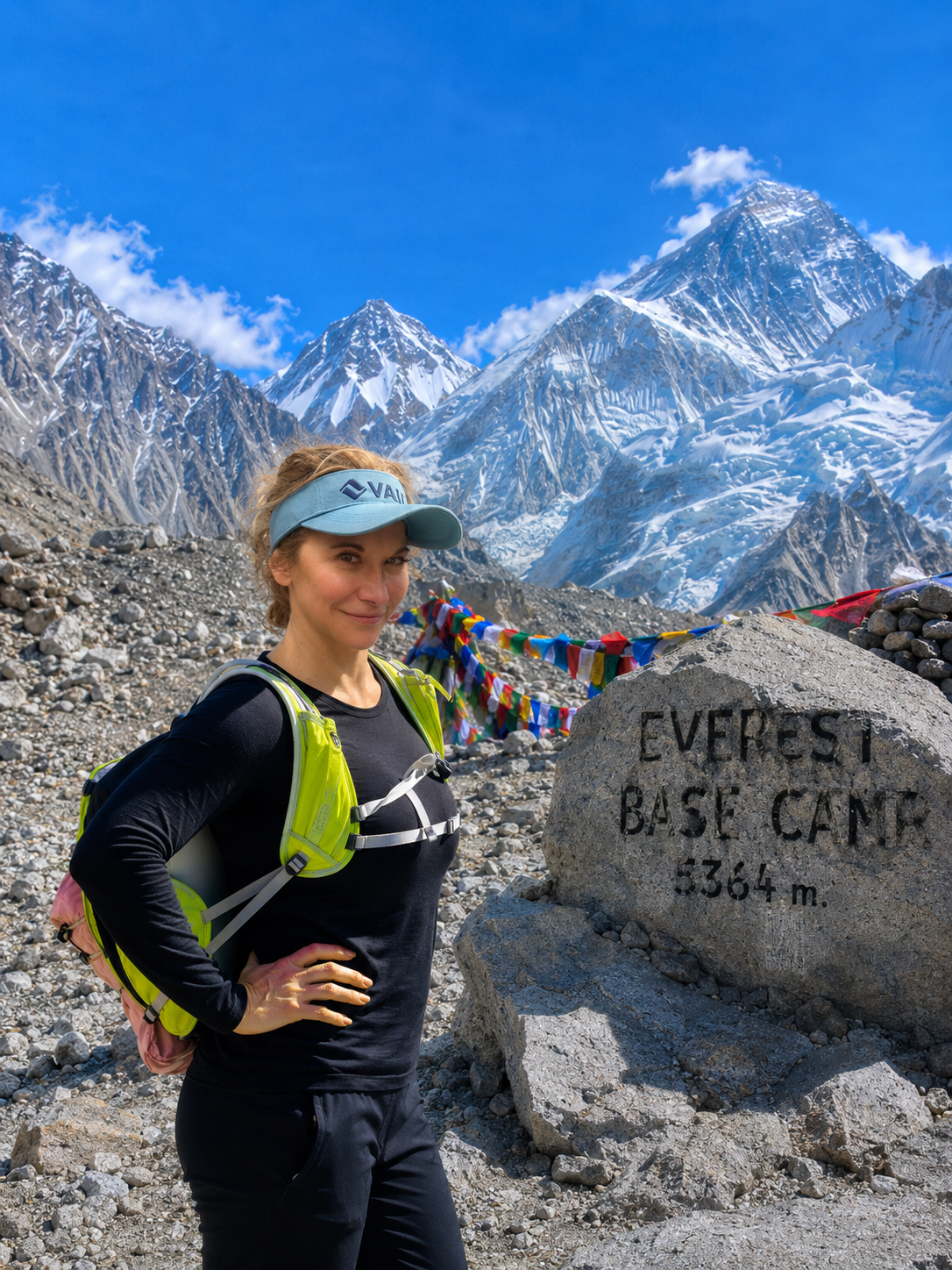
I also value clinical depth and directness. I do not sugarcoat things. I believe in telling people the truth with care. Sometimes the truth is uncomfortable, but so is staying stuck, and frankly, stuck has terrible lighting. Exercise and mountain climbing are also central to my life. I have hiked in brutal conditions, including toward Everest Base Camp, where you are exhausted, cold, muddy, questioning your life choices, and wondering why “vacation” apparently now means voluntary suffering. But that kind of struggle teaches endurance. It reminds me what people are capable of when they keep going one step at a time. That “suck” makes me a better leader and clinician. When I am sitting with someone in psychological pain, I understand something about endurance, fear, fatigue, and the moment when you think, “I cannot do this anymore,” and then somehow you do.
I am also a builder. I build a practice, a team, programs, and community — spaces where women who have been through emotional war can find one another and realize they are not crazy, weak, or alone.
Her Content Hub
Articles by Kristine
Confessions of a Reality-Confronter: How I Accidentally Built a Career Out of Telling People Things They Didn't Want to Hear
How a Clinical Psychologist Learned That Personal Growth Happens When You Stop Waiting for Permission

Years ago, if you’d asked what my life’s work would be, I would have said something noble like “helping people heal.” Turns out my actual life’s work is closer to: gently, professionally, and at $350 an hour, telling people what is known to literally everyone except them.
I’m a clinical psychologist. I have a framed Ivy League degree and everything. For decades I’ve sat across from people navigating trauma, divorce, and the special chaos of realizing their family is, in fact, the source of the problem. After all of that couch time, I’ve landed on one big insight: most of us are being run by things we cannot see, like a marionette who’s furious at the ceiling for no reason.
Childhood wounds wearing clever disguises. Fears quietly steering the car while we insist we’re driving. Family patterns so deeply baked in that we mistake them for “just how I am,” the way you might mistake expired mayonnaise for “a little tangy.”
What remains hidden shapes what is lived. Mostly badly.
This is the entire premise of my practice, Random Thoughts, which is a much better business name than “The Office Where I Tell You Things You Already Suspected.”
The Move I See People Make Constantly
Here’s the move I see people make constantly: they wait. They wait for the ex to apologize, the parent to finally get it, the situation to magically rearrange itself into something fairer. Sometimes it happens. Mostly it doesn’t, and you’ve spent four years on hold for a phone call that’s never coming.
The actual turning point isn’t getting the apology. It’s the moment you put the phone down and deal with what’s actually in front of you instead of the imaginary, better version of events you’ve been quietly drafting since 2019.
This sounds bleak. It is, in fact, the opposite. Once you see clearly, you get your choices back—boundaries, decisions, the blessed ability to stop doing the thing that’s been quietly ruining your Tuesdays for a decade. Clarity is annoying at first and extremely useful after.
The Logo, the Poppy, and the Framework
Naturally, I wanted a logo, because nothing says “serious psychological framework” like branding. At the center is reality itself—not the flattering director’s-cut version, just reality, looking back at you, unimpressed. Around it: translucent petals, because growth doesn’t arrive in one dramatic cinematic moment; it shows up in embarrassing little increments, like finally admitting your “good listener” reputation is actually just conflict avoidance with excellent posture.
I picked a poppy because poppies grow in terrible conditions and refuse to die, which felt appropriate for a flower representing the human nervous system.
The flower also gave us our framework: Restore—Reorient, Realign, Redesign. Reorient toward what’s actually true, instead of the fan fiction. Realign with your actual values, not the ones you adopted at twenty-two to impress someone who’s since blocked you. Redesign the parts of your life that no longer fit, the way you’d finally throw out the jeans from 2014.
The flower isn’t just blooming—it’s becoming, which is the dignified way of saying “doing a lot of awkward, unglamorous work where nobody claps.”
Groups, Retreats, and Where Growth Actually Happens
These days, the chaos has expanded into groups and retreats, where people gather to confront reality together, which is somehow both more efficient and more fun than doing it alone in your car at a red light—which, statistically, is where most personal growth actually happens.
My hope, minus the jokes for one sentence: to help people see clearly, live on purpose, and remember that facing what’s real is what hands your choices back to you.
Choice changes lives. Also, throw out the jeans.
A psychologist explores how clarity and insight, not just resilience, transform lives by uncovering blind spots and unconscious patterns that shape our relationships and futures.
Insight Is More Powerful Than Strength
From Resilience to Clarity: How Insight Restores Choice and Transforms Your Life
For years, I believed resilience was the answer.
As a psychologist and a woman, I admired strength and work ethic. I depended on them to survive difficult relationships, build a practice, raise three sons, and navigate a high-conflict, abusive divorce. I could go on and on about financial loss, betrayal, and uncertainty—the full weight of a life fully lived. And yet, I am grateful for my traumas.
What I did not yet understand was that strength and hard work can become defenses of their own.
You can survive a situation without understanding it.
You can leave a relationship without understanding why you entered it.
You can recover from a loss without understanding what it revealed about you.
You can even repeat the same painful patterns while calling yourself resilient.
Ha! What is the point?
That is not enough, my friends.
Clarity Does
Years ago, I climbed to Everest Base Camp. At altitude, doubt is constant. Your lungs work harder for less air, your body questions every step, and the destination ahead never seems to get closer, no matter how far you've come.
What got me through was learning to read both my body and the terrain: knowing when to push, when to rest, when the thinning air was fear talking, and when it was my body asking for caution.
Strength alone doesn't get you to 17,600 feet.
Clarity does.
What Am I Not Seeing?
The same was true off the mountain.
The turning point in my life came through discovering my blind spots and doing my own psychoanalytic therapy to gain insight. It was brutal work—facing shame, confronting feelings of inadequacy, and moving through depression.
As both a clinical psychologist and a woman who had lived through narcissistic abuse and relational trauma, I began asking a different question—not, "How do I get through this?" but, "What am I not seeing?"
That question changed everything.
It changed my love life.
It changed my mothering.
It changed my professional life, allowing me to offer my patients more of myself and a deeper understanding of the human experience.
What remains hidden shapes what is lived.
Unconscious beliefs, childhood roles, relationships that feel familiar rather than healthy, and fears we avoid confronting—these concepts may roll easily off our TikTok feeds, but they are also the forces that quietly organize our lives behind the scenes, the way fog obscures a ridgeline you know is there.
Most people try to change their lives without ever understanding what is driving them.
I am here to tell you: it doesn't work that way.
Insight Restores Choice
Insight changes that because when we make the unconscious conscious, we gain something more valuable than strength:
Choice.
We can choose different relationships.
Different boundaries.
Different futures.
Today, after more than thirty years as a clinical psychologist, my work rests on one core belief: insight restores choice.
My investment in my patients offers them the security and courage required to do this work. Whether I'm working with someone recovering from betrayal, navigating divorce, or rebuilding after trauma, the goal isn't simply to help them cope—it's to help them see.
Because once we see clearly, we are no longer directed by what remains hidden.
We become active participants in our own story.
That is where transformation begins—on the mountain and in the psychotherapy treatment room.
Join Influential Women and start making an impact. Register now.