Her Story
About Kristy
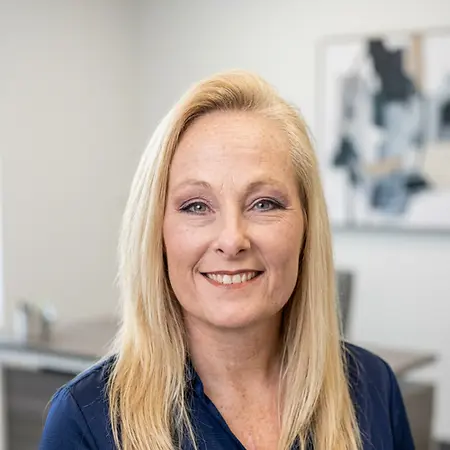
Kristy LaLonde is the Founder and Owner of Vargon Recovery Support Services and a candidate for Sheriff of Chowan County. She brings a unique combination of experience in public safety and behavioral health, grounded in years of direct service to individuals impacted by the justice system and substance use disorders.
She spent eight years in law enforcement, beginning in narcotics and later moving into community policing, where she gained a well-rounded understanding of both enforcement challenges and community needs. In 2018, she became a certified substance use counselor and began working across four North Carolina counties through TASC programs, supporting justice-involved individuals with complex mental health, substance use, and recovery needs. She also served on a Community Support Team, providing substance use counseling and coordinated support services across five North Carolina counties. Through this work, she developed a deeper understanding of rehabilitation, recidivism, and the critical role of long-term, community-based support systems.
In 2025, she founded Vargon Recovery Support Services, named in honor of her lifelong best friend whom she tragically lost to substance use and mental health challenges, particularly those rooted in trauma. This personal loss continues to be a driving force in her commitment to compassionate, accessible care for others facing similar struggles. Vargon Recovery Support Services is a fully self-funded practice dedicated to providing substance use counseling and recovery support to underserved populations. Her work is centered on meeting individuals where they are—both physically and in their recovery journey—while ensuring access to care regardless of insurance or financial barriers. She emphasizes collaboration and continuity of care by connecting community resources, mental health services, and justice system supports to improve long-term recovery outcomes.
After facing a significant health challenge that required emergency surgery and a period of intensive rehabilitation, Kristy gained an even deeper appreciation for resilience, recovery, and the importance of strong support systems during critical life moments. This experience further strengthened her commitment to service and advocacy.
She is now running for Sheriff with a platform centered on building stronger coordination between law enforcement, the courts, and behavioral health and recovery services. Her focus is on strengthening communication between systems, improving access to meaningful support, and expanding approaches that address underlying issues before they become repeated cycles in the justice system. Her vision is shaped by years of experience working directly with both enforcement and recovery populations, and by a commitment to practical, community-based solutions that improve long-term outcomes.
Her Interview
Ten minutes with Kristy
01What do you attribute your success to?
I credit my success to having strong, dependable people in my life—people I can trust, lean on, and talk things through with. Throughout my career, from narcotics work to community policing to counseling, I’ve learned how important it is to have people who help me process life. Self-care is essential, and I’ve learned not to bury my own struggles while focusing on everyone else’s, because eventually those buried issues will surface.
I’ve also developed resilience and a determination to prove people wrong. While attending basic law enforcement training, I shared my goal of working in narcotics and was told that women weren’t suited for that kind of work. Instead of discouraging me, it motivated me even more. I graduated and went straight into the Eastern North Carolina Narcotics Task Force, collaborating with numerous law enforcement agencies throughout Eastern North Carolina.
I’ve learned never to let anyone define my limits or tell me what I can’t accomplish. I’m tender-hearted and I do cry, but I refuse to let doubt from others weaken my resolve. At the same time, I’ve learned not to be so independent that I convince myself I don’t need support. We were never meant to go through life alone, and having people in your corner makes all the difference.
02What’s the best career advice you’ve ever received?
The best career advice I’ve ever received is that I don’t have to prove my worth by doing everything alone. Early in my career, I also learned that doubt from others can either limit you or motivate you—and I chose to let it push me forward instead of hold me back. I’ve carried that with me ever since: stay grounded, take care of yourself while you’re taking care of others, and don’t let anyone else define what you’re capable of becoming.
03What advice would you give to young women entering your industry?
My advice is to surround yourself with solid, trustworthy people who you can rely on and be honest with. Having that kind of support system is essential, because no one is meant to carry the weight of life or this work alone. Prioritize self-care and be intentional about it. Don’t push your own struggles aside while showing up for everyone else, because eventually what you ignore will find its way back to the surface. Learn to recognize when you need help and allow yourself to receive it.
Confidence is also key, especially as a woman navigating spaces where your abilities may be questioned. There will always be moments where others try to define your limits, but you can’t allow that to shape your path. Early on, I was exposed to the idea that certain opportunities weren’t meant for women. Rather than deterring me, it strengthened my determination. Since then, I’ve continued to encounter doubt about what women can achieve, and I’ve chosen to meet it with consistency, determination, and a belief in my own potential rather than limitation.
At the same time, real strength includes balance. You can be strong and driven without isolating yourself. Independence is important, but so is community. We’re not meant to navigate life alone, and having dependable people in your corner makes all the difference. I’m deeply compassionate and feel things strongly, but I’ve also learned to be intentional about protecting my peace and being mindful of who has access to my vulnerability.
04What are the biggest challenges or opportunities in your field right now?
The biggest challenge—and also the biggest opportunity—in my field is the lack of true collaboration between systems that are all dealing with the same people from different angles.
Over the course of my career, I’ve seen how disconnected those systems can be. In some roles, the focus is solely on enforcement and moving from one case to the next, while in other settings I’ve had the chance to see people more holistically and understand the circumstances behind their behavior. Working across those different environments showed me very clearly what happens when systems operate in silos—and what becomes possible when they don’t.
The opportunity now is to bridge those gaps. There is real potential in bringing law enforcement, mental health services, substance use treatment, and the courts into better alignment so that responses are more coordinated and effective. Too often, people fall into a cycle that doesn’t lead to lasting change, and that revolving door is something we have the ability to address if we work together differently.
From my perspective, this is where leadership at the community level can make a meaningful difference—creating space for collaboration, improving communication across agencies, and focusing on solutions that offer both accountability and support. The individuals I’ve worked with in underserved and often overlooked populations are exactly who would benefit most from that kind of coordinated approach.
05What values are most important to you in your work and personal life?
The values that guide me most in both my work and personal life are collaboration, accountability, and compassion.
I believe real progress happens when systems and people work together instead of in isolation. Whether it’s law enforcement, mental health, substance use treatment, or the courts, I value efforts that bring these areas into better alignment so responses are more coordinated and effective. Too often, people get caught in cycles that don’t lead to lasting change, and I believe we have a responsibility to work together differently to change that outcome.
I also value accountability paired with compassion—holding people responsible while still recognizing their humanity and the circumstances that shape their lives. To me, effective leadership means creating space for both structure and support, and making sure communication between systems is clear and consistent.
At the center of it all is a commitment to serving people who are often overlooked. I value meeting individuals where they are and working toward solutions that give them a real opportunity for stability, growth, and change.
Join Influential Women and start making an impact. Register now.