Her Story
About Krystyna
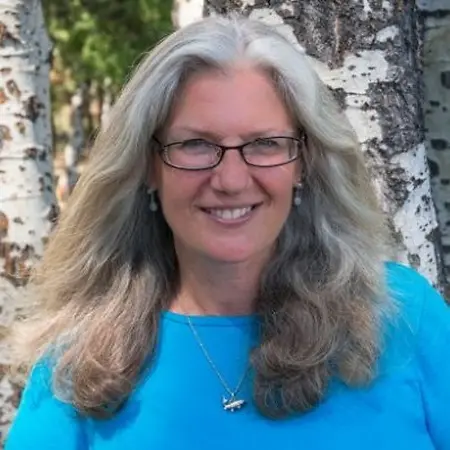
Krystyna U. Wolniakowski is a conservation leader, biologist, and public policy expert whose 45-year career has been dedicated to advancing environmental stewardship through collaboration. As Executive Director of the Columbia River Gorge Commission, she oversees the management and protection of the Columbia River Gorge National Scenic Area, a 300,000-acre bi-state landscape spanning Oregon and Washington. Her work focuses on balancing ecological preservation, cultural heritage, community needs, and economic vitality within one of the most diverse and heavily visited scenic regions in the United States.
Throughout her career, Krystyna has worked at the intersection of science, policy, and community engagement. She has held leadership roles with organizations including the National Fish and Wildlife Foundation, the Oregon Watershed Enhancement Board, and the German Marshall Fund of the United States. A trained biologist with a Master of Science in Oceanographic and Marine Studies from Oregon State University, she has long been driven by a commitment to helping people understand the essential connection between healthy ecosystems and thriving communities. Her expertise spans watershed conservation, environmental policy, collaborative governance, and large-scale natural resource management.
In addition to leading the Gorge Commission, Krystyna serves as Board President of the Klamath River Renewal Corporation, helping oversee the historic removal of four dams and the restoration of the Klamath River watershed to support salmon recovery and ecosystem health. Throughout her career, she has worked closely with tribal nations, local communities, state and federal agencies, elected officials, and conservation organizations to build consensus around complex environmental challenges. Often one of the few women in leadership discussions throughout her career, Krystyna has remained committed to pragmatic, collaborative solutions that create lasting benefits for both people and the environment.
Her Interview
Ten minutes with Krystyna
01What do you attribute your success to?
I attribute my success to patience, perseverance, tenacity, and trying to listen. I think it's probably listening skills and trying to figure out what people need and what people want, and then overlaying that with what I need to do with the agency, and to try to find a way to thread the needle on making sure I fulfill my responsibilities while still helping other people understand their responsibilities as being part of this landscape. I think the listening skills is really critical, but still really understanding the sideboards of what my responsibilities are.
02What’s the best career advice you’ve ever received?
The best career advice I've ever received is to always follow your gut. You know, we all have a lot of knowledge of whatever we are working on and working for, but to have a vision of what you want to achieve, and then try to figure out all the building blocks to get there. I am a true believer in kind of the logic model - you look to where you want to be, and then you work backwards from there about all the different steps you need to take to get there. Who do you need to have on your side? Who is going to oppose you? Why are they opposing you? And what is it that you can do to reduce the tension and kind of get to yes. And that's all about negotiation skills and, as I said, listening and trying to figure out a collaborative approach. Sometimes you have to go slow to go fast. I can be driven by my vision, and what I think is right, but I really have to have other people - I have to bring other people along to be able to make that happen.
03What advice would you give to young women entering your industry?
I think you have to have self-confidence. You have to believe in what you want to do and what you want to accomplish, and then you find ways to do it, and it's always going to be tougher for women as leaders, because there's still a tremendous amount of, to this day, there's still a tremendous amount of sexism out there, and women are always held to a higher standard, and you just have to be prepared to do that. You always have to be prepared to work twice as hard. And so you just have to do it. Different women have different goals, and so, whether you're gonna be the best mom on Earth, or you're gonna be the best conservation director on Earth, you just have to believe in yourself and listen to people. I can give you an example - I just watched the Catherine Graham documentary, and despite being the only woman in the room, she had to deal with a lot of disrespect, she had to deal with President Nixon calling her horrible names, but she prevailed. She followed her gut. She kind of mustered up the self-confidence that she needed to make the decision she needed to make the Washington Post a successful newspaper, and she was relentless. But she also listened, and she knew who to trust as advisors. Failure comes when you don't listen to your gut, failure comes when you start having a lot of self-doubts and letting other people define who you are.
04What are the biggest challenges or opportunities in your field right now?
I think people appreciate the beauty that we've been able to protect. I think some of the challenges are that people want to keep this landscape intact, and they appreciate the beauty, and many people live here because of the beauty, but people also want to do what they want to do. And they want to build, and they want to develop, and they want to have homes on ridgetops with the beautiful views. And so, it's this constant balancing of reminding people that they live here because it's beautiful, but somebody has to manage those lands, and that's our agency that does that. And so, I think the challenge is in communicating that you can live in a beautiful landscape, but you also have to be a steward of it. And that requires looking beyond your backyard and really being able to understand the importance of having a place that is still ecologically intact. There are many people who want to come and build big hotels, or they want to develop different properties here, and that detracts from the landscape that you're trying to protect. So I'm constantly balancing the stewardship and the future of this National Scenic Area with the fact that people live here, and they need to have their businesses, they need to have their homes, and how do we make that happen? That's the constant challenge - balancing economic vitality with conservation.
05What values are most important to you in your work and personal life?
Integrity is most important to me - always telling the truth. And I think there's a lot of spiritual values through what I try to do as well, and that is that people need a healthy Earth. We need clean air, we need clean water, we need water supplies for our own benefit, but we also need a planet that supports those. And so, for me, the values reflect the respect of who we are on this earth, and how we protect the very environment that sustains us. I can talk about values like personal behavioral values, which I am steadfast on those. But there are other values, about recognizing other people's rights, for example, like indigenous rights. They are sovereign nations, and we need to respect people that are also different than us, and try to listen and come to understand their role in this world. I think my values are integrity, listening, truth-telling, and just following a course of action that you really believe in. For me, and this isn't true for everybody, and it doesn't need to be true for everybody, but I've always led my life to where my personal values and my professional values are the same. And it's a blurry line between what I do for a living, my 7 a.m. to 5 p.m. job every day, versus what I do in my personal time. And because of that, I can work till I'm 70, because it doesn't feel like a job. It feels like I'm just fulfilling my responsibilities. I feel very lucky, because there are many people who work their 9 to 5 and can't wait till they retire, but for me, it's like, what does that even mean to retire? I'm not gonna retire from my values.
Join Influential Women and start making an impact. Register now.