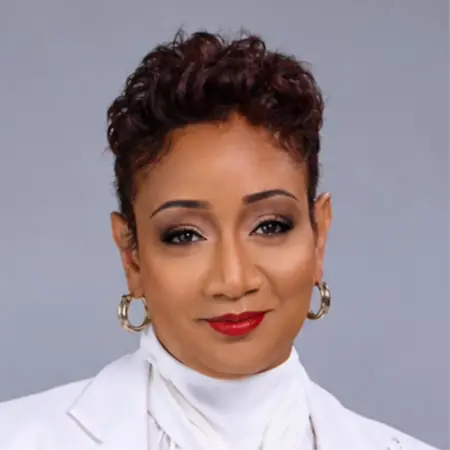
Her Story
About La Keisha
La Keisha W. Ratliff, Ph.D., is an accomplished education, human resources, and project management professional with more than three decades of experience in public education. She currently serves as a Child Find Assistant Project Manager within the Department of Special Education, where she supports regulatory compliance, systems coordination, stakeholder engagement, and data-informed initiatives designed to strengthen the identification and support of students who may require special education services.
Her expertise spans school-age Child Find, early childhood education, Montessori education and administration, workforce development, professional training, organizational leadership, and process improvement. Throughout her career, Dr. Ratliff has demonstrated a strong ability to lead and coordinate complex initiatives, develop sustainable systems, foster cross-functional collaboration, and translate policies and procedures into practical, accessible resources for educators, families, administrators, and school-based teams.
Dr. Ratliff’s academic and professional preparation reflects her longstanding commitment to continuous learning, service, and leadership. She earned her bachelor’s degree in English and Mass Communications from Virginia State University, followed by graduate degrees in Curriculum and Instruction, Administration and Supervision, and Business Administration, as well as a Doctor of Philosophy in Education. She also holds 17 Maryland professional teaching licenses and credentials, complementing her extensive experience across education, administration, human resources, and organizational leadership.
Her career accomplishments reflect both innovation and measurable impact. Dr. Ratliff founded a female mentoring program for middle school students that received recognition from the Governor of Maryland, earned a Teacher of the Year nomination, and played an instrumental role in helping to secure and preserve a $1.9 million grant supporting early childhood education initiatives.
A committed advocate for educational equity, access, and community engagement, Dr. Ratliff has consistently leveraged her leadership to expand opportunities for students and families. During the COVID-19 pandemic, she organized and coordinated a diverse team focused on supporting Black and Brown students in underserved and low-income communities, contributing to the successful implementation of an in-person summer learning program that served more than 1,700 students.
Beyond her professional responsibilities, Dr. Ratliff has provided leadership and service through numerous professional and community organizations, including Alpha Kappa Alpha Sorority, Incorporated®, the Maryland State Educators Early Childhood Education Association, the American Montessori Society, and professional school administrators’ organizations.
Through her work in special education, early childhood education, human resources, project management, and organizational leadership, Dr. Ratliff remains committed to strengthening educational systems, removing barriers to access, and ensuring that students and families receive the resources, advocacy, and support necessary to thrive. Her career reflects a guiding commitment to transforming complex systems into meaningful opportunities for the communities she serves.
Her Interview
Ten minutes with La Keisha
01What do you attribute your success to?
I attribute my success to a strong educational foundation, an unwavering commitment to lifelong learning, a heart for serving others, and, above all, my faith in God. Earning two bachelor’s degrees, multiple master’s degrees, a doctorate in philosophy and education, and 17 Maryland teaching licenses has provided me with the knowledge, versatility, and expertise to make a meaningful impact across education, leadership, and entrepreneurship.
As the owner of SLAM DUNK ENTERPRISES LLC, I have had the privilege of helping more than 1,000 individuals navigate the complexities of student loan debt, better understand their options, and pursue greater financial stability. For me, however, success extends far beyond professional accomplishments, degrees, titles, or accolades. True success is measured by the lives we touch, the doors we help open, and the positive difference we make in the lives of others.
That belief also inspires my commitment to giving back and supporting charitable organizations, including the American Breast Cancer Society and the Pink Pearl Association. I believe that our gifts, talents, education, and experiences are not meant solely for our own advancement; they are meant to be used in service to others and to create opportunities for those who come behind us.
One of the biblical principles that continues to guide my journey is Proverbs 18:16: “A man’s gift maketh room for him, and bringeth him before great men.” I have witnessed this principle throughout my life: when we faithfully develop our gifts, remain committed to our purpose, and use what God has given us to serve others, opportunities have a way of finding us.
I truly believe my gift has made room for me—but more importantly, I believe God has given me that room so that I can use my gifts, my voice, my knowledge, and my experiences to make room for others.
02What advice would you give to young women entering your industry?
I would encourage young women entering education to first understand that this profession must be about purpose, not simply a paycheck. If you enter education solely for the money, you may find yourself disappointed more times than you can count. Be certain that educating and serving children is part of your God-given purpose, because there will be many moments when you will call upon Him for wisdom, patience, guidance, and direction—not only for yourself, but also to help your students remain on their own paths toward success.
Develop resilience and have tough skin. You will encounter parents and caregivers who may question or challenge your decisions, methods, and professional judgment. Do not allow those experiences to discourage you. Stand confidently in your preparation and expertise while remaining respectful, professional, and willing to listen. Model the collaboration you want to see by helping families understand that educators and parents should never be adversaries; we are partners with a shared responsibility for the success of the child.
Before determining how best to teach a student, take the time to understand who that student is. Learn about their background, circumstances, culture, strengths, challenges, and basic needs. Sometimes the behavior we see in the classroom is communicating something a child does not yet have the words to express. Create an intentional and inclusive learning environment where every student feels seen, respected, supported, challenged, and capable of succeeding.
Seek mentorship throughout your career, not just when you are new to the profession. Mentorship should be an ongoing process of reflection, accountability, encouragement, and professional growth. I also strongly encourage educators to videotape themselves teaching, when permitted by school policy and appropriate privacy requirements, and review those lessons afterward. Watching yourself teach can reveal things you may never notice in the moment—from your tone and body language to your questioning techniques, classroom management, student engagement, and overall effectiveness.
You will also encounter people within the profession who may have lost sight of why they entered education—or perhaps never fully discovered their purpose in the first place. Do not allow their lack of passion to dim yours. Instead, be willing to become a fisherman: help guide others back toward the shore, remind them of the importance of the work, and help them see the light and potential that still exists within our most challenging students.
Most importantly, remember that some of the students who challenge you the most may ultimately need you the most. Never underestimate the power of one educator who refuses to give up on a child. Lead with purpose, teach with compassion, remain teachable yourself, stand firmly in your convictions, and allow God to guide you through the difficult moments. Education is more than what we teach—it is about whom we reach, what we awaken within them, and the legacy we leave behind.
03What are the biggest challenges or opportunities in your field right now?
One of the greatest challenges I have experienced throughout my career in education has been the lack of genuine mentorship and supportive leadership. At times, it almost felt like an unspoken rite of passage to work under women leaders whose intensity crossed the line from high expectations into behaviors that could feel intimidating, dismissive, and, at times, bullying. The expectation was often to accomplish the work, accept even more responsibility as the “reward” for doing it well, and continue producing without necessarily receiving acknowledgment, encouragement, or recognition.
It was rare to hear, “You did a good job,” or to receive public acknowledgment that my contributions were valued. Ironically, the more I accomplished and demonstrated my capabilities, the more responsibilities I inherited. At certain points in my career, instead of feeling developed, supported, and mentored, I found myself navigating increasingly difficult and sometimes hostile working environments.
Those experiences taught me one of the most important leadership lessons of my career: I could not control how others chose to lead me, but I could control the kind of leader I would become. I made a promise to myself that if I were ever entrusted with supervising, mentoring, or leading others, I would never intentionally diminish another person in order to accomplish the work. Accountability, excellence, and high expectations are essential, but they do not require intimidation, humiliation, or the absence of compassion.
That philosophy is captured beautifully in the words often attributed to the late Dr. Maya Angelou: “People will forget what you said, people will forget what you did, but people will never forget how you made them feel.” Those words have remained meaningful throughout my leadership journey because leadership is not simply about completing an assignment or achieving a goal—it is also about how we develop, encourage, value, and treat the people entrusted to our leadership along the way.
Perhaps one of the greatest examples of turning that philosophy into action was my work with our district’s three public Montessori schools. Recognizing the importance of mentorship and leadership development, I founded and mentored a collaborative group of Montessori Lead Teachers representing all three schools. Under my leadership, this core group worked tirelessly to develop curriculum, create instructional resources, and support Montessori educators during one of the most unprecedented periods in education.
When COVID-19 forced schools into virtual learning, we faced an extraordinary challenge: How do you take a 150-year-old educational model intentionally built around hands-on materials, carefully prepared environments, independence, movement, and in-person learning and successfully translate it into a virtual environment? We refused to accept that it could not be done.
Together, we reimagined how Montessori education could be delivered while remaining grounded in its philosophy and instructional principles. Our teachers collaborated extensively, wrote curriculum, developed resources, shared best practices, and created innovative approaches to supporting students and families remotely. What began as a response to an immediate crisis ultimately became an example of systemic change, innovation, and collective leadership.
The impact extended beyond our own schools. Our work became highly sought after within the broader Montessori community, creating opportunities to collaborate with Montessori schools and professionals beyond our district. We also carefully vetted organizations and professional-development providers to identify high-quality training opportunities for our educators. Our goal was not simply to survive virtual learning; we wanted to strengthen the Montessori program for the future.
Equally important, we intentionally invested in developing our people. Through mentorship, professional learning, collaboration, and leadership opportunities, we worked to build a robust pipeline of Montessori educators and future school leaders. For me, that was especially meaningful. I had experienced what it felt like to progress professionally without the mentorship I needed, so I became intentional about creating mentorship opportunities for others.
That same commitment to equitable access and systemic change guided my leadership during the COVID-19 pandemic in other areas. I organized a diverse, Hispanic-led team to support Black and Brown students and families in low-income communities, addressing critical educational and family needs during an extraordinarily challenging time. I also helped implement an in-person summer learning program that successfully enrolled more than 1,700 students, providing children with access to educational opportunities and support when those connections were desperately needed.
That commitment to access continues through teams providing bilingual support to families during family engagement activities, IEP meetings, school-related communication, and interactions with educational leadership. Language should never determine a parent’s ability to advocate for their child, and access should never determine a student’s opportunity to succeed.
Ultimately, some of my most difficult professional experiences helped shape my greatest leadership principles. The absence of mentorship taught me to become a mentor. The absence of recognition taught me to recognize others. Experiencing difficult leadership taught me to lead with humanity. Witnessing inequities taught me to create access. And confronting unprecedented challenges taught me that transformational leaders do not simply preserve existing systems—they have the courage to reimagine them.
I have learned that great leadership is not measured solely by how much work gets accomplished. It is measured by the people we develop, the opportunities we create, the systems we strengthen, and how people feel after having been led by us. My goal has always been to leave both the people and the programs entrusted to my leadership stronger than I found them.
04What values are most important to you in your work and personal life?
The values that are most important to me in both my professional and personal life are faith, service, perseverance, integrity, mentorship, and creating opportunities for others. At the foundation of them all is my faith in God. One Scripture that has guided me throughout my life is Philippians 4:13: “I can do all things through Christ which strengtheneth me.” I have carried that belief with me through some of my greatest accomplishments as well as some of my most difficult seasons. My faith reminds me that my strength does not come solely from my education, experience, titles, or abilities; it comes from knowing that God has equipped me for the assignments He has placed before me.
Interestingly, education was not the career I originally envisioned for myself. My initial aspiration was to become a sports broadcaster. However, after working on a project with D.C. Public Schools and volunteering at my childhood church teaching Vacation Bible School, I discovered something unexpected—a genuine passion for teaching, mentoring, and serving children and families. What began as an unexpected turn ultimately became a calling and a career spanning more than three decades.
Service has remained central to that calling. I believe that whatever knowledge, influence, resources, or opportunities I have been blessed to receive should also create opportunities for someone else. That belief led me to establish a female mentoring program for middle school students that was recognized by the Governor of Maryland and the Prince George’s County Executive in 2005. Being nominated for Teacher of the Year was also meaningful, but the greatest reward has always been knowing that my work positively affected the lives of students and families.
Perseverance is equally important to me. Education requires the ability to continue moving forward when circumstances are difficult, systems are resistant to change, or the outcome is uncertain. Throughout my career, I have learned that meaningful change often requires persistence. One example was helping bring Judy Centers out of Corrective Action while helping preserve a $1.9 million grant for early childhood education. That experience reinforced my belief that challenges should not automatically become stopping points; sometimes they are invitations to think differently, work harder, collaborate more effectively, and find another way forward.
Integrity guides how I approach both people and responsibilities. I believe in doing what is right even when no one is watching, keeping my word, treating people with dignity, and remaining accountable for the responsibilities entrusted to me. Titles may give someone authority, but integrity is what earns trust.
Mentorship has also become one of my deepest values, particularly because I understand what it feels like to advance professionally without always receiving the mentorship, encouragement, or recognition I needed. Rather than allowing those experiences to make me bitter, I made a conscious decision to become the kind of mentor and leader I wished I had encountered more often. I want the people I lead to know that excellence and compassion can coexist—that I can hold someone accountable, challenge them to grow, and still make sure they know their contributions are valued.
Finally, I value advocacy and creating opportunities for others. Whether I am working with students, families, educators, colleagues, or members of my community, I want people to leave an interaction with me feeling that someone saw their potential, listened to their concerns, and was willing to help open a door.
Ultimately, my values are rooted in a simple belief: my life and my work should be about more than my own success. Faith gives me strength, integrity keeps me grounded, perseverance keeps me moving, service keeps me humble, and mentorship allows me to reach back and help someone else move forward.
Philippians 4:13 reminds me that I can do all things through Christ who strengthens me—but I also believe that when God gives us strength, gifts, knowledge, and opportunities, He expects us to use them to strengthen someone else.
Join Influential Women and start making an impact. Register now.