Explore how collaborative design, thoughtful planning, and adaptive technologies create homes that foster independence, safety, and comfort for people of all ages and abilities through holistic, accessible living spaces.

Verified Member
Influential Woman · Construction and Design Education
LaDonna A. Eriksen
Chief Executive Officer / Director of Education, Construction Education Consortium
Omaha, NE 68122
1Article published
Her Story
About LaDonna
LaDonna A. Eriksen is a seasoned educator, designer, and construction industry leader based in Omaha, Nebraska. She serves as CEO and Director of Education for Construction Education Consortium, where she develops and leads multidisciplinary training programs for contractors, designers, real estate professionals, and occupational therapists. With advanced credentials including BS, MS, CASSI-PRO, and NKBA certification, she brings together decades of experience in both education and residential construction to elevate industry standards and improve how homes are designed and built.
With over 40 years in interior design through Interiors By Design and a long career in education, LaDonna specializes in kitchen and bath design, universal design, and accessible housing. She is known for pioneering “forever homes”—residences designed to support aging in place and accommodate people of all abilities, including those with mobility limitations, neurodiversity, sensory impairments, and chronic health conditions. Her work is grounded in the belief that homes should be designed to fit the human body, not force people to adapt to poorly designed spaces.
Her approach uniquely integrates construction science with anatomy, physiology, and evidence-based research drawn from medical and scientific journals. A former adjunct instructor and lifelong educator, she has taught anatomy and physiology and continues to translate complex research into practical building solutions. Through her leadership, teaching, and design work, she advocates for inclusive, accessible, and functionally intelligent housing that improves quality of life for all users.
Her Interview
Ten minutes with LaDonna
01What do you attribute your success to?
I attribute my success to my willingness to think outside the box and challenge conventional approaches in the construction industry. When I designed and built our prototype home, I was told it couldn’t be done, but I chose to move forward by asking the right questions, working closely with carefully selected subcontractors, and finding solutions to challenges others had not attempted before. My success also comes from combining over 50 years of teaching anatomy and physiology with more than 40 years in construction and design, allowing me to apply scientific and medical principles to how homes are built. By continuously researching medical and scientific literature, I am able to design homes that are grounded in evidence and better aligned with the needs of the human body.
02What’s the best career advice you’ve ever received?
The best career advice I’ve received is that a successful, rewarding career comes from staying aligned with purpose and using your expertise to solve real human needs. It reinforced my belief that homes should be designed to fit the human body, especially for people with disabilities, rather than expecting people to adapt to their environment. This perspective also guided me to develop an accredited program that teaches professionals accessible and inclusive home design, helping others apply these principles in their own work.
03What advice would you give to young women entering your industry?
My advice to young women in this industry is to break the mold, think outside the box, and trust your ability to make a real difference. Don’t let “it can’t be done” discourage you—use it as motivation to find better solutions and create meaningful change in how things are designed and built.
04What are the biggest challenges or opportunities in your field right now?
One of the biggest challenges in my field is changing long-standing industry mindsets that often overlook accessibility and human-centered design in home construction. At the same time, there is a strong opportunity to advance the field through education and research. In my role as CEO and Director of Education and Research, I focus on expanding awareness and training so professionals can apply evidence-based, inclusive design principles. The goal is to shift the industry toward creating homes that truly support all people.
05What values are most important to you in your work and personal life?
What matters most to me is creating real impact by designing homes that truly work for people, especially those with disabilities and diverse needs, including neurodiversity, mobility challenges, and sensory or cognitive conditions. I am passionate about making spaces accessible, functional, and human-centered, not just compliant on paper. In both my work and personal life, I value continuous learning through research in science and medical literature, as well as staying grounded through time with my husband and short travels. Overall, my values center on purpose-driven work, accessibility, and improving quality of life through thoughtful, evidence-based design.
Her Content Hub
Articles by LaDonna
Functionality in Living Environments
How Collaborative Design and Smart Technology Create Homes That Support Independence, Safety, and Comfort Across All Ages and Abilities
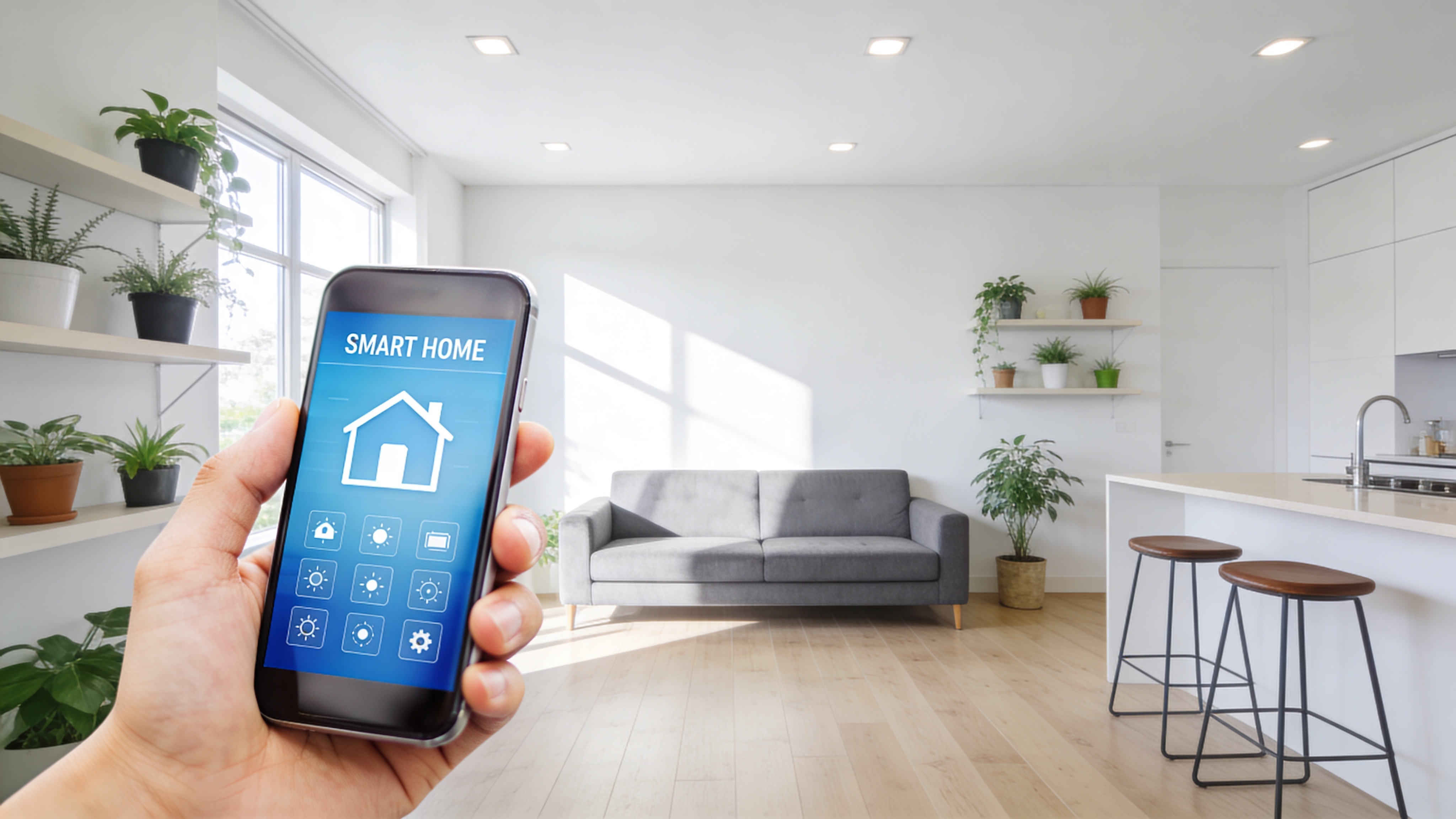
We are going to take a journey and explore the critical components that make residential spaces not only accessible, but exceptional. The destination is a home that supports people of all ages and abilities with independence, safety, and comfort. The path requires more than good intentions; it takes collaborative planning across professions and thoughtful decisions—from layout to materials to smart systems—that together form a holistic framework for equity in the built environment.
Creating a truly supportive home—one that fosters independence, comfort, and long-term safety—requires more than thoughtful design. It demands proactive, interdisciplinary collaboration grounded in clear intent and future-oriented planning. This process begins with a design charrette: an inclusive kickoff that brings together homeowners, caregivers, architects, general contractors, interior designers, occupational therapists, and technology integrators. Rather than simply exchanging ideas, this gathering aligns visions and defines what “functioning well” means for each occupant.
The charrette produces a shared intent document that captures critical goals, distinguishing between must-haves and nice-to-haves, and laying the foundation for coordinated decisions across trades. From cabinetry and appliance clearances to switch placement and grab-bar blocking, cross-disciplinary planning reduces downstream conflicts and ensures systems work holistically. To future-proof the space, teams invest early in infrastructure—conduit, panel capacity, low-voltage wiring, neutral wires, and accessible junction points that allow flexibility for decades.
Arrivals are step-free with flush thresholds, 36-inch doorways, and 42-inch-plus hallways to support effortless circulation. Continuous, level flooring and 60-inch turning radii at key nodes reduce effort and eliminate trip hazards. Bedrooms and living areas maintain two-sided bed access, reachable controls, uncluttered pathways, flexible seating, quiet zones, and effective light control for glare and blackout conditions.
Stairs include railings on both sides, high-contrast edge markings, and uniform risers. Stacked closets or a designated residential platform lift location are incorporated to preserve future elevator readiness.
Kitchens are organized into distinct prep, cook, clean, and serve zones. They include multi-height work surfaces with optional knee clearance, pull-out work boards, deep drawers, D-shaped pulls, induction cooktops with auto shutoff, and wall ovens installed at accessible heights.
Bathrooms feature curbless showers with linear drains, reinforced walls for future grab bars, slip-resistant heated flooring, handheld and fixed showerheads with thermostatic controls, and comfort-height toilets with transfer space and prewired bidet integration.
A well-functioning home balances intuitive design with dependable technology to elevate safety, comfort, and clarity in everyday life. Flooring plays a foundational role, prioritizing slip resistance, low glare, and continuous surfaces using materials such as matte LVP, cork, rubber, or textured porcelain. Thoughtful contrast at edges, switches, and surfaces enhances visual clarity for occupants with varying needs.
Acoustic comfort is achieved through soft surfaces, sealed doors, quiet HVAC systems, and strategically placed acoustic panels, creating a calm auditory environment. Air quality is maintained through low- or no-VOC materials, balanced ventilation, and filtration systems scaled to occupant sensitivity.
Smart technologies extend across entry, communication, and safety systems. Video doorbells, intercoms, and smart locks provide secure access with redundancy. Environmental sensors monitor water leaks, smoke, carbon monoxide, and temperature changes, triggering automated shutoffs and alerts when needed. Zoned HVAC, indoor air quality monitoring, and humidity controls work together to maintain stable conditions.
Scene-based controls—such as “Morning” and “Wind Down”—simplify interaction and reduce cognitive load through visual timers and customized alerts, including soft tones, light cues, or wearable vibrations. These systems are integrated into a layered lighting strategy combining ambient, task, and accent lighting with high-CRI sources in warm-to-neutral tones to support both mood and function.
Lighting systems adapt throughout the day. Tunable white lighting supports circadian rhythms, while occupancy sensors and pathway lighting enhance nighttime safety. Automated shading systems manage glare and heat, with manual override always available.
Control redundancy ensures accessibility for all users. Voice commands, mobile applications, and physical switches provide multiple interaction pathways. Local-first system design ensures core functions—lighting, HVAC, and alerts—continue operating even during internet outages, supported by battery backup or generator systems.
Privacy-by-design principles safeguard personal data while enabling intuitive automation. Together, these systems create a cohesive ecosystem that balances responsiveness with user autonomy, clarity, and reliability.
When functional design and adaptive technologies are planned collaboratively, homes become engines of independence, safety, and comfort. Every choice—from hallway width to lighting behavior—contributes to a system greater than the sum of its parts. This is how we move from “accessible” as a checkbox to full access in the built environment.
Designing for adaptability is equally essential. Modular cabinetry, adjustable-height fixtures, swappable components, and multipurpose furnishings ensure that spaces evolve alongside changing needs and technologies. Phased technology deployment protects budgets: essential systems such as lighting, sensors, HVAC, and shading are installed first, with wellness and convenience features added over time based on lived experience.
Once installed, environmental and technology systems are commissioned in real-world conditions. This is not just testing—it is training. Hands-on orientation and clear guides transform unfamiliar systems into daily tools. This onboarding phase lays the groundwork for post-occupancy tuning, where professionals return within 30 to 60 days to adjust systems based on real user feedback and behavior.
Together, these efforts create a living system of support: a home tuned to its occupants, grounded in collaboration, and designed for change. It is more than a structure—it is a platform for independence that grows with those who live within it.
To understand daily function, we begin with the occupants. In a home designed for a young family with three children under the age of seven, daily life is dynamic and fast-moving. The design supports structured routines while remaining flexible enough for the unexpected—whether it is breakfast during a busy morning or bedtime transitions at night.
Smart home scenes simplify decision-making: a single command can dim lights, lock doors, and play calming audio for wind-down routines. Zoned spaces separate high-energy play from quiet rest and work areas. Open sightlines from kitchen to key activity zones allow supervision without constant interruption. Durable, easy-to-clean materials support the realities of childhood activity.
Ergonomic design accounts for frequent lifting, bending, and multitasking. Voice-controlled lighting, hands-free entry, and adjustable fixtures reduce strain. Child safety is integrated subtly, through thoughtful placement and design rather than visual barriers.
Sensory regulation is also prioritized. Layered lighting, glare control, and acoustic separation reduce overstimulation while supporting learning and exploration. The result is a home that balances independence and supervision, structure and flexibility, technology and simplicity.
The same home can evolve for a couple in their seventies, prioritizing comfort, autonomy, and simplicity. Routine-friendly layouts, intuitive interfaces, and minimal cognitive load support daily living. Selective technology focuses on safety and health without intrusive monitoring, preserving privacy and dignity.
Mobility-focused design includes slip-resistant flooring, seated workstations, and strategically placed grab bars. Furniture supports easy transfers with varied heights and soft support. Storage is designed for accessibility, minimizing bending or reaching, while transitions between flooring materials remain smooth and stable.
Sensory comfort includes glare-free lighting, high-contrast finishes for visibility, and accessible communication tools such as captions and visual alerts. Larger tactile controls replace fine touchscreens where needed.
The environment is calm and predictable. Acoustic treatments reduce noise stress, while climate systems remain reliable and simple to operate. Communication hubs support social connection while maintaining independence.
Designed for two people with potentially different abilities, the home supports shared routines and individual needs. Whether one partner is assisting the other or managing systems independently, the design preserves dignity, collaboration, and autonomy.
A multigenerational household extends this further. Safer nighttime navigation, warm low-level lighting, and clear circulation paths support all ages. A single “Goodnight” scene can lock doors, verify appliances, and dim lighting, while manual controls remain available if technology fails. The result is a home that feels quiet, predictable, and dignified—because function was designed in from the start.
Join Influential Women and start making an impact. Register now.