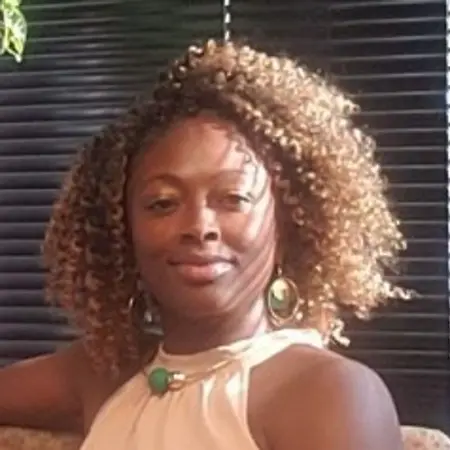
Her Story
About LaQuesha
My journey into education began 22 years ago in the most unexpected way. I was working in sales for a wine company with a background in marketing and management, and I thought I had the best job in the world. Then I became a mom, and everything changed. I wanted to be very strategic about ensuring a strong academic foundation for my child, so I went through an alternative teaching program to learn the fundamentals of teaching - really just to be a good teacher for my own kid. But going through that process, I fell in love with the work and thought there might be an opportunity here. My son was a year and a half when I started teaching, and I have been in education ever since. Today, I serve as the Associate Principal for Academic Affairs and School Leadership at Klein Forest High School and Klein ISD, where I've held this title for the last 3 years. In my role, I support the teachers who support the kids - that's first and foremost. While I'm not directly in the classroom anymore, the work we do every day is always in the best interest of students. I oversee curriculum and instruction, ensuring our students receive a guaranteed and viable curriculum through direct instruction from their teachers. This means coaching, working with professional learning communities and collaborative learning teams, helping establish systems for effective planning and instruction delivery, and providing overall support for the student as a whole. I support all of the administrators, counselors, and instructional teams in this work - that's a team of 15 administrators, about 12 counselors, and another team of 12 on the instructional support side. I'm regularly in classrooms observing, providing feedback and coaching support, and on a great day, I get to go in and help support a teacher by modeling and teaching myself. What makes my approach unique is that I do not have a background in education - I came by way of a business program. I have an MBA and an undergraduate degree in marketing and management. When I had the opportunity to get my master's degree, I was challenged with whether to get it in education, but I realized very quickly that if my overall goal was to run a school or be part of leadership for a school district, the lens for me was running a small business. All components that make up education fall into that business sector - starting with the resources component, starting with customer satisfaction. At the end of the day, I run a small business of 3,300 students and 250 staff members. This business perspective has been invaluable, especially now as the culture of education is changing because of open enrollment and vouchers. People are in spaces where they're having to actually recruit and advertise and advocate for their campuses, and some don't know that space. But I've been blessed with that background, and it's not a new space for me to have to get out in front of people and build community relationships to keep kids on our campuses and attract new students.
Her Interview
Ten minutes with LaQuesha
01What do you attribute your success to?
I really attribute my success to my overall passion for supporting students, and especially students who are underserved in communities. I am a mom of one, and like I said from the very beginning, it really started with making sure that my kid had a solid foundation. And then I get into school, I have a campus of 3,300 kids, and then all the kids become my kids. So really ensuring, especially those students who may be underrepresented, maybe those kids whose parents may not know how to advocate for them - I advocate for those students who may not have a voice, or don't know how to use their voice yet. That's what drives me every single day.
02What’s the best career advice you’ve ever received?
It sounds cliche, but the best career advice I ever received was to always put the students first. I remember as a young educator, a former teacher of mine told me: we don't teach curriculum, we teach kids. That advice has shaped everything I do. It reminds me to bring humanity to the work we do every day - that we're teaching, and kids are watching. I need to make sure that I maintain professional decorum and remain approachable and build solid relationships with kids, because at the end of the day, we're just teaching kids. We're teaching kids about life, and we're intentionally teaching kids about the core and the instruction. So I think just keeping kids first and remembering that they're watching everything that we do - that's the advice that has stuck with me throughout my entire career.
03What advice would you give to young women entering your industry?
I think the first thing is to be grounded in the work and understand your why. People can easily get bogged down in trying to make the next career move, or trying to figure out how to stand out in a place where it might not actually be the time. But I think it's always about growing where you're planted. I like to say, you know, sometimes we don't always know the why behind the work, and it's very difficult in the moment. But I will tell you, after being in education for 22 years, when I see kids that I had when I was teaching, my kids are grown now, and these are the kids that were like my first group of kids - they have families, they have kids, and some of their kids are my students at my school. It really just brings back the refocus of why I do this work. When those kids walk up to me and say, 'I never got to tell you this, but you were always my favorite because you really made sure that I did my work' - those are the impactful stories that matter. I remember one kid who literally rolled the window down and yelled out my name, Grigsby! He said, 'I don't know if you ever knew, I know I was bad in your class, but you were always my favorite, and you always made sure I knew the right thing to do.' Sometimes it takes time before you see the fruits of your labor, but I promise you they're there. So my advice would just be to be patient, know that the work is the why, and you may not see it immediately, but that's the place that you're in. Grow where you're planted.
04What are the biggest challenges or opportunities in your field right now?
I think the biggest challenge is ensuring that we are compliant with all the state laws, regulations, whether it be campus, district, or federal regulations, but always ensuring that those are keeping students first. Sometimes people get bogged down in all the political parts that come with the work, and changes in accountability, and changes in testing, changes in hiring practices. So really just balancing that with keeping the work of students first - that's the challenge we face every day.
05What values are most important to you in your work and personal life?
I'll be honest, family is where I start, because I think that it's important to remember that every child that comes to my school is someone's child. So really just keeping the core value of creating an atmosphere where kids are like family - they're loved as part of that family, and kids are held accountable as part of that family. I really value that in the work, making sure that kids always feel like they're welcome and they're part of a family. In addition to that, it's just that core concept of respect. Kids will say, well, you don't give respect until you give respect, but I remind kids that that goes both ways at the same time. So really just this family environment, this family culture, and ultimately, the level of respect and what that means - and how you have to teach that to kids, and sometimes adults.
Join Influential Women and start making an impact. Register now.