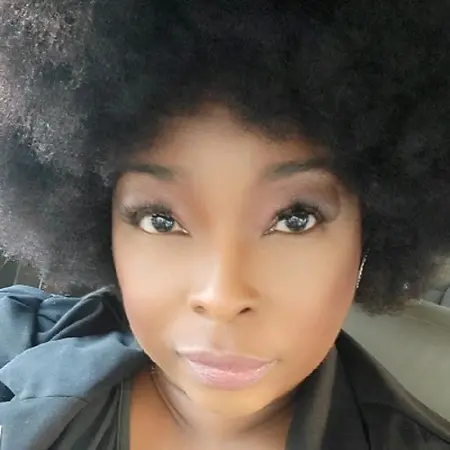
Her Story
About Latonia
I didn't start my career in public health or advocacy—I started in corporate finance. But it didn't take long for me to realize that helping people and standing up for my community was where my heart truly was.
After a police shooting in Milwaukee, I began volunteering with Program the Parks, where I helped bridge conversations between law enforcement and young people, supported voter registration efforts, and connected community members to resources. I noticed that people often came to me when they needed information, support, or someone they could trust. Those experiences inspired me to return to school, earning a degree in Human Services and continuing my education in Social Work.
Over the years, I have worked with organizations that support individuals and families facing a variety of challenges. Much of my work has been grounded in lived experience and relationship-building because I believe people are more likely to engage when they feel seen, heard, and understood.
After moving to Atlanta, I struggled to find support services for my partner, a heterosexual Black man living with HIV. Many of the available spaces and programs did not reflect our experiences. That realization pushed me deeper into advocacy and strengthened my commitment to creating more inclusive conversations around HIV prevention, sexual health, and healthcare access.
Today, I serve as a Community Health Advocate and Training Coordinator with The Fulton-DeKalb Hospital Authority and Co-Executive Director of Project RED Paint, Inc. I facilitate community listening sessions in communities such as Clarkston and Stone Mountain, helping residents identify priorities, access resources, and advocate for solutions that improve community health.
I am also a national HIV prevention advocate, presenter, and author. I have presented at conferences including AIDSWatch and the United States Conference on HIV/AIDS (USCHA), and my writing has been published by TheBody and Positively Aware. Through Project RED Paint, I provide HIV education and advocacy across the country, create opportunities for honest conversations about sexual health, and work to bridge gaps between community members, healthcare providers, researchers, and public health systems.
At the core of everything I do is a simple belief: the people most impacted by an issue should have a voice in the solutions. My goal is to help create spaces where people feel empowered, informed, and supported enough to advocate for themselves and their communities.
Her Interview
Ten minutes with Latonia
01What do you attribute your success to?
Being a mom. Everything goes back to being a mom. I was a foster child raised by my grandmother, and being a mom has instilled so much in me because it was so important for me to give my kids what I didn't have - not material-wise, but that support, to be there, to not leave them orphans. That prompted me to work harder on my health, be on top of my health. I wanted to make sure I saw my daughter walk across the stage at graduation. Last month at her graduation, I lost my ever-loving mind because I did it! With all the health challenges, setbacks in life, being unhoused, going without a car, bill collectors, working for bosses that didn't appreciate me - I've been a mom since I was 19, and I'll be 54 next week. I look at my kids and realize a lot of things I didn't have, things that were never shared with me. Had they been shared with me, I would have made better decisions or at least informed decisions. I'm working hard to ensure they have a different type of agency over their being, and I think for the most part, I have been successful with them.
02What’s the best career advice you’ve ever received?
Trust yourself. I grew up in an environment where I wasn't so sure of myself, which led me to just go along with what was happening. But in my mind, I'd have an idea that I know would work, but wouldn't trust myself. I was working at a group home for young girls, and I was sharing with my mentor something that was happening, and I said I know this could make a difference. She asked me, 'Do you ever trust yourself?' I said, well, yeah, if somebody gives me a chance to do it, I could do it. She said, no, no, no - do you trust yourself? Do you trust that voice in your head telling you to do something one way or another? That has stuck with me, because whenever I get in that imposter syndrome mode, I have to remind myself that I have overcome a lot of things. I was graduating from college in my 40s, making the provost and dean's list as a non-traditional college student. Anything that I have set my mind to, I can do it if I just have the space and the tools to do it. And sometimes I don't even have to have the tools - I build my own tools. I've learned to trust myself.
03What advice would you give to young women entering your industry?
I'm going to regurgitate the advice that I was given: trust yourself. I think that we all have that inner voice, and a lot of us are scared to take a chance on ourselves. We're so used to having somebody else navigate our trajectory, whereas if we would trust ourselves, we would be on the path that was destined for us.
04What are the biggest challenges or opportunities in your field right now?
One of the biggest challenges in my field right now is maintaining hope, trust, and engagement within the communities we serve. Community members are experiencing constant change—whether it's shifts in healthcare access, public policy, funding, economic pressures, or social issues—and many of the systems and institutions they once trusted are being questioned or dismantled in real time.
As a community health advocate, much of my work depends on building relationships and trust. Today, that work is becoming increasingly difficult because many people feel overwhelmed, discouraged, and uncertain about the future. When communities repeatedly experience broken promises, changing policies, and barriers to accessing resources, it can create skepticism and make it harder to engage people in programs, services, and opportunities that are designed to support them.
My challenge is not only connecting people to resources but also helping them remain hopeful and motivated enough to believe that change is possible. This requires meeting people where they are, listening without judgment, being transparent about challenges, and consistently showing up even when trust has been damaged.
I believe that rebuilding trust starts with authenticity, accountability, and ensuring that community members have a meaningful voice in the decisions that affect their lives. Even during uncertain times, I remain committed to helping communities recognize their power, advocate for their needs, and create solutions that are driven by the people most impacted.
05What values are most important to you in your work and personal life?
The values that guide both my professional and personal life are service, authenticity, equity, compassion, and community empowerment.
I believe in meeting people where they are and treating everyone with dignity and respect, regardless of their background, circumstances, or life experiences. Much of my work is rooted in service—helping individuals access resources, navigate systems, and find opportunities that improve their health and quality of life.
Authenticity is equally important to me. I believe trust is built through honesty, transparency, and a willingness to share both professional expertise and lived experience. Whether I am facilitating a community conversation, advocating for policy change, or supporting an individual one-on-one, I strive to show up as my genuine self.
I am deeply committed to equity and ensuring that communities most impacted by health disparities have a meaningful voice in the decisions that affect them. Rather than speaking for communities, I believe in creating opportunities for communities to speak for themselves and lead solutions.
Compassion drives how I engage with others, especially during times of uncertainty and change. People are often navigating challenges that are invisible to those around them, and I believe empathy is essential to building strong relationships and healthy communities.
Above all, I value empowerment. My goal is not simply to provide support, but to help people recognize their own strengths, advocate for themselves, and create lasting change within their communities.
Join Influential Women and start making an impact. Register now.