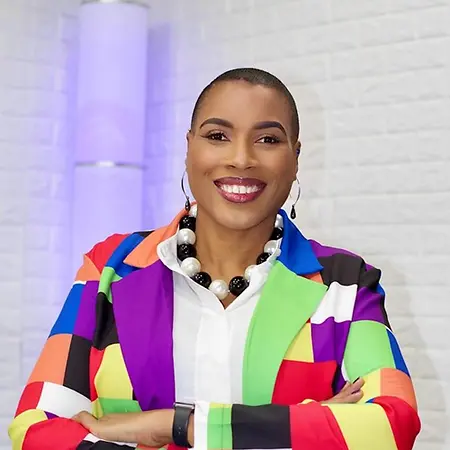
Her Story
About LaToshia
LaToshia Cannon is an experienced educational leader and advocate based in Washington, D.C., with a career in education spanning more than two decades. She earned her bachelor’s degree in Speech-Language Pathology from Howard University, where she developed a strong foundation in communication and special education. Early in her career, she transitioned from roles as an educational aide into special education teaching, working closely with students requiring individualized support and building her expertise in serving at-risk youth.
Currently serving as an Assistant Principal at Harriet Tubman Elementary School, LaToshia focuses on instructional leadership, early childhood education, and special education support. In a school community where a significant portion of students are multilingual learners and many families experience housing instability, she plays a key role in strengthening family engagement and connecting parents with resources. Her leadership approach is rooted in trauma-informed care and culturally responsive practices, with a strong emphasis on helping families understand mental health needs and advocate effectively for their children.
Beyond her school leadership, LaToshia is a foster parent and certified life coach dedicated to supporting youth transitioning out of the foster care system. Since 2008, she has fostered teenagers and continues to provide stability and guidance to young people navigating complex life circumstances. She is also developing a book titled Dear Black Girl, You Are Normal, which reflects her belief in redefining identity, embracing individuality, and empowering young women. Across all her work, she is guided by a commitment to service, advocacy, and helping young people and families build stronger, more supported futures.
Her Interview
Ten minutes with LaToshia
01What do you attribute your success to?
I attribute my success to my deep commitment to service, relationship-building, and trauma-informed care in both my professional role as an assistant principal and my work as a foster parent. While many may view my success through the lens of my title, what truly defines it is my ability to connect with families, meet them where they are, and build trust by showing that I am here to support rather than judge. I take great pride in helping parents understand that I am on their side and focused on the well-being and growth of their children. My passion for working with people is evident in how I show up every day—with consistency, empathy, and joy for the work, even in challenging circumstances. In my foster parenting journey, which began informally long before I was licensed in 2008, I have remained committed to restoring dignity to children who often enter my home carrying deep trauma, instability, and loss. I ensure that every child who comes into my care is seen, valued, and treated as a whole human being, not defined by their circumstances or the system. Over the years, I have also learned the importance of honoring their family histories without judgment, while helping children build healthier futures rooted in healing and self-awareness. I am most proud that my work consistently reflects compassion, patience, and the belief that with the right support, every child and family can grow beyond their trauma.
02What’s the best career advice you’ve ever received?
The best career advice I ever received was that I don't have to fix everything. As someone who naturally wants to help people, I often carried problems that weren't mine to solve. Learning to set boundaries helped me understand that supporting others doesn't mean overextending myself. It means listening, providing guidance, and allowing people the opportunity to grow through their own experiences. That shift has made me more effective as a leader and has helped me maintain balance in both my professional and personal life.
03What advice would you give to young women entering your industry?
My advice to young women entering this field is, first and foremost, do not give up—this work is challenging, but it is deeply meaningful and worth it. It is essential to educate yourself on trauma and mental health so you can truly understand the lived experiences of the children and families you serve. I also encourage you to approach this work without viewing children as a charity or as individuals to “save.” They do not need rescuing; they need guidance, structure, love, and consistent support while they are in your care. My role is never to save anyone, but to walk alongside them, provide resources, and help them recognize their own strengths and potential. I firmly believe every child has a “superpower,” and part of our responsibility is helping them discover it, even when progress is slow and requires patience, repetition, and hard work. At the same time, this profession demands that you take care of your own mental health—whether that means therapy, support systems, or other healthy outlets—because you cannot pour into others if you are not taking care of yourself. Teaching and working with children today takes resilience, self-awareness, and commitment, and while it is not easy, it is incredibly rewarding. And if you find that it is not the right fit for you, that is also okay, because the goal is to serve in a way that is sustainable, healthy, and authentic.
04What are the biggest challenges or opportunities in your field right now?
One of the biggest challenges in education right now is meeting the diverse academic, behavioral, and social-emotional needs of students while also supporting educator well-being. Schools serve students with a wide range of needs, including multilingual learners, students with disabilities, and students who have experienced trauma or housing instability. At the same time, educators are balancing increased expectations and accountability.
The opportunity within that challenge is that we know more than ever about effective instruction, intervention, and inclusive practices. Schools have access to data, evidence-based interventions, and technology that can help personalize learning and improve outcomes for all students. There is also a growing recognition that strong family partnerships and student-centered support are essential to success.
As a school leader, I see an opportunity to build systems that empower teachers, strengthen collaboration among staff, and ensure that every student receives the support they need to thrive academically and socially. When schools create inclusive environments and invest in both students and educators, we can achieve meaningful and lasting results.
05What values are most important to you in your work and personal life?
The values that are most important to me are service, integrity, trust, relationships, growth, and faith. Service is at the heart of everything I do, whether I am supporting students, families, staff, or clients. I believe leadership is about helping others reach their full potential and creating opportunities for success. Integrity and trust go hand in hand, and I strive to be honest, transparent, and consistent in my actions and decisions. Trust is the foundation of every successful relationship, and I work hard to ensure that people know they can rely on me to follow through on my commitments and act in their best interests. I also place a high value on relationships because I believe people thrive when they feel valued, heard, and supported. Building strong connections allows me to create environments where individuals feel safe enough to learn, grow, and take risks. Growth is another core value that guides my work and personal life. I am committed to continuous learning and self-improvement, and I believe that challenges often provide the greatest opportunities for development. Finally, faith serves as my compass, guiding me to lead with compassion, humility, and purpose. Together, these values shape how I make decisions, build relationships, and serve others both professionally and personally.
Join Influential Women and start making an impact. Register now.