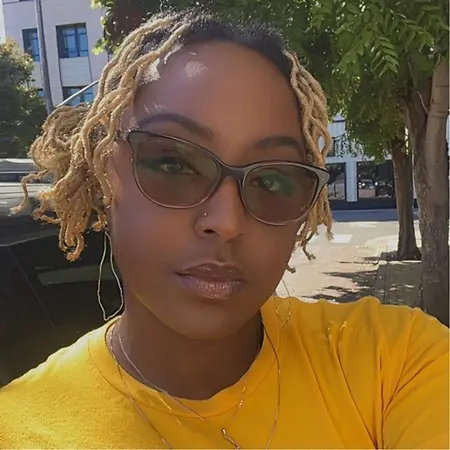
Her Story
About Latoya
Latoya Phillips is a community builder, roller-skating advocate, and founder of Grillz on 8, a movement-driven platform centered on skating culture, wellness, travel, and inclusive outdoor experiences. Based in Oakland, she has built her work around creating welcoming, intergenerational spaces where people can connect through movement, recreation, and shared cultural expression. She also contributes to community programs and nonprofit initiatives focused on expanding access to outdoor recreation, particularly for Black and Brown communities.
Born in Barbados and later relocating to California, Latoya’s journey has been shaped by resilience, creativity, and transformation. After years in the corporate and administrative sectors, she made a major life transition following the COVID-19 pandemic, when she rediscovered roller skating as a form of healing, reflection, and reconnection with herself. This rediscovery followed a long period of personal grief after the loss of her older brother, which deeply influenced her emotional journey and ultimately strengthened her commitment to purpose-driven work. A pivotal moment of reflection near Lake Merritt in Oakland helped spark her renewed connection to skating and community.
Today, Latoya leads skating retreats, community activations, and cross-cultural programs that bridge communities across California, the United States, and the Caribbean. Her work blends wellness, travel, education, and cultural exchange, while also advancing advocacy for equitable access to outdoor spaces. Through her leadership roles in skating organizations and local nonprofit partnerships in Oakland, she continues to focus on helping people rediscover joy, build connection, and engage more fully with movement, nature, and community life.
Her Interview
Ten minutes with Latoya
01What do you attribute your success to?
I attribute my success to reconnecting with my higher self and spiritual foundation during the COVID-19 period. During that time, I intentionally leaned into my passions—such as reading, playing piano, roller skating, and spending time outdoors—which helped me regain clarity and balance. I also took consistent, hands-on action toward my goals, supported by meaningful community connections that encouraged and guided my growth.
02What’s the best career advice you’ve ever received?
The best career advice I’ve ever received is to stay grounded in service, authenticity, and community while remaining open to the people and experiences that shape your path. My journey has been shaped by influential figures such as Richard Humphrey, a respected leader in the roller-skating community whose lifelong dedication to teaching, mentoring, and preserving skating culture has shown me the power of passion sustained over time. I was also significantly encouraged by Jeffrey Allen, whom I met in Barbados, whose belief in my vision and support helped me turn ideas into meaningful opportunities and expand my work across communities. Beyond these individuals, I continue to draw inspiration from community leaders and organizers who create inclusive spaces where people can connect and thrive, reinforcing my commitment to service, authenticity, and building opportunities that bring people together.
03What are the biggest challenges or opportunities in your field right now?
The biggest opportunities in my field right now are rooted in the growing recognition of roller skating as more than recreation—it is increasingly being embraced as a tool for healing, self-discovery, and community building. The COVID-19 pandemic highlighted this shift, as many of us turned to outdoor skating to navigate uncertainty, stay grounded, and reconnect with movement and ourselves when traditional spaces were unavailable. This moment also strengthened my appreciation for the culture and legacy of skating, and for the pioneers and mentors who have sustained it over generations, including figures like Richard Humphrey, whose lifelong dedication as a skater, instructor, and mentor continues to inspire the community. At the same time, one of the ongoing challenges is preserving the depth and history of skating culture while ensuring it remains inclusive, accessible, and welcoming to new generations. For me, this balance between honoring tradition and expanding access represents both the challenge and the opportunity—building spaces where people of all backgrounds can experience freedom, confidence, and belonging through skating.
04What values are most important to you in your work and personal life?
The values most important to me in both my work and personal life are community, inclusivity, authenticity, and service. Community is at the heart of everything I do—roller skating, in particular, has grounded me and given me a space of peace where I can be free, expressive, and reflective. It has supported my personal growth by helping me overcome fears and challenges, while also reminding me of the importance of showing up in a hands-on, “boots on the ground” way. I deeply value the inclusive nature of the skating community, where people of all ages and backgrounds are welcomed—whether a child is introduced by a parent, aunt, or grandfather, or someone is stepping on skates for the first time, there is a shared sense of family, support, and belonging. This sense of freedom and possibility continues to fuel my passion, and I am committed to creating spaces where people feel seen, supported, and connected. In my work, I prioritize impact over information, focusing on meaningful action that helps others reconnect with themselves and rediscover joy, creativity, and movement.
Join Influential Women and start making an impact. Register now.