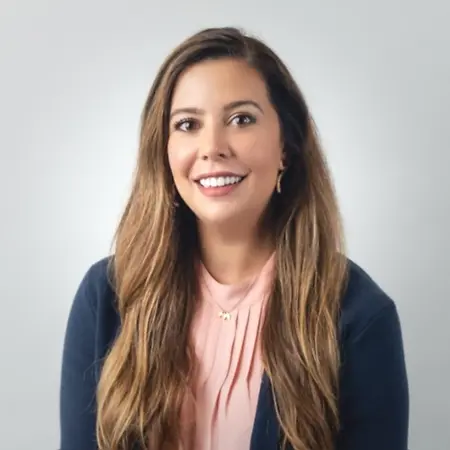
Her Story
About Laura
I originally went to college for behavioral neuroscience, and it was taking some of those classes and learning about the bench science of addiction that gave me the first think of the possibilities of being a pharmacist. I realized I could blend research with my love of interacting with people, because what became a little bit of a turn-off with the research side of things was that I didn't want to be just kind of stuck in a lab. I do enjoy working with the public. As I was growing up, my dad was actually a living kidney donor for his brother, so that was really my first exposure to solid organ transplant. Once I had a better understanding of the pharmacist's role in organ transplantation, it was like a slam dunk of everything I've ever been interested in and one career, which was really exciting for me. I've transitioned through many things, working for retail pharmacy to then becoming a solid organ transplant pharmacist, and then transitioning to being a medical science liaison for CareDx, and now I work as the senior medical affairs lead for CareDx. I'm able to blend all of my experiences thus far to help with the operations of medical affairs at my company. That includes making sure that MSLs have everything they need clinically, organizing our literature libraries, and providing those types of scientific resources, and helping also with the operations of our clinical studies and pipeline. It's really fun stuff, really getting to be on the forefront of what's coming next from our company. I came from a background of making recommendations based on what's currently available, and now I'm involved with the science of what's next in the field and what's going to become the standard of care in the next 3 to 5 years, which is really exciting.
Her Interview
Ten minutes with Laura
01What do you attribute your success to?
My first thought was my parents. They've inspired me in many different ways. My dad was an organ donor, so of course there's that, but they both are immigrants from Portugal and had really different upbringings than me. I think that learning from their hard work and determination, and really, something that my mom always said, even if she didn't have the answer because she didn't know what the right answer was for me, she's like, I don't know, but I know that you'll figure it out. That replays in my head all the time. Like, even still, I just think, well, I'll figure it out, and then it really helps me believe that I will. So I think I attribute my success to that attitude of not giving up and knowing I can figure it out.
02What advice would you give to young women entering your industry?
I love this question. I think now, because I am in the thick of being a mother of small children, and I didn't know how I would be able to still be a career-driven person and the mom that I want to be, I think that the main advice I would give would be don't be afraid to ask for what you need and what you want. I have a job now that is so able to allow me to use my mind in a way that is challenging and interesting, and still balance my needs at home. And that's possible because my job was willing to work with me, and so I think advocating for yourself is always very important. And you can get what you want, so get it.
03What are the biggest challenges or opportunities in your field right now?
I think the challenges create the opportunities, and honestly, I think what's really exciting about the job I have is that that's literally our everyday work. Really, in the field of transplantation, our most dire need is making sure everybody who needs a transplant can get one. So, increasing the availability, which is being done by various companies and devices to help build ways to preserve or use organs that may otherwise not have been used. But advocacy to become an organ donor is important. And I think increasing the survival of the organs that are available, so in my field, we help with non-invasive testing to assess for rejection. We're able to detect injury sooner, which allows intervention to happen sooner, and then improve outcomes from there. And of course, I'm always a pharmacist first. Being able to have better options for immunosuppression, options with less side effects would be ideal. I think there's a lot of opportunity there to sort of optimize the options that patients have to keep them safe from rejection and other complications. There's a lot of room for improvement there still. We were using the same drugs we used in the 80s.
04What values are most important to you in your work and personal life?
I think honesty is one that's very important to me. I think with honesty and even in the sense of just kind of being honest with where something is, like where is a project at, what is reasonable, what is actually feasible. I think dealing with the truth, in all ways, in all things, helps. It's more productive. It helps you get to the right answer faster, even if it means admitting that maybe my idea isn't working out and we need to pivot. So I think that's probably, to me, one of the more important things in life.
Join Influential Women and start making an impact. Register now.