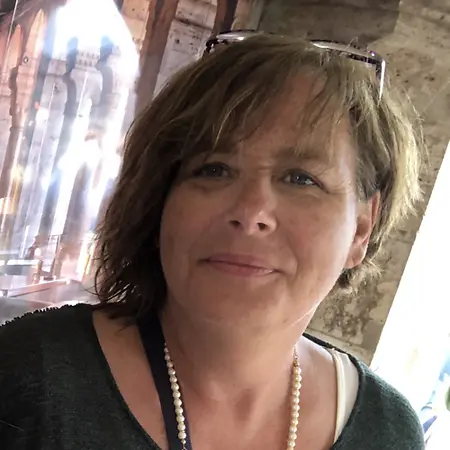
Her Story
About Laura
Laura Johnson (she/her) is a senior accreditation and reaccreditation consultant specializing in continuing professional development (CPD) systems, outcomes-based frameworks, and ACCME and Joint Accreditation compliance. With over 25 years of experience in medical education and consulting, Laura advises healthcare organizations, medical societies, and educational institutions on moving beyond time- and activity-based CPD models toward competency-aligned, outcomes-driven approaches. Her expertise spans accreditation strategy, governance, compliance policies, program standards, and continuous improvement to ensure meaningful learning and measurable professional growth.
Prior to founding LRJ Consulting, Laura served as Director of Continuing Medical Education for a national medical society, where she led multiple reaccreditation cycles, secured Accreditation with Commendation from the ACCME, and expanded educational offerings from a single annual event to more than 70 accredited activities serving over 11,000 healthcare professionals annually. She also directed the launch of an online education platform and implemented outcomes assessment strategies to strengthen educational quality. Earlier in her career, Laura served as Executive Director of the LASIK Institute, providing patient education, physician training, and strategic leadership for a nonprofit organization.
In addition to her consulting work, Laura is deeply committed to humanitarian and educational service. She serves as President of the U.S. Board of Directors for the DeSanto Centre for the Deaf in Livingstone, Zambia, guiding strategic planning, fundraising, and institutional development to provide tuition-free education to Deaf children. She is also active in global health initiatives, volunteering with women-led nonprofits that provide eye care and training in rural Tanzania. Laura holds a Bachelor’s degree in Economics from Temple University and is recognized for her integrity, dedication, and commitment to advancing both professional education and inclusive access to learning worldwide.
Her Interview
Ten minutes with Laura
01What do you attribute your success to?
I owe my success to my mentors. Throughout my career, I’ve been fortunate to work alongside strong women whose guidance shaped both my work and my leadership. I sought out their perspective rather than waiting for mentorship to be offered, and they were generous with their time, experience, and honesty. They helped me navigate not only day-to-day responsibilities, but also how to move through the business world with confidence and integrity. I would not be where I am today without their leadership, their willingness to share hard-earned lessons, and their friendship. In turn, my own leadership style is rooted in paying that forward by creating space for the people I work with to grow, be recognized, and have their work shine brightly.
02What’s the best career advice you’ve ever received?
Assume you are qualified and valuable. The best career advice I ever received was to approach opportunities with confidence in your readiness and worth. Don’t underestimate your qualifications, and don’t negotiate from a place of caution. When pursuing roles or compensation, aim higher than your initial instinct and let the conversation meet you there.
03What advice would you give to young women entering your industry?
My advice to young women entering this industry is to resist doing it alone. Many CME roles exist within very small departments, which can feel isolating when you’re trying to grow, problem-solve, or move your program forward. Seek out mentors, engage in conferences and professional communities, and build relationships beyond your organization. Those connections create space to share ideas, learn from others’ experience, and gain perspective
04What are the biggest challenges or opportunities in your field right now?
One of the biggest challenges—and opportunities—in my field is how we integrate AI into medical education. Used thoughtfully, AI can be a powerful collaborator that enhances efficiency, supports outcomes-focused design, and helps us respect the very limited time clinicians have for learning. The challenge is ensuring it never replaces human expertise or judgment. Human oversight remains essential for accuracy, relevance, and real-world impact. When positioned as a tool that augments professional expertise rather than generates content in isolation, AI has the potential to significantly strengthen educational quality and reach.
05What values are most important to you in your work and personal life?
Honesty, accountability, and service guide both my work and personal life. I believe meaningful impact is built through small, intentional actions carried out with integrity and care. Outside of work, I value staying connected with my family, especially my adult children living abroad, and I find joy in crocheting and traveling, which keep me grounded and curious.
Join Influential Women and start making an impact. Register now.