Influential Woman · Neurostar TMS
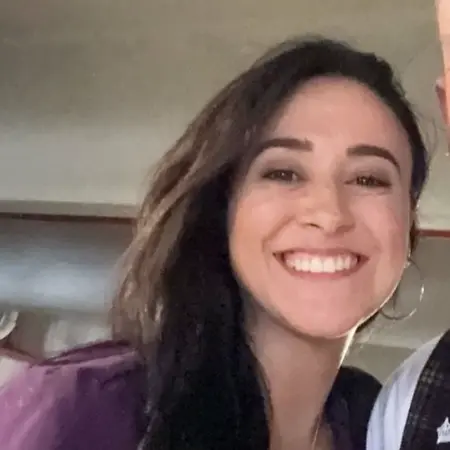
Laura Marquez
Chief Procedure Coordinator- TMS/Spravato, Elevate Psychiatry
Miami, FL
Her Story
About Laura
That drives me.
Laura Marquez is a dedicated mental health professional specializing in Transcranial Magnetic Stimulation (TMS), an FDA-approved, non-invasive treatment for depression. With over seven years of hands-on experience in the field, she has built a career centered on improving patient outcomes through education and advocacy. Beginning her journey as a TMS technician and later serving as a coordinator within a clinical setting, Laura developed a strong foundation in patient care and treatment delivery. Today, she works on behalf of a manufacturing organization, where she educates healthcare providers on best practices for administering TMS and ensuring patients receive the highest standard of care.
In her current role, Laura manages a territory spanning all of South Florida, partnering with medical practices to support the effective implementation of TMS treatment. She is deeply committed to raising awareness about the therapy’s proven effectiveness, emphasizing that education is key to ensuring patients have access to life-changing care. By training providers, guiding clinical teams, and reinforcing patient education, Laura plays an essential role in bridging the gap between innovation and real-world impact. Her work ensures that more individuals struggling with depression are informed about and able to benefit from this transformative treatment.
Driven by both professional passion and personal purpose, Laura finds fulfillment in knowing her work helps save lives. She is equally proud of her role as a mother, which she considers her most important responsibility. Balancing career and family, she brings empathy, resilience, and dedication into every aspect of her life. Laura’s journey—from working in a single office to influencing multiple practices across an entire region—reflects her commitment to growth, service, and making a meaningful difference in the field of mental health.
Her Interview
Ten minutes with Laura
01What do you attribute your success to?
I would say, first, my mom. She's a single parent, and man, I have never seen anyone work as hard as she has, so that's what she taught me. And I'm going back to the passion for the impact, because I could do a lot of things, and I can learn a lot of things, but do I really like it? So, I don't know, it's just very important for me that if I'm going to do something, do it right. But I like doing it, and I'm doing it like what I do now. I know that the treatment that I teach, that I work in, helps people with depression, it saves lives, and that drives me. So I attribute my success to my mother, my mom, but also the passion and the impact of my career.
02What’s the best career advice you’ve ever received?
Somebody once told me that when making a decision, it's not as important as to when you're making it. And that stuck with me. I was working with a provider, and I wasn't sure if I could go back to school, and I was like, maybe I could go back later. But the decision - you can make the decision, yes, I want to go back, but the most important part of the decision is when are you going to make the decision? Because you can go to school today, and I did, and I graduated. Or you can wait, and wait, and wait, but you still made a decision of going back. Just the when is so important. That stuck with me.
03What advice would you give to young women entering your industry?
I would say, like, stay resilient. Setbacks are part of the path, not the end of it. I'm thinking about me, just, I was a mom, I could've given a hundred excuses to not be where I'm at. But that just made me want to do it even more, so I could tell myself, I did it. So, be resilient. Setbacks are part of the path, not the end of it.
04What are the biggest challenges or opportunities in your field right now?
I would say the challenges and opportunities are awareness and education. Even though stigma is not as bad as it used to be, you know, it's okay to not be okay, and it's okay to talk about it, and it's okay to ask for help. So, awareness and education not only for the providers, but for the patients as well. One of the challenges would be awareness and education. And then, opportunity - just that. Just being able to talk about what we do, and educate on this treatment, on mental health itself. But it's okay. There's treatments, there's alternatives. And it's okay to ask for help.
05What values are most important to you in your work and personal life?
I think integrity is very, very important. Integrity is, like, the value - integrity is very important. Impact is very important, because if I am doing something, I need to make sure that I mean, and it, you know, it makes sense, the things I do. Compassion is very important. I know I guess, happiness and fulfillment. So, to answer your question, integrity, I would say impact is very important. Compassion, happiness and fulfillment. Because you don't feel good at something, you don't like it, it ain't worth it.
Join Influential Women and start making an impact. Register now.