Influential Woman · Growth strategy firm specializing in upstream marketing and customer-centric growth
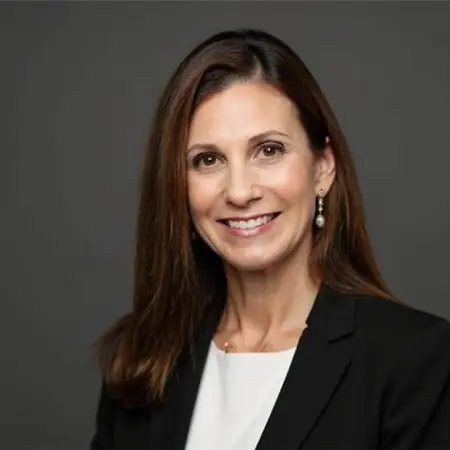
Laura Patterson
President, VisionEdge Marketing, Inc.
Austin, TX 78738
Her Story
About Laura
Laura Patterson has spent more than 30 years helping leaders make better decisions about where to focus their time, resources, and investments so they can create meaningful customer value and measurable business results. She is President and Founder of VisionEdge Marketing, a growth strategy firm she founded in 1999 after a career that included nearly 15 years with Motorola. Over the course of her career, she has advised more than 300 organizations across technology, industrial manufacturing, supply chain/logistics, life sciences/biosciences, and other B2B markets.
A recurring pattern she observed became the foundation of her work: organizations can have talented people, strong ideas, and tremendous activity, yet still struggle to achieve growth when their initiatives aren't connected to strategy, customer value, and measurable outcomes. Patterson calls these disconnected efforts “random acts”, the well-intentioned activities that consume time and resources without necessarily advancing what matters most. Her work today centers on helping executive teams replace random acts with intentional, customer-centric strategies. She brings together customer insight, strategic alignment, performance measurement, and disciplined execution to help leaders create customer value, business value, and ultimately shareholder value.
Patterson is also expanding her personal thought leadership platform through LauraPatterson.co, where she brings together her frameworks, writing, speaking, executive advisory work, assessments, and educational resources. Her career has been shaped by curiosity, courage, discipline, gratitude, service, authentic relationships, and a commitment to creating positive impact. She believes sustainable growth isn't about doing more. It is about making better choices about where to focus.
Her Interview
Ten minutes with Laura
01What do you attribute your success to?
I attribute my success to a combination of hard work, curiosity, discipline, and the willingness to keep learning. A school counselor once described me simply as someone who was willing to do the work, and that has stayed with me. I've also learned the importance of being coachable, to listen carefully, seek out perspectives that challenge my thinking, and make adjustments when the evidence tells me I need to change course. The ability to pivot has been especially important as an entrepreneur. I've navigated major changes in the business environment, from the dot-com bust and the aftermath of 9/11 to the financial crisis and the pandemic. Each experience reinforced the importance of staying close to customers, paying attention to what is changing, and being willing to adapt without losing sight of your purpose.
Most importantly, I've learned that success is less about any single breakthrough and more about consistently doing meaningful work, building trusted relationships, and staying committed to creating value.
02What’s the best career advice you’ve ever received?
"Do the Work."
Throughout my career, I've learned that credibility and opportunity are built over time. You don't have to know everything when you start, but you do need to be willing to learn, listen, prepare, follow through, and take responsibility for the results.
I've also learned to pay attention to patterns. Sometimes the most important career opportunities come from recognizing a problem that keeps appearing and asking yourself, “Why does this keep happening, and what can I do about it?”
That question ultimately shaped my own career. The more organizations I worked with, the more I saw talented people working incredibly hard but struggling because their activities weren't connected to strategy or customer value. Recognizing that pattern led me to build much of my life's work around helping leaders create greater strategic clarity and intentionality.
03What advice would you give to young women entering your industry?
Don't wait until you feel completely ready to contribute. Build your credibility by doing the work, keeping your commitments, asking thoughtful questions, and continually developing your expertise.
I've also learned that expertise isn't about having all the answers. It's about being curious enough to ask better questions, confident enough to share what you know, and humble enough to say when you don't know something and then go figure it out. Early in my career, I sometimes felt that I needed to prove I belonged in the room before I allowed myself to fully occupy the room. Over time, I learned to value my experience and trust my voice.
For young women entering business today, I'd encourage them to develop strong critical-thinking and problem-solving skills, understand the business (not just their function), and learn to connect their work to outcomes that matter. Build relationships, find people who will challenge and support you, and don't confuse being busy with creating value.
Your authority isn't something you're given. You build it over time.
04What are the biggest challenges or opportunities in your field right now?
One of the biggest challenges I see is that organizations have more data, technology, AI capabilities, and potential initiatives than ever before, yet more activity doesn't necessarily produce better decisions or stronger growth. Leaders are facing an increasingly complex environment in which they have to determine which customers to prioritize, which opportunities deserve investment, which initiatives actually support strategy, and how to measure whether those decisions are creating value. That creates a significant opportunity to rethink customer-centricity as an enterprise-wide business strategy rather than a marketing initiative.
The organizations that can connect customer insight to strategic priorities, investment decisions, performance measurement, and execution will be better positioned to turn all of the available information and technology into meaningful business value. For me, the opportunity is helping leaders move from “What should we do next?” to “What should we intentionally choose to do and why?”
05What values are most important to you in your work and personal life?
The values that guide me most are gratitude, curiosity, service, integrity, authentic connection, continuous learning, and creating positive impact.
I'm grateful for the people and experiences that have shaped my journey, including the challenges. I've learned that some of the most valuable lessons come from situations that don't go according to plan. I value authentic relationships and believe that how we work with people matters as much as what we accomplish. I also believe in serving others: sharing what I've learned, helping people see possibilities they may not have considered, and using my experience to make a meaningful difference.
And I'm guided by an abundance mindset: there is always more to learn, more value to create, and more opportunity to help others succeed. At this stage of my career, that sense of service and impact has become increasingly important. I want the work I do to leave people, organizations, and communities better than I found them.
Join Influential Women and start making an impact. Register now.